Whoopi Goldberg on Till: 'This could be anybody’s child'
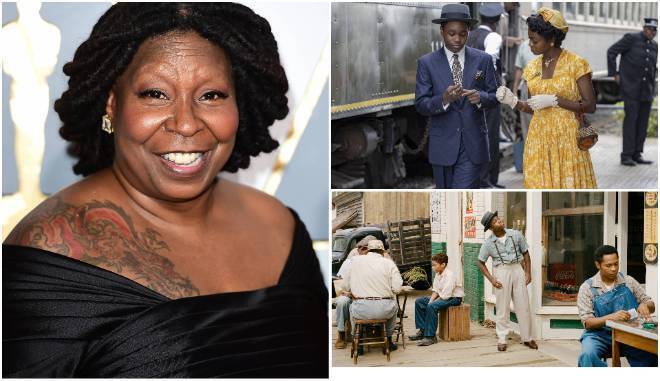
Whoopi Goldberg stars in Till, the story of the death of Emmett Till, whose brutal lynching was a turning point in America's civil-rights history
Last year American president Joe Biden signed the Emmett Till Antilynching Act into law, meaning that as of March 29, 2022, lynching became a federal hate crime.
And while the story brought to the big screen by writer-director Chinonye Chukwu in biographical drama Till took place in 1955, its resonance and impact is more important than ever.
The film Till, with a screenplay by Michael Reilly and Keith Beauchamp, is based on the true story of Mamie Till-Mobley’s pursuit of justice for her 14-year-old son Emmett, who was lynched in 1955 while visiting his cousins in Mississippi.
It stars Danielle Deadwyler in the title role and Whoopi Goldberg as Emmett’s grandmother Alma Carthan, as well as also starring Jalyn Hall, Frankie Faison and Haley Bennett.
Sister Act star Goldberg, 67, also serves as a producer on the film, and was keen to bring the story to the screen. “This could be anybody’s child," says Goldberg. "And so for me that was the catalyst because I recognised, I think in a way that I didn’t really know that I was thinking about, how large racism, and all the -isms attached to racism, actually is and how long the tentacles of hate can be.
“For me, Till is the epitome of what hate can look like and what it means to hate that way. To see this ordinary woman and her wonderful, ordinary 14-year-old son thrust into a situation that his grandmother certainly never would have thought would be possible.
“His mother never really thought this was possible because she says in the movie: ‘I’ve seen what they do to folks down there, but that has nothing to do with me, I’m up here’.
“As it turns out, it has to do with all of us, and we’re all up here. So it really for me became about the best way of sounding the alarm to the direction we as a world, we’re heading towards with our hatred of these people.”
“Till is the culmination of what hate can look like. But it’s also the culmination of the love between a mother and a son. So it’s so many things.”
And it is also this bond that Nigerian-born American filmmaker Chukwu, who also wrote and directed 2019’s Clemency starring Alfre Woodard, wanted to focus on.
In a note written about Till, she says she was drawn to a “singular figure at the centre of his orbit”, which, of course, was his mother Mamie Till-Mobley.
She explains: “For me, the opportunity to focus the film on Mamie, a multi-faceted black woman, and peel back the layers on this particular chapter in her life, was a tall order I accepted with deep respect and responsibility.”
The 37-year-old filmmaker, adds: “The crux of this story is not about the traumatic, physical violence inflicted upon Emmett – which is why I refused to depict such brutality in the film – but it is about Mamie’s remarkable journey in the aftermath."
In August 1955, 14-year-old Emmett was lynched after after being accused of an inappropriate interaction with white female store owner Carolyn Bryant.
Two men stood trial for killing Emmett and were acquitted by an all-white jury.
Reports say that the men, both now dead, later admitted to the crime in a magazine interview, protected against prosecution for the same offence by the double jeopardy clause in the US Constitution.
Mamie Till-Mobley, who died in 2003, was insistent on the casket being open at Emmett’s funeral and pictures of his mutilated body were also published in a magazine to show the world the true horror of what had happened to her son.
Last year a statue of Emmett was unveiled in the US.
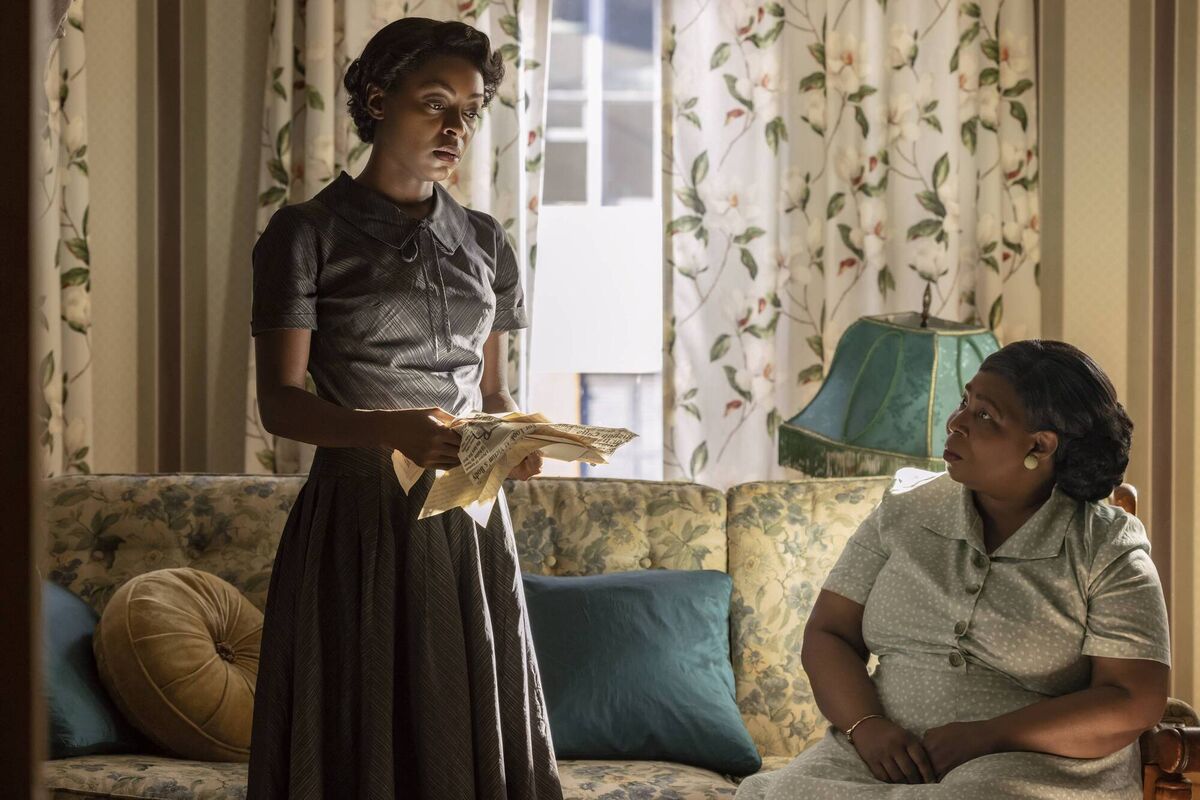
Forty-year-old actress Deadwyler, whose credits include 2021’s The Harder They Fall, said it was a ‘critical time’ to be considering American history.
“The challenges that we’re facing in America, governors who are disinterested in digging into the reality of American history and where we derive from, the true origins,” she says.
“This is a marker where people don’t talk about the impact of black women’s labour in the civil rights movement – and so Mamie is an origin moment.
“She is the progenitor of the civil rights movement. Martin Luther King, James Baldwin, Rosa Parks, all were deeply impacted by Mamie’s actions, and the life of Emmett Till, so this is critical right now.”
Goldberg also remembers her shock at first hearing Emmett Till’s story before learning about “all the prejudices that exist”.
People familiar with the story had hoped that a film documenting his tale would come out but it never did, before she became involved alongside James Bond producers Barbara Broccoli and Michael Reilly, as well as Frederick Zollo and Keith Beauchamp.
She explains: “Keith Beauchamp decided that it needed to be made because he was also a friend of Mrs Mobley’s, and he wanted to get the story out and into the zeitgeist.
“So he first made a documentary which sort of helped resurrect the story and then started working on the script, which we couldn’t get anybody to pay attention to.”
Goldberg, the star of films including Ghost and The Color Purple, said she was shocked that people were so “blase” about not wanting to make the film.
“And then George Floyd happened and the reckoning that happened in the US really forced people to take a good look at themselves, and how they felt,” she said.
“Suddenly, everybody could identify with what was happening to George Floyd and that also helped open the doors to the money that we needed to make the film.” Floyd died on May 25 2020, after former police officer Derek Chauvin knelt on his neck for nine-and-a-half minutes as Floyd repeatedly said he could not breathe and eventually went limp.
His death sparked worldwide protests as part of a broader reckoning over racial injustice.
Goldberg adds of Till: “It’s a cautionary tale for all of us.
“If no one says anything, and this continues to go on the way that it does, this will never stop, because we all like to think that sanctioned racism is gone, but it’s not.
“So, this film is very important, especially now, because it is a part of American history not African American history.”
- Till is out in cinemas now.