Jack Talty: 'UCC has had a far-reaching impact on traditional music'
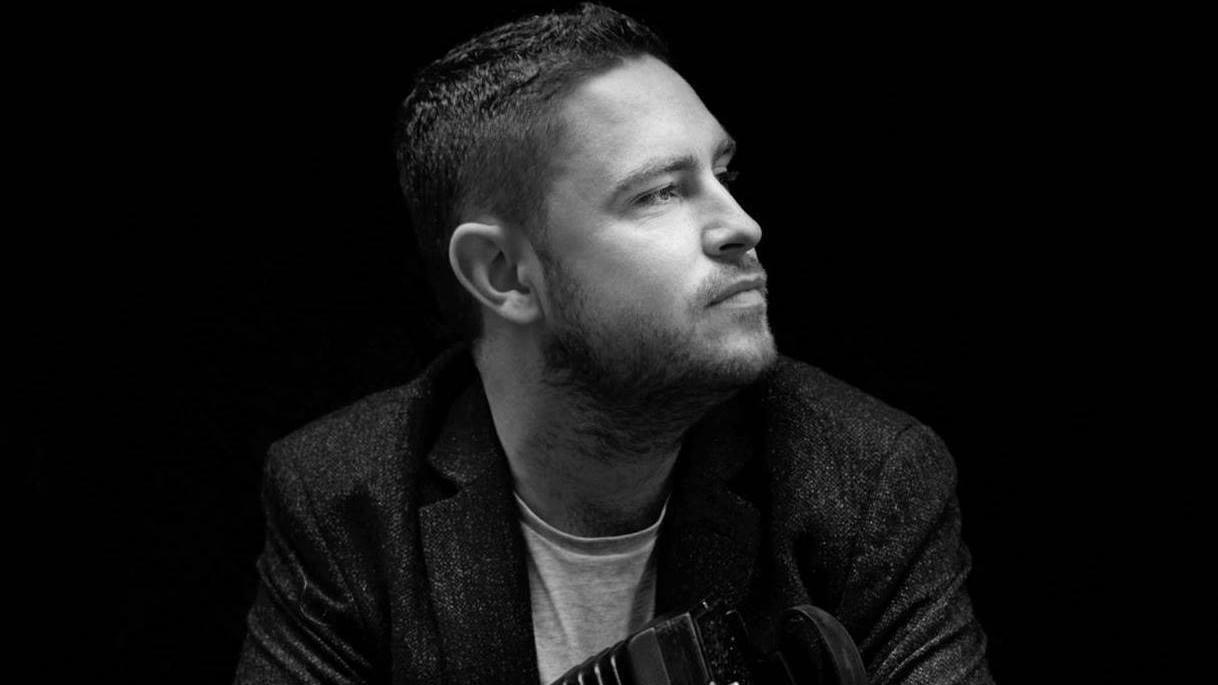
Jack Talty, musician and UCC lecturer. Picture: Maurice Gunning
“As practitioners, people who love and play traditional music, we are very aware of its cultural, social, and artistic value,” says Dr Jack Talty, Co Clare, concertina player and UCC lecturer in Irish traditional music. “But it’s pretty-well universally accepted that there is a raising of the status of traditional music when it has become integrated into third-level education.”
As someone who has coupled extensive musical performance and production experience with a PhD exploring the institutionalisation of Irish traditional music in higher education, Talty points to the Scandinavian experience, indicating “the fact that their traditional and folk music is located within their third-level education system has raised its status and its respect among the wider population”.
“There are pejorative attitudes to Irish traditional music and it’s mainly because people haven’t been given that window into it,” he says. “That’s something that’s very important at the [UCC Music] department, that it can be inclusive and give people an insight who may not have had opportunities elsewhere.
“I’m not just delivering traditional music modules to Irish tradition musicians,” he points out. “We find all kinds of musicians and researchers in our classes and they will often go on to be the next generation of secondary school teachers – there’s an Irish traditional music component in the secondary-level music curriculum - so [at UCC] they will have encountered Irish traditional music on its own terms, where it’s being mediated by people who get stuck in, who actually play Irish traditional music and are passionate about it, and that’s transmitted to them.
“Anecdotally, I was aware that there were certain perceptions, certain tensions around the idea of institutionalising Irish traditional music in third-level education,” he admits. “But coming to UCC has been a really positive way to see how Irish traditional music, even though it’s only one of many disciplines and genres taught, still holds its own and is still absolutely valued and honoured as a very important cultural and artistic activity.
“You have this very sympathetic environment where you can study virtually any kind of music at the music department but that does not mean that any genre is under-represented or anything is treated on a superficial basis,” he adds. “The one constant that I think remains at UCC, is that if you think back to 1922, from the original appointment of Carl Hardebeck, and if you consider all the big moments that came subsequently, it’s clear that although it has been a very broad music degree, Irish traditional music has been positioned centrally in its curriculum from the very outset.”
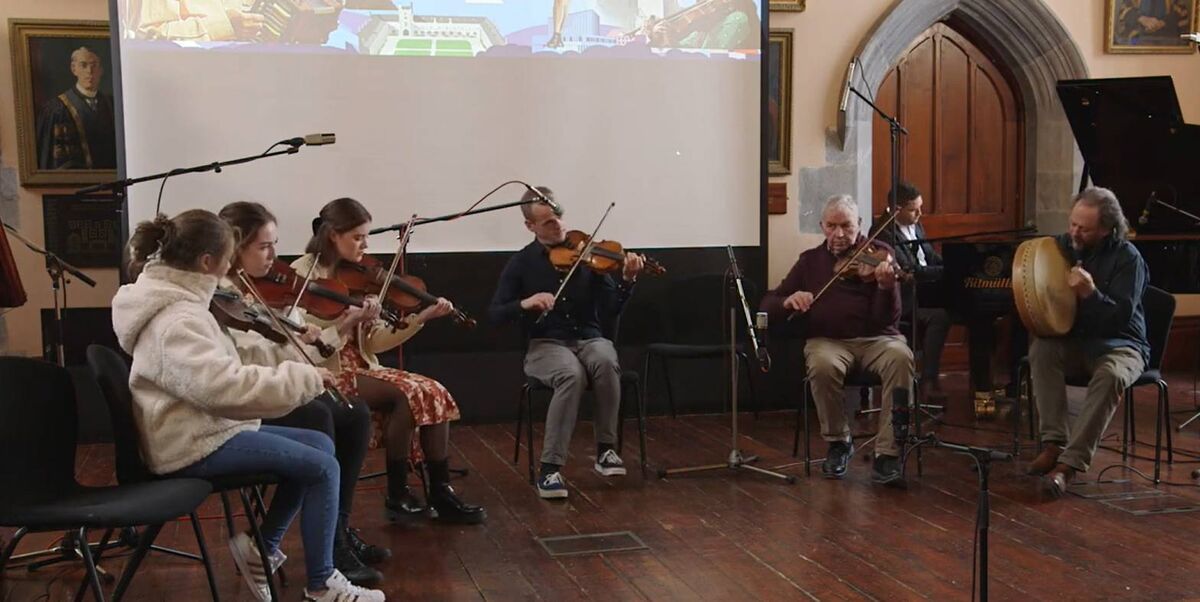
Centenary celebrations have included a concert and launch of an album, Celebrating 100 Years of Irish Traditional Music at UCC: Volume 1, both featuring current students and tutors, some of them, such as Bobby Gardiner (accordion/melodeon) and Connie O’Connell (fiddle), among the first appointed at the music department four decades ago.
Tunes featured span selections from Aloys Fleischmann’s Sources of Irish Traditional Music 1600-1855 and a new composition by traditional artist in residence Caitlín Nic Gabhann, with further CDs featuring past staff and students in the pipeline.
“UCC has had a far-reaching impact on traditional music, in terms of people who have gone on to establish other courses around the country in other institutions, as well as people who have gone on to be performers, to be educators in primary and secondary-level education, and who have gone into arts administration, so we wanted to mark that over a series of releases,” he adds.
Coinciding with the centenary celebrations are plans for the development of a taught masters degree in Irish traditional music, a natural progression for the music department, says Talty.
“I think we’re at a stage now where we can reflect on 100 years of Irish traditional music in the department and move that history along and open a new chapter by creating the MA in Irish traditional music.
“It seems unthinkable that UCC would not have an MA in Irish traditional music so it’s an absolute privilege to be at UCC at such a monumental and significant time when we have the opportunity to put together this programme.”
- Celebrating 100 Years of Irish Traditional Music at UCC: Volume 1 is available at https://musicatucc.bandcamp.com/ from December 2