The Great Lighthouses of Ireland: Beacons at the edge of the world
The TV series that showcased Ireland’s Great Lighthouses has inspired a new book. Lorna Siggins meets author David Hare
The Great Lighthouses of Ireland: Beacons at the edge of the world

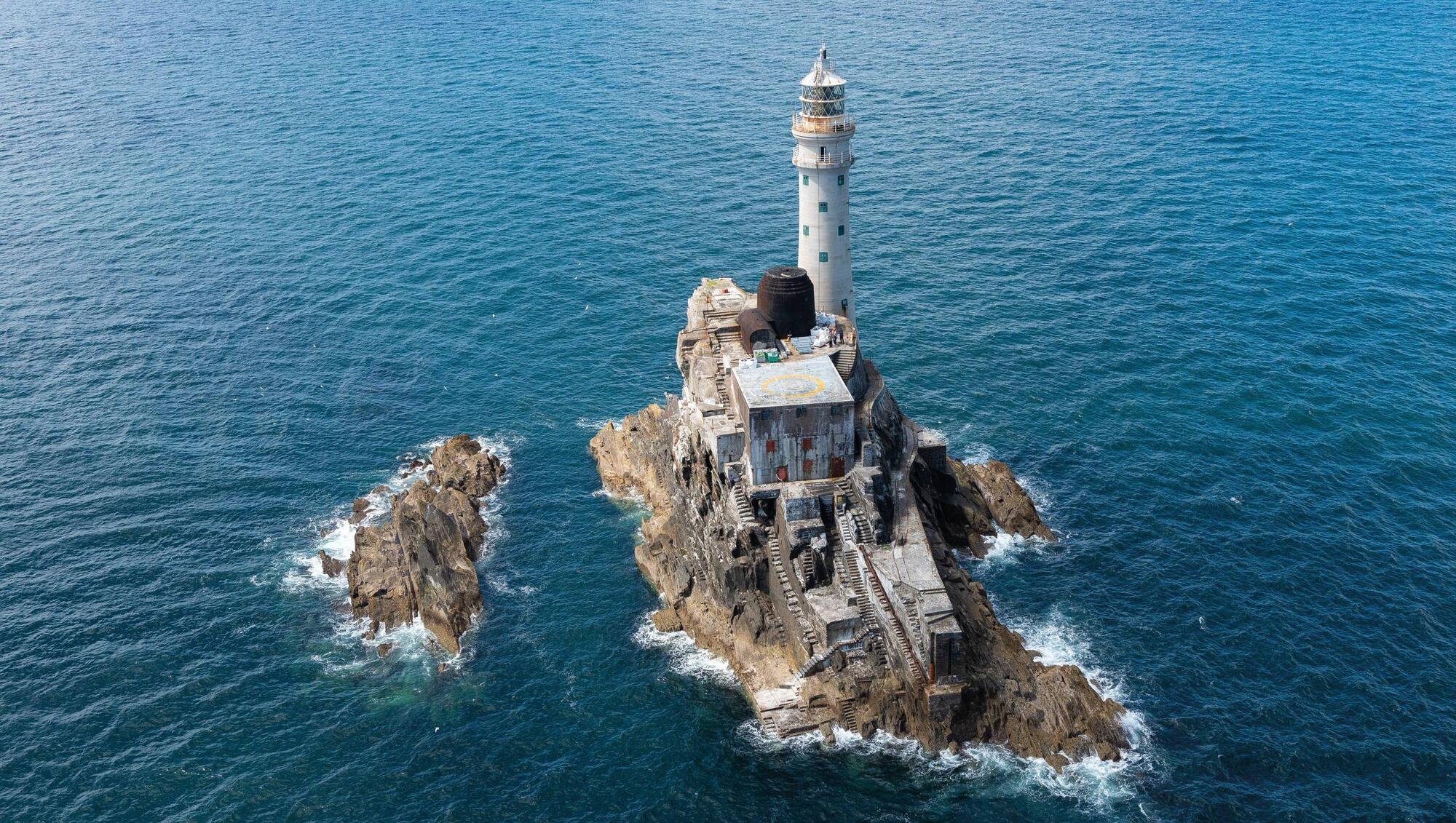
The two peaks of the Fastnet Rock. (Andrew Collins)

Documentary maker David Hare was sitting at an original mahogany desk in his home office and looking out on the Atlantic when he was struck by what he thought at the time to be a “very unoriginal idea”.

The desk, which he bought at auction, had once belonged to the Commissioners of Irish Lights. He had found a slip from its financial controller, a key that didn’t fit any of the desk’s locks, and a couple of copper coins in its top drawer.
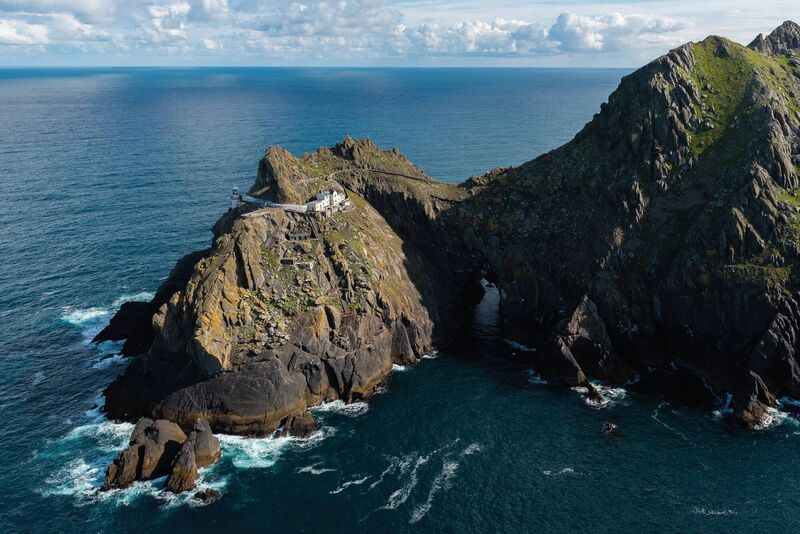
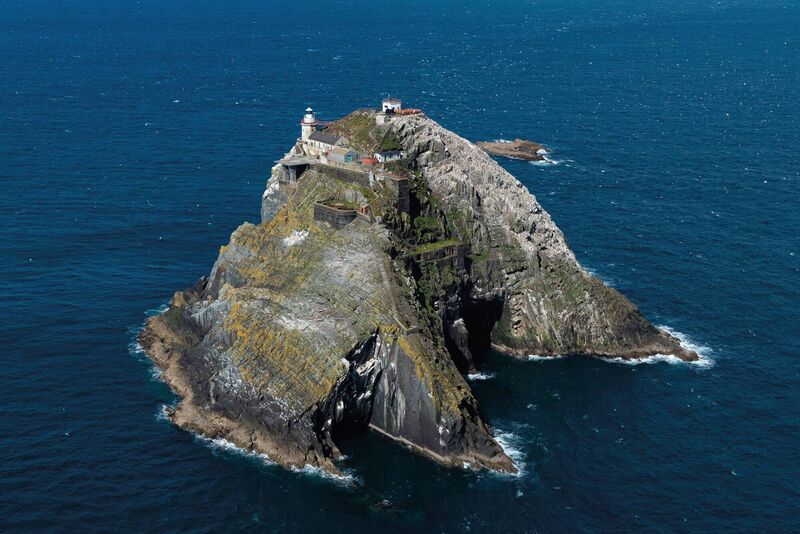
Catching a clear view of west Cork’s Bull Rock, he wondered if anyone had ever made a television series on lighthouses. His company, Inproduction TV, specialises in food and travel documentaries, including a long-running collaboration with chef Neven Maguire.

“And I quickly dismissed the idea, as I thought that someone surely had done so already,” he recalls.

However, he discovered that there had only been one series, made by a British company back in 1992, which had been “shot on tape and shown during the daytime on RTÉ.” Irish Lights chief executive Yvonne Shields O’Connor responded positively when he wrote to her with the suggestion back in 2013.

“She really wanted people to realise that these beautiful structures were not dead objects,” he says. He credits her with “immense patience”, as the first series was not broadcast until 2018, five years later.

“It took three attempts to secure Broadcasting Authority of Ireland (BAI) funding, even though it ticked every box,” Hare says.

Inishtearaght, Co. Kerry. Picture: Andrew Collins

Such was the appeal of Great Lighthouses of Ireland that RTÉ increased its audience share for that particular early evening slot in every age range. Yet, the BAI turned down an application for the second series, which was broadcast from May of this year.

Hare credits a large team that includes editor Pete Higgins, the Telegael crew including director of photography Billy Keady, and former and current staff at Irish Lights.

It has led to a book, now published by Gill which “sort of wrote itself”, he says, as much work had been done by him and his researchers before and during filming.

“I know that there are already a number of books on Irish lighthouses, and we had referred to these, but I suppose I wanted to produce something with wide appeal that my son might buy for me and I might buy for my son,” he explains.

“Lighthouses extend over so many fields, from science, to art, to social history, to engineering, to literature” he says. He was also very conscious of the value of recording those who had worked as lightkeepers while it was still a vital profession.

One such was Eugene O’Sullivan, who was serving on Howth’s Baily light when it was the last to be automated, in 1997.

The Bull Rock Lighthouse, Co. Cork (Andrew Collins)

His father, the late DJ O’Sullivan, had contributed a column, entitled “Land and Water”, to The Irish Press for 40 years, and published a book of poems, entitled A Lightkeeper’s Lyrics, with illustrations by Alfred Kerr. Eugene had read one of his father’s poems for the television series but it didn’t make the final cut.

“I was so glad to be able to include it in the book,” Hare says, along with other stories which didn’t make it to television, such as the background to Ireland’s nuclear lighthouse.

“That story tickled me,” Hare says of Rathlin O’Birne off Donegal’s Malinbeg Head which went from using a paraffin lamp to nuclear and wind power to solar-powered LED lights within a 20-year period.

He recounts in his book how the isotope generator known as RIPPLE X (Radio Isotope Powered Prolonged Life Equipment – Mark Ten) was transported by road to Holyhead from the Atomic Energy Research Establishment at Harwell in Oxfordshire, England, and then brought by sea on board the Irish Lights tender Isolda.

“Almost comically, the nuclear-powered generator had to clear customs in Dún Laoghaire before the Isolda sailed to Rathlin O’Birne and landed the generator on 7 June 1974,” he writes.

Due to the use of Strontium-90, a source of strong radiation, the RIPPLE X generator was shielded in hermetically sealed vessels that were enclosed in heavy biological shielding, “making it safe for the keepers to work in the vicinity of the generator”. As it turned out, the keepers were withdrawn a month after the nuclear-powered light was switched on. However, it was generating insufficient energy to power the Rathlin O’Birne light by 1987, and the lighthouse was then converted to wind power.

The architectural feats involved in building so many strikingly beautiful structures along the coast – along with the skills of lightkeepers who were primarily employed to “keep a good light” – provide much inspiration for Hare.

However, he also writes about the lightships, which suffered casualties during two world wars in light wars, and the lightshipmen who were, he says, “a different, much tougher breed”. “We were so lucky to be able to interview Jack Higginbotham before he died,” Hare says. Higginbotham, an engineer who worked on lightships as a contractor, could trace his relatives back several centuries to lightkeepers who had served at Hook Head.

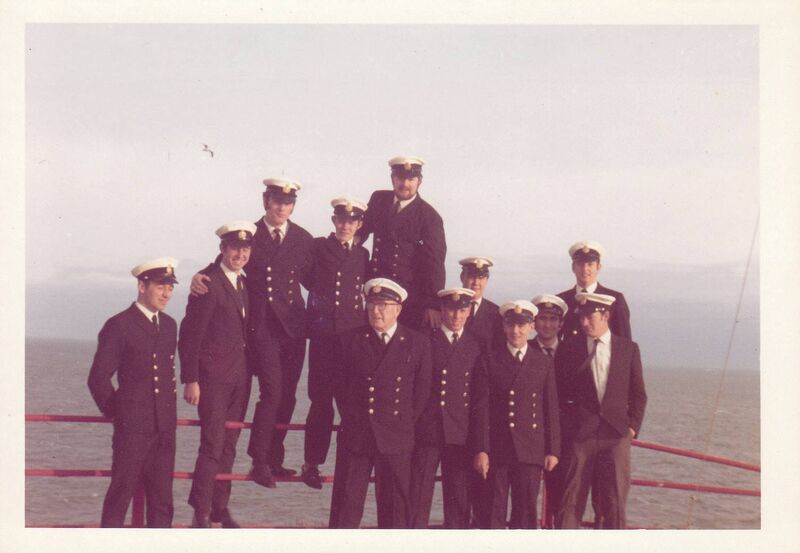
Newly qualified supernunnery assistant keepers in 1969. Picture: Al Hamilton

Higginbotham had been very keen to talk about the sinking of the Daunt Rock lightship, Puffin, off west Cork on October 7, 1896, which led to one of the worst losses of life in the history of Irish Lights.

One of his relatives, Robert Higginbotham, was the youngest of the eight crew to die at the age of just 22.

Daunt Rock, about two kilometres off the Cork coast and south-east of Robert’s Head, had been such a hazard for ships approaching Cork harbour’s entrance that it was marked by lightships for a century from 1874. On February 7, 1936, one of its lightships, Comet, was the focus of one of the RNLI’s most famous rescues. After it broke its moorings, the RNLI Ballycotton crew spent 49 hours at sea, 25 hours of which were without food, to rescue the eight lightship crew.

Hare’s book also includes many anecdotes told by lightkeepers who, he says, all share one characteristic, apart from resilience.

“They are all just incredibly good company,” he says. One such is Gerry Butler, who was a lightkeeper for 22 years and is now an attendant keeper at Corks’ Galley Head. His mother, Pauline, was the daughter of a lightkeeper and was living on Mayo’s Eagle island when she met the man who became her husband, Larry Butler. Gerry was one of their 15 children. Gerry remarked that the size of his family fascinated many.

“People would say, ‘You’re one of fifteen?’ And I’d say, ‘Yeah, only just one, though.’” “And they’d ask you questions like, ‘What was it like to live here?’ ‘How did you do this?’ And ‘How did you do that?’ And ‘How did you all sleep?’ It was a great question. I wound up saying, ‘We took turns at it’.” Lightkeepers like John O’Connor also reminded him that life was not idyllic. He recalled living at Wicklow Head as a child, and how his mother struggled with the isolation and harsh living conditions.

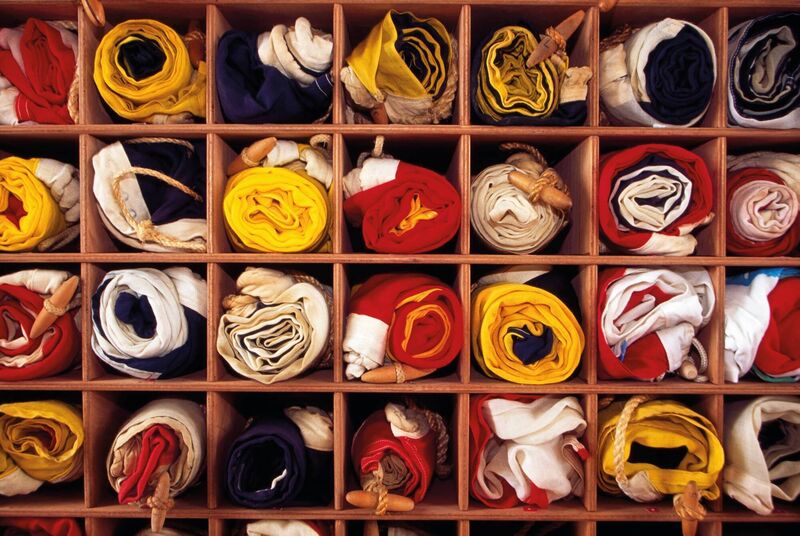
Learning how to send messages by Morse code, semaphore and flags was an important part of the lighthouse keepers’ training. (Picture Richard Cummins)

O’Connor also recalled “being tied with a rope to his brothers and sister to prevent them from being blown over the cliff as they walked half an hour to the main road to wait for the school bus”. Hare spent a night on Ireland’s “tear drop”, west Cork’s Fastnet Rock during filming. The weather wasn’t dramatic, and “just one of those slightly grey days on the Atlantic,” he says.

He was also flown out by helicopter pilot Capt Pete Hodges, along with his film crew, to Inishtearaght, one of the Kerry Blaskets islands where keepers lived between 1870 and 1988.

Its approach by sea was always perilous, as was the case with many offshore structures. After helicopter reliefs began in 1969, it became one of the trickiest to approach by air.

However, Hare’s favourite light is the aforementioned Bull Rock off Dursey island, one of a group of rocks known as the Bull, the Cow, the Calf and Heifer.

“It is no longer a light, but an LED illumination on a stainless steel pole,” he says.

“It is 300 feet above sea level, and Irish Lights had built those cottages that would not be out of place in an early 20th-century Irish streetscape,”he says.

Hare may have gazed at it hundreds of times on a clear day from his home, but says he is still struck by its sheer beauty.

  • The Great Lighthouses of Ireland by David Hare is published by Gill Books and out now.

x

More in this section

Scene & Heard

Newsletter

Music, film art, culture, books and more from Munster and beyond.......curated weekly by the Irish Examiner Arts Editor.

Cookie Policy Privacy Policy Brand Safety FAQ Help Contact Us Terms and Conditions

© Examiner Echo Group Limited