Munster in 30 Artworks, No 23: Cliodhna Cussen’s sculpture of Fr Michael O’Hickey, Carrickbeg 
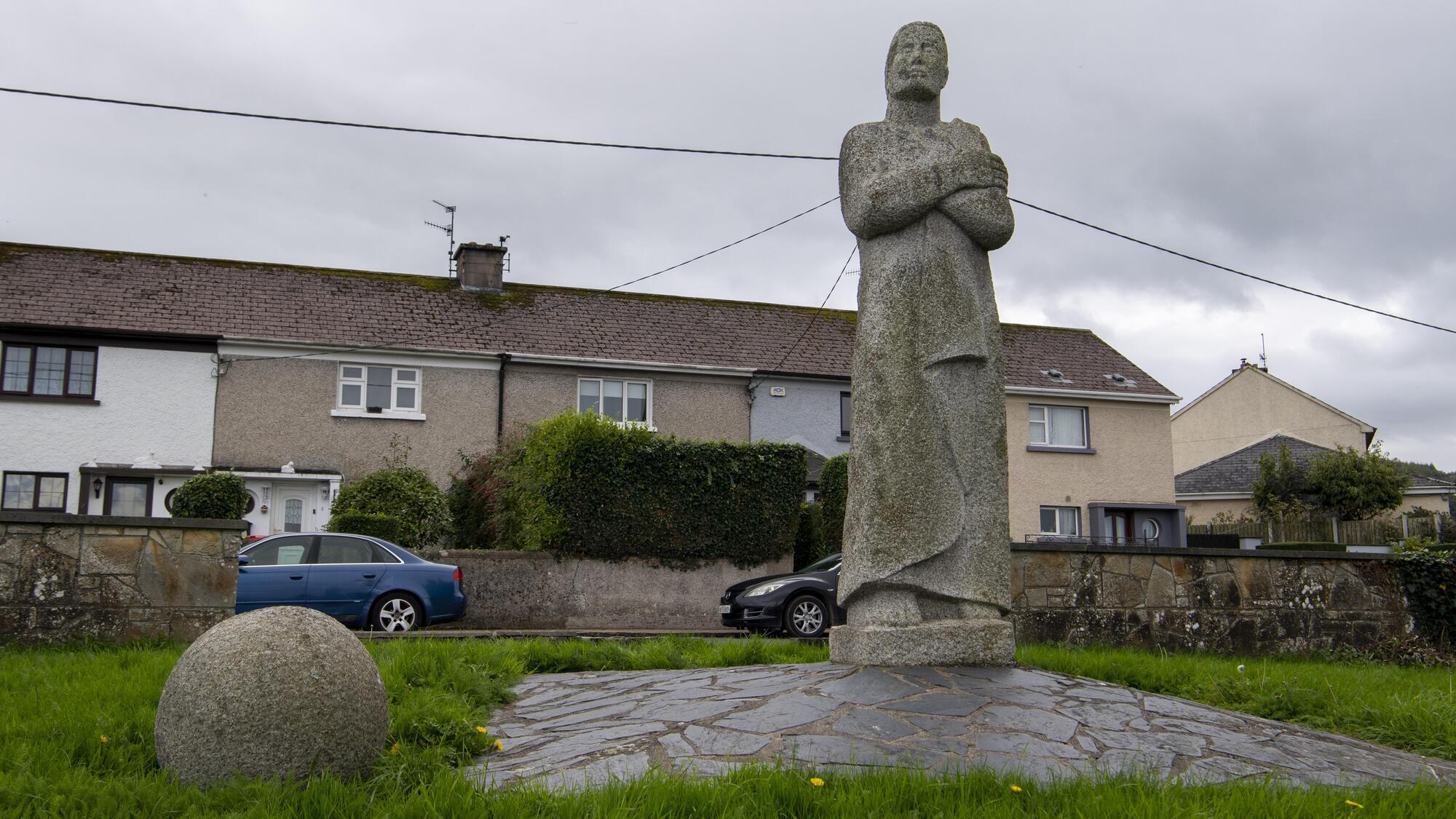
The Co Tipperary native fell out with the Catholic Church over his campaign for Irish to be made a compulsory subject for matriculation to the National University 
Munster in 30 Artworks, No 23: Cliodhna Cussen’s sculpture of Fr Michael O’Hickey, Carrickbeg 

The statue of Fr Michael O'Hickey in Carrickbeg, Co Tipperary. Picture: Dan Linehan

Fr Michael O’Hickey was an Irish language enthusiast whose clash with the Catholic hierarchy made him a notorious figure in the early 20th century. 

O’Hickey backed the campaign for Irish to be made a compulsory subject for matriculation to the National University, while the Church did not, fearing it would encourage students to enrol at TCD instead.


His speeches and vigorous letter-writing in support of compulsory Irish were viewed as being disrespectful to the bishops, who responded by dismissing him from his position as Professor of Irish at Maynooth in 1908.

It was a shocking development, and O’Hickey spent the next seven years in Rome, seeking reinstatement, but died in 1916 without the issue being resolved. 

He was largely forgotten until an RTÉ radio documentary more than 60 years after his death resurrected his story, prompting a campaign to have him commemorated with a statue in his native Carrickbeg, a village in Co Tipperary adjacent to Carrick-on-Suir.

“A large collection of Fr O’Hickey’s letters turned up in an attic in Carrickbeg in 1978,” explains Micheál Ó Briodáin, who lectures in English at the University of Helsinki in Finland. 

“My mother was his niece, and she lent them for use in the RTÉ documentary, which aired early the next year. 

"After that, people like the poet Michael Coady began talking about commemorating Fr Michael with a statue. My parents and others got involved and started a committee to raise money for the project.”

The committee chose Cliodhna Cussen, a noted sculptor and poet from Newcastle West, Co Limerick, for the commission. It was agreed that she would carve the work in granite.

 The plaque near the statue of Fr Michael O'Hickey in Carrickeg, marking the unveiling by Cardinal Tomás Ó Fiaich. Picture: Dan Linehan
The plaque near the statue of Fr Michael O'Hickey in Carrickeg, marking the unveiling by Cardinal Tomás Ó Fiaich. Picture: Dan Linehan

A large crowd attended the unveiling of Cussen’s sculpture in July 1988. The Portlaw Pipe Band and the Carrick Brass Band both performed, while the principal speaker was the Primate of All Ireland, and former president of Maynooth College, Cardinal Tomás Ó Fiaich.

“Cardinal Ó Fiaich didn’t mince his words,” says Ó Briodáin. 

“He apologised for the bishops’ treatment of Fr O’Hickey. There might have been some ecclesiasticals present who didn’t appreciate that, but anyway, in no uncertain terms, he said it was a disgrace.”

Ó Fiaich must have been aware that, technically speaking, the college statute Fr O’Hickey was alleged to have broken had not actually been promulgated. 

“The statute related to the freedom of speech, and what staff at the college could and could not say in public,” says Ó Briodáin.

“It had been promulgated in 1901, but was only valid for seven years. The 1907 statutes were never promulgated or given out to the professors, so Fr O’Hickey was dismissed on a charge that wasn’t legal, strictly speaking. 

"His appeal in Rome never came to the two sides meeting in court, but nowadays he’d almost certainly get off on that technicality.”

The bishops also alleged that Fr O’Hickey was fomenting anti-clericalism, and was supported by anti-clerics. 

“But there were very few anti-clerics in Ireland in those days, so that was crazy anyway. His own advocate in Rome wanted evidence of his good character, but his colleagues in Maynooth were afraid to give him references, unless the Vatican sent someone to query them in person.

“An English cardinal was appointed to do so, but the bishops in Dublin didn’t like an Englishman coming over, so Cardinal Logue was appointed instead. 

"Cardinal Logue was head of the Irish Church in Ireland, the same body that Fr O’Hickey was taking the case against, so that was very strange.”

Fr O’Hickey was also claimed to have sparked a campaign of insubordination among the student priests at Maynooth. 

“There was something in the air at the time, the student priests were testing to see how far they could go,” says Ó Briodáin. 

“But Dr Mannix, the president, blamed Fr Hickey, which was probably unfair as well.”

Fr O’Hickey did not expect his appeal in Rome to take so long. He had already been there three years when the campaign for compulsory Irish won the day in 2013. 

“It was the only case in which the laity defeated the bishops in those days,” says Ó Briodáin. It was unheard of. They were used to being important, and they were made to feel very small.”

 The statue of Fr Michael O'Hickey in Carrickbeg, Co Tipperary. Picture: Dan Linehan
The statue of Fr Michael O'Hickey in Carrickbeg, Co Tipperary. Picture: Dan Linehan

On the outbreak of World War I, Fr O’Hickey was stranded in Rome for a further two years, while his appeal dragged on. He returned to Ireland in 1916, with the expectation that he would be appointed to a new clerical post, but he died of an intestinal condition at his brother’s home in Portlaw that November. He was aged 56.

As is often the case with public sculptures, there was some discussion of how Cussen should represent Fr O’Hickey. 

“A decision was made that the statue did not have to be too lifelike, which gave the artist a lot of freedom,” says Ó Briodáin. 

“That was a good decision, but the statue is open to interpretation. Fr O’Hickey’s hands, for instance, are folded across his body, and it could be that he’s pleading, but he was more of a fighter than a pleader really.”

Cussen passed away earlier this year, so it is not possible to know what her intentions were, particularly in relation to the large granite ball at the statue’s feet. 

“My understanding is that Cliodhna found that lying around in a quarry in Wicklow. It wasn’t as if Fr Michael was kicking a football around or anything, but Jack Charlton was very active with the Irish soccer team around that time, so maybe it relates to that.

“The day after the unveiling, we went back to take some photographs, and my mother sat on the granite ball.”

Ó Briodáin is concerned that the statue may have become neglected over the past few years. 

“The Council have always maintained the site, and it could be that everything was stopped under Covid. But the hedge at the front has obscured the sculpture to an extent, and the sculpture itself could do with a good clean. I’m hoping that will happen soon.”

Further information:

More in this section

Scene & Heard

Newsletter

From music and film to books and visual art, explore the best of culture in Munster and beyond. Selected by our Arts Editor and delivered weekly.

Cookie Policy Privacy Policy Brand Safety FAQ Help Contact Us Terms and Conditions

© Examiner Echo Group Limited