Emilie Pine: Good Sex and the tricky path back to intimacy
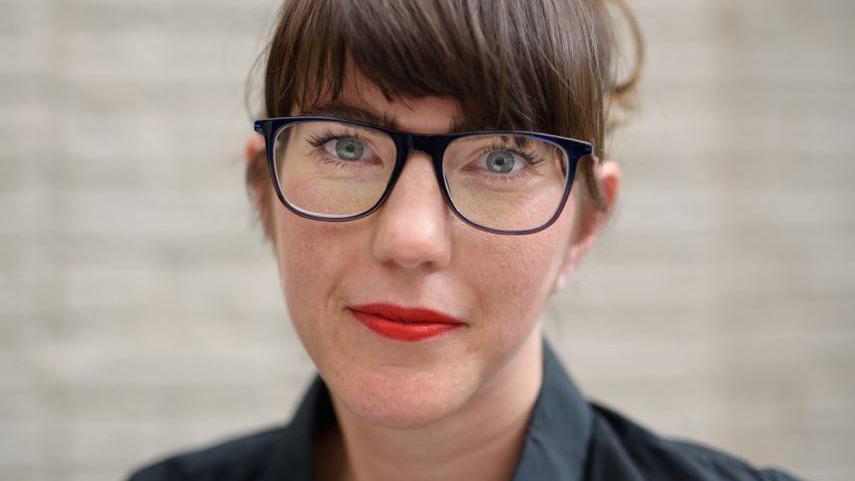
Emilie Pine, writer of Good Sex at Dublin Theatre Festival.
The pandemic played havoc with our lives in myriad ways, not least in its effect on intimacy and relationships. It’s a subject explored by writer Emilie Pine in the show Good Sex, showing at the Dublin Theatre Festival. It is described as a love story for a loveless age — looking at how we must learn to be with each other again after two years of being told that touching or contact is forbidden or dangerous.
Pine, author of the acclaimed essay collection Notes to Self, and director Ben Kidd, of Dead Centre theatre company, came up with the initial idea before the pandemic.
“He and I were talking about doing a play about a couple over the course of one night, and then the pandemic started," says Pine. "One of the things that emerged from that was this fear of touching each other, and being close to other people. That really got us thinking about what’s at stake when you go to touch somebody else, and what are all the emotions that go with physical contact."
Each night, the show features two new performers who have not rehearsed together or read the script, and who will be guided on stage by an intimacy director. Pine says they were influenced by the television adaptation of Sally Rooney’s Normal People, one of the first high-profile shows to use an intimacy director to help choreograph sex scenes.
“Normal People was in the news and there was a lot of concentration on intimacy work and making it safe for the actors to portray characters having sex. So we put these things together and started thinking about how in real life it would be nice to have an intimacy co-ordinator sometimes to come in and say, ‘the way that person touched you or the way you touched them wasn’t okay’.”
As a professor of modern drama at UCD, Pine is no stranger to the theatre, but this is the first time she has written a play.
“It has gone through a total transformation since I pressed 'Save' and sent it to Ben,” she says.
Notes to Self, Pine’s publishing debut, was a huge success, its deeply personal essays on subjects from addiction to infertility resonating with legions of readers. She is keen to emphasise, however, that Good Sex is not based on her own experience. In the way that the intimacy director implements boundaries, so Pine is putting them in place for herself.
“It is very important as somebody who has written a lot autobiographically to say that the play is in no way autobiographical. For me, that is the boundary that is important to instil,” she says.
“But during the pandemic, because the lockdowns went on for so long and there were all of these rules about households and not mixing and so on, I did feel incredibly empathetic for anyone who was in a new relationship, or who was between relationships.”
She believes that one positive to come out of this was that we started to consider the impact of loneliness on society. “Loneliness became the underlying pandemic in the pandemic. Interestingly, we started talking about loneliness in a way that we never did before the pandemic.
"Loneliness is this huge taboo. When you're feeling lonely, the last thing you feel able to say is ‘I feel lonely’, and I’m someone who feels lonely a lot. Certainly for me, a really strong presence in the script is that sense of aloneness.”
Pine followed up Notes to Self with a novel, Ruth & Pen. She says it was liberating to write fiction having delved so deep for Notes.
“It was an important way for me to move on from Notes to Self in lots of ways. But there are lots of things that I wrote about in Ruth and Pen that I wouldn’t have dared write about in Notes to Self, like Ruth going to the toilet."
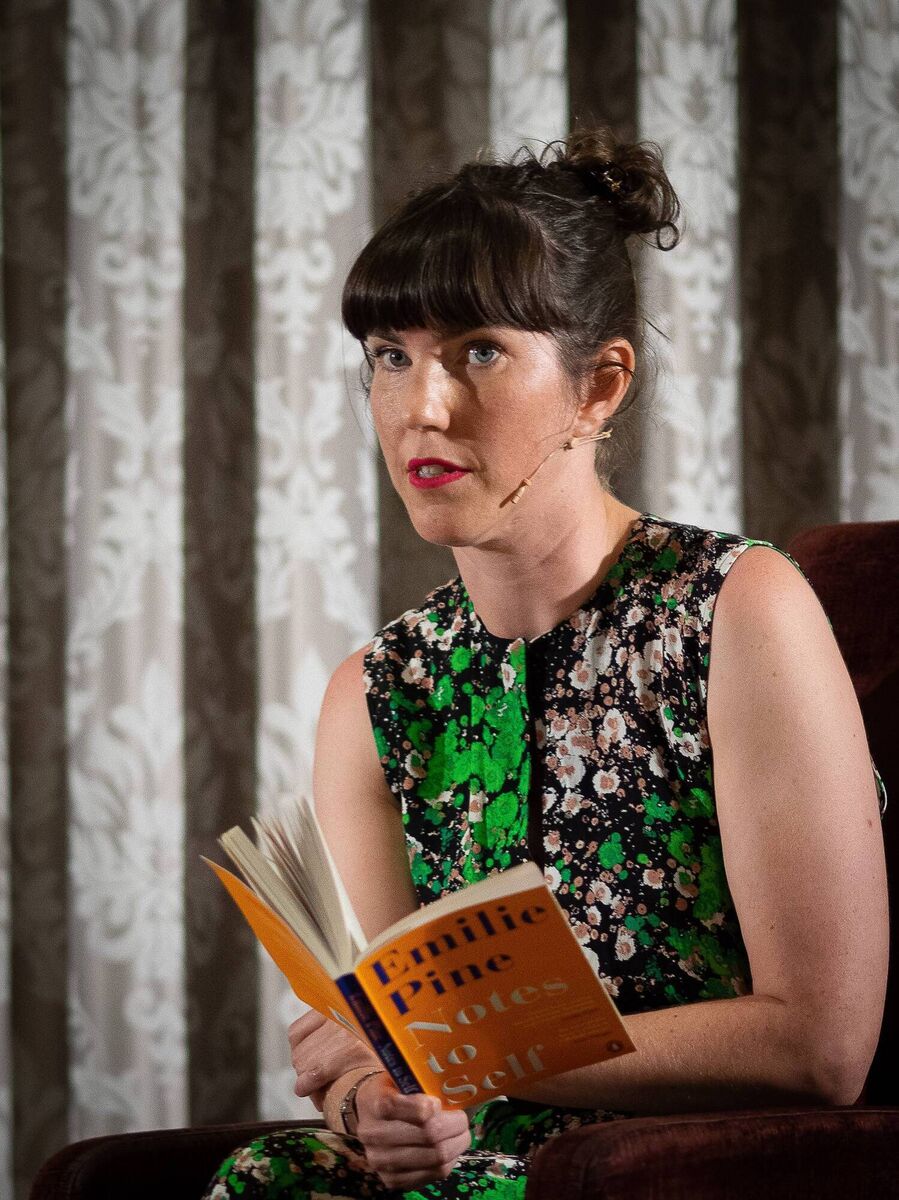
And the loneliness and bullying that Pen experienced as a teenager —those all feel very close to home and feel like things that we don’t see enough of in fiction or in writing in general. The same kind of thought process informs both books, it is about being open about the things that so often get silenced. And often the things that get silenced are women and women’s bodies.”
While Notes to Self is one of many impressive books by Irish women in the burgeoning field of memoir/auto-fiction, Pine says her own awakening in that regard came about when she read Nuala Ó Faoláin’s book, Are You Somebody?
“I just devoured that. I had never read anything like it, and I think that is very powerful. Because my life in no way looked like Nuala’s life and yet I read it thinking, ‘Oh, wow, someone is finally saying it’, and how extraordinary that was. To see emotional honesty on the page is really important to people.”
Pine has found being creatively involved in the process of theatre-making rewarding in terms of working with her students. “It’s funny, I have taught drama for 20 years, and I have been in rehearsal rooms plenty but I’ve never been in a rehearsal room where the show is still being devised. I feel like I’m now able to bring that back to when I’m having conversations with my students. A teacher brings knowledge to the room, but students bring a ton of knowledge as well.”
While Pine is delighted to be physically back in the theatre and in the lecture halls after the constraints of the pandemic, she says she does worry about its far-reaching impact on students, along with the cost-of-living crisis.
“It is so good to be ‘back in the room’ but it is also really difficult for students to actually get to the room. They don’t have places to live, they’re commuting really long distances and campus is really expensive. I’ve never seen attendance levels this low."
Pine worries that we’re moving towards a situation where it's back to the era of university education being only for people who can afford for it. "So there I am in the classroom, we’re doing all these plays, about social equality and justice, feminism and so on, and the students who probably really need to hear it aren’t able to get there.”
- Good Sex is at the Samuel Beckett Theatre, Trinity College, Dublin, from Sept 28 to Oct 2; post-show talk with Emilie Pine and members of the company on Sept 30; www.dublintheatrefestival.ie
A new adaptation of Colm Tóibín’s novel about a family joining forces with their loved one’s gay friends as they look after him in an era when Aids was still a terminal illness.
Kerry-based choreographer Michael Keegan Dolan has already thrilled with Loch na hEala and Mám. In this show, he presents a personal take on his own life, along with his partner Rachel Poirier.
Seán McGinley stars in a production of Tom Murphy’s classic family drama.
Eugene O’Brien returns to Co Offaly – his home county that gave us TV series Pure Mule and his hit play Eden – for a tale set around a local wedding.
Cork company Gare St Lazare Ireland are famed for their Beckett work, but here Judy Hegarty Lovett and Conor Lovett turn their attention to a work by American playwright Will Eno.