Mo Laethanta Saoire: 2020 was the year Ireland was discovered by the Irish
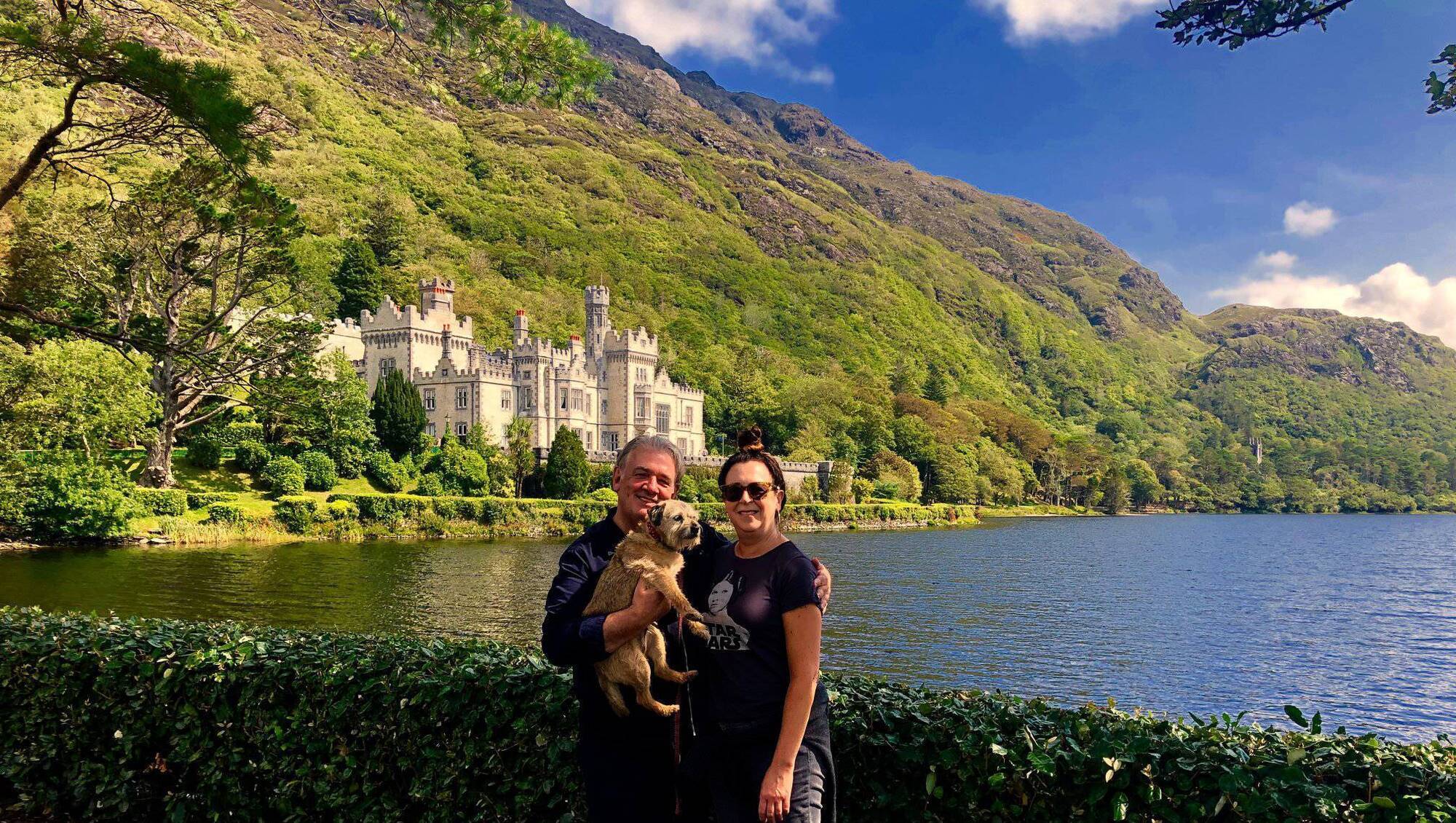
Cónal Creedon with Fiona O'Toole on a staycation in the west of Ireland.
Looking back on it, I guess she was of seafaring, Hiberno-Norse extract, if not a daughter of Queen Maebh herself. Out she stepped, hands perched comfortably on her hips. And with a flick of her head, she sent tresses of copper coloured curls, cascading down over squared shoulders.
But I digress … Come with me to 2020; the summer of our discontent. It was a time when pestilence stalked the land and the world as we knew it stopped spinning.
St. Patrick’s Day had been cancelled. It was decided that we should flatten the curve rather than cull the herd, so we came together by staying apart. And though counter-intuitive to our natural disposition, as a nation we embraced the notion of socially distant isolation.
Officially we were in lockdown. The fundamental expression of our Irishness, that instinctive impulse to gather in groups and raise a glass in honour of a birth, death or marriage was outlawed. This pandemic had succeeded where the Statutes of Kilkenny, the Penal Laws and eight hundred years of colonial oppression had failed — Irish Culture had been derailed.
Inter-county travel was strictly forbidden, as isolated rural communities feared a deluge of city folk would open the flood-gated to a tsunami of infection. With all international flights grounded, the sky was cleared of contrails, and overnight, fortress Ireland became an island once again.
No sun-kissed selfies on social media. No photos from the playas or the praias. No cocktails on the Costas. No sand, sea or sangria. And for the first time, the word ‘staycation’ entered the lexicon and we became resigned with the fact that 2020 would be a back-yard summer.
Then on June 19, a glimmer of hope. It was decreed that travel restrictions across the island of Ireland would be lifted.

It was as if John Hinde himself had been resurrected from the grave, picture postcard photographs began popping up online; snapshots of tourist traps with all the sham-roguery were back in vogue. Jaunting cars and shillelagh sticks — the Irish became more Irish than the Irish themselves.
For the first time in living memory, the inhabitants of this island reclaimed sovereignty of ground we had long conceded to cash-paying visitors. From Beara to Ballycastle, Summer 2020 will forever be remembered as the year Ireland was discovered by the Irish.
And just like every other family in the country, me and my partner Fiona O’Toole, checked the oil and water, filled the tank, put the dog in the back seat and set out on a road trip.
We were heading for the island of Inishturk off the coast of Mayo — the ancestral home place of the O’Toole Clan. It was from this isle over a hundred years ago, that past generations of Fiona’s family had departed for the mainland.
Being tourists in our own land was a revelation, and with our sights set firmly on our destination we were content to meander and let the journey be our reward. We spent that first night on the Beara Peninsula. Watching the sun go down on Dursey Sound; feasting alfresco on fresh monk-fish tails and brown bread from Murphy’s mobile food kitchen; the finest dining in the land.
The next evening we had moved to County Kerry where we pitched our tent in the shelter of the iron age Staigue Fort near Sneem. Bright and early the following morning we boarded a ferry at Tarbert and crossed the River Shannon into County Clare.
Every twist of the road along the western seaboard reveals the most glorious vista that nature can provide; untouched by human hand, from the endless white sand at Kilkee, to the sheer cliffs of Moher. On we went through the Banner, past the colourful hamlets of Kilfenora, Lisdoonvarna and Doolin — to the stunning exposed flora and fauna of the Burren.
In County Galway we paused for a wander around the City of the Tribes, before heading north to Connemara, stopping off along the way at Patrick Pearse’s Cottage in Rosmuc, followed by a quick detour into the romantic heartland of Quiet Man country eternally associated with Cong and Maam Cross.
That night we bedded down in Leenane on the shores of majestic Killary Fjord. The following morning we crossed into County Mayo, and with time on our hands, we took the scenic route through Doolough Valley to Louisburg. At Roonagh pier we boarded the Naomh Ciarán and set a course for Inishturk, happy to share the deck with a herd of sheep.
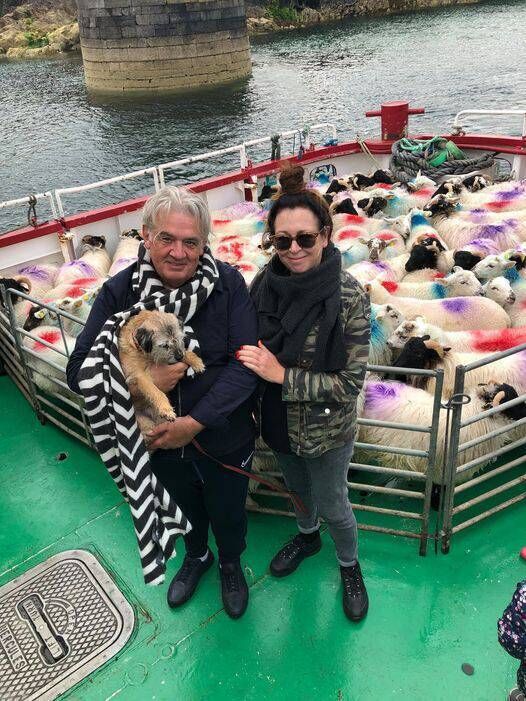
In truth, I was a little apprehensive that Fiona’s expectations regarding encountering past generations might not be matched by reality. But my concerns were unfounded.
Inishturk has been O’Toole’s stronghold since the 12th Century and knowledge of family lines is second nature and instinctive. A simple inquiry on the quayside and a direct line was identified. We set off on foot to Packie O’Toole’s farmhouse on the far side of the island. And after a separation of more than a century that spanned four generations, Fiona received such a gorgeous warm welcome from direct descendants of her kinfolk — the clan O’Toole.
It was such a joy to hear vivid memories of her grandfather, Peter O’Toole — a man she had never known. Fiona was home among her own. With pandemic restrictions and social distance etiquette still in place, we bid farewell to her newfound cousins, vowing to return when Covid-tide was past.
Summer 2020 presents a fascinating case study on what it means to be Irish. A social experiment of national proportion, with all gatherings restricted to six socially distanced individuals, and the magic food to drink ratio rigidly and legally enforced [ninety-minutes of alcohol consumption: for every nine euro meal consumed].
So despite the national stereotype of drink-fuelled maudlin sing-songs and bawdy brawling, 2020 will go down in history as a summer of sobriety, with an abiding sense that the whole nation was tucked up in bed each night by 9.30pm.
I remember sitting on a bench, sipping coffee from a paper cup watching the sunset on Kinvara. I wondered if we had lost a fundamental aspect of our culture to Covid? Had regulations culled our natural ability to mingle, had that elusive entity we call craic slipped between the cracks and fallen between the two stools of health and safety?
And that’s when it happened … I would guess she was of seafaring, Hiberno-Norse extract, if not a daughter of Queen Maebh herself. Up she stepped at the far side of the square. And with a flick of her head, she sent tresses of copper coloured curls, cascading down over squared shoulders. And she began to sing: “If you’re Irish come into the paaaaa-rrlour”
And just like that, we Irish did what we Irish do best. In the face of adversity, we instinctively pulled together and entertained each other. An epic sing-song took hold in the square. And in the absence of competitive GAA, it soon developed into an inter-county sing-off featuring: The Fields of Athenry, The Rocky Road to Dublin, Limerick You’re a Lady and I gave my best rendition of The Banks.
The most spectacular performance came from a young Chinese couple who sang a duet of Ni Wen Wo Ai — you could hear a pin drop. And The rousing chorus of the night was reserved for a Lithuanian woman and her family who sang a show-stopping rendition of Oi Šermukšnio.
There was magic on the waterfront that night. And later, we all slept sober and sound, confident in the knowledge that for thousands of years the varied and diverse peoples of this island had faced adversity: famine, war and poverty. This pandemic was but another milestone in our history.
There was a sense that it might be a long battle, but to paraphrase Terence McSwiney himself — when all is said and done we would endure and we would be victorious.
- Cónal Creedon is an author from Cork city. His collection of short fiction, Pancho And Lefty Ride Again, is currently the One City One Book 2022