Culture That Made Me: Mario Rosenstock picks Frank Hall, Monty Python, Michael Moore...

Mario Rosenstock is currently on a nationwide tour, including five nights at Cork Opera House.
Mario Rosenstock, 51, grew up on his grandparents’ farm in Co Waterford. He went to boarding school at Ashton School, Cork city. As an actor in the 1990s, he appeared in Glenroe. In 1999, he began doing the Gift Grub comic sketches on Today FM. He will perform his Very Best of Gift Grub Live! nationwide tour the Cork Opera House, April 12-16. See: www.corkoperahouse.ie.
My earliest memory of watching something funny on television is probably Hall’s Pictorial Weekly. Frank Hall and Frank Kelly and men dressing up as women. I found that interesting. It definitely informed my lack of fear of dressing up as woman or as Miriam O'Callaghan. If they did it, I could do it. Also I loved this door: Frank Hall would be talking to camera and then somehow there would be a door to his left and through this door there was, say, a Ballymagash local party meeting. I loved the idea that there was magic and madness happening through this door.
Growing up, I was influenced by sketches and funny voices from programmes like The Muppet Show and Sesame Street. The idea, for example, of Kermit doing Muppet news flashes: “I'm live from Jack Be Nimble and Jack Be Quick. What're you gonna do Jack?” “I'm gonna jump over the Candlestick.” “Really?” “OK here we go. Jack is going to be nimble…” They fed my first understanding of what a comic sketch was. There was an adult sensibility there as well – in Sesame Street, they did sketches for children, but they alluded to adult characters that American adults would know. Also the sketches were two minutes in length which fed my sensibility that a sketch had to be two or three minutes to capture people’s attention.
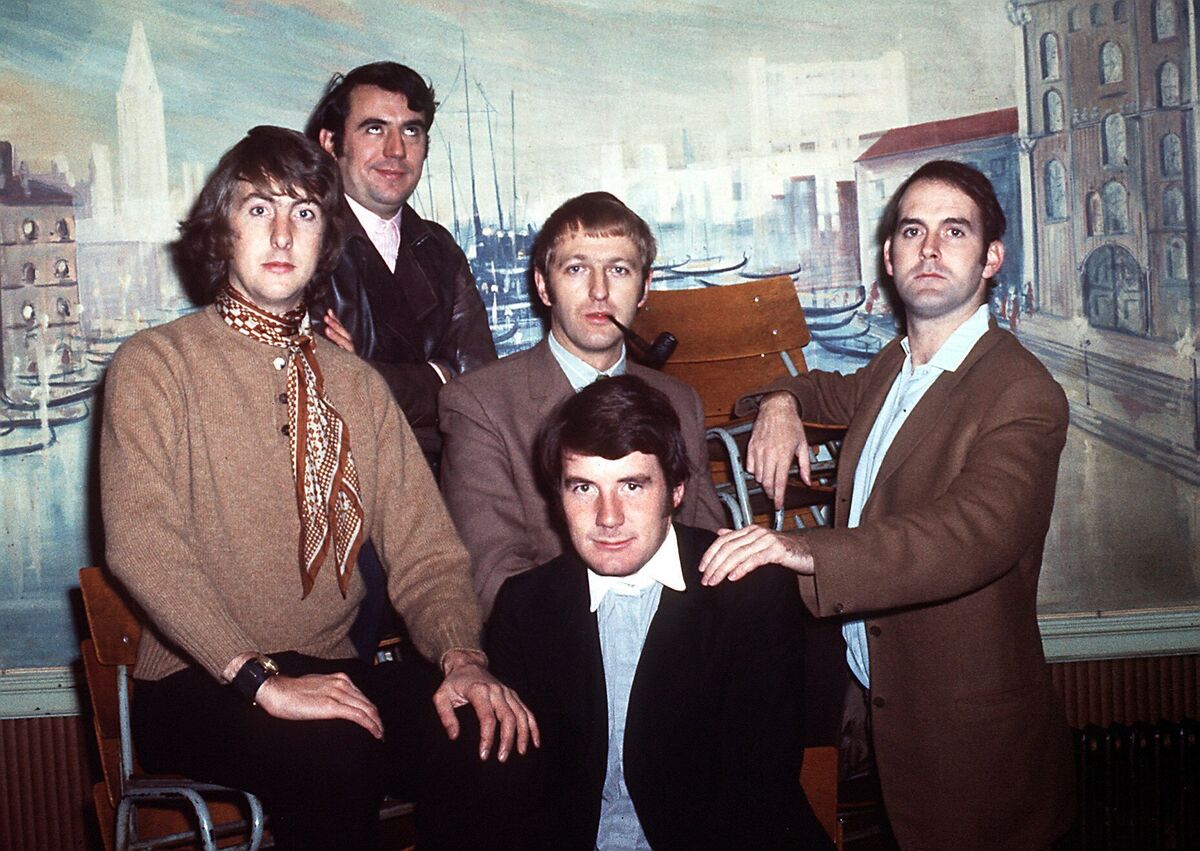
I was influenced – to a lesser extent – at 13 or 14 by Monty Python. I was aware from a comic perspective that it was funny, enough to make me laugh, but I didn’t fully grasp their entire humorous allusions. I've always been interested in the absurd. I always thought Gift Grub works best when you take something straight-ish, but you make it slightly absurd.
Monty Python opened doors. Everybody needs to make mistakes. Their genius was getting it wrong so often. If you watch the Monty Python TV series, the sketches are mainly missed and only half-hits. But when they hit, it opened vast new doors for everybody else. People went: “I never knew you could do it that way.” They brought philosophy into comedy: where are we? What are we doing? Is this happening? They freely exhibited their educated brains without fear of being regarded as elitist. There's nothing wrong with being smart. In fact, clever is just the polar opposite of being stupid, and really stupid is funny as well.
The best actor I've seen play a version of himself is Clint Eastwood. The idea of taking who you are, and applying what you are, to everything. “So the new movie is gonna be about ‘this’, but it's gonna be Clint. He's gonna have those steely eyes. He’s going to sound the same and look the same,” but you believe in him. Like John Wayne, who used to be the same in every movie. John Ford was asked once: “what's so good about John Wayne?” He said: “Nobody plays John Wayne better than John Wayne.”
I've always loved Michael Moore. I love his podcast Rumble. He's passionate about fixing the world and America. He's a protester and activist. Especially during Trump’s presidency, he’d start an episode like: “My friends, this is an emergency podcast. I did not want to make this podcast, but my friends we have got to act now. I didn't think I would ever hear myself saying this, but Trump is the devil. We've gotta stop him. My friends ring this number now: 2020494. That's your local senator. Tell him you are going to march.” You’re listening, thinking: this guy is on the ramparts as America is on fire. He’s melodramatic, but intelligent and caring. He's a bleeding left liberal and there's a hippie and a social justice warrior in me as well.

I love Eamon Dunphy's podcast The Stand. I’ve always enjoyed Dunphy as a pundit. I enjoy Dunphy trying to figure things out, listening to people. I enjoy his U-turns and how he changes his mind. Dunphy has helped to teach us is it's OK to change your mind. People go, “Ah, Dunphy. Did ya hear him? One minute he’s saying this, the next minute he’s sayin’ that.” Yes, that's because he's changed his mind, you idiot. Do you ever change your mind? Do you believe in the same thing you believed in when you were 14, you eejit? Intelligent people change their minds.
A book I'm rereading is Revolution in the Head by Ian MacDonald. It chronicles every single Beatles song. It describes what's happening in the world at the moment that song is written; what every one of the Beatles are going through when that song is written; how the song was written; where it was written; who wrote it; who played on the song, including every session musician. You can almost feel you’re going back in time when they were putting together these amazing songs.
Fintan O’Toole’s We Don’t Know Ourselves is a wonderful book. I know some people like to slag him off, but he’s one of the most important voices in Irish journalism that we've had for many years. He's at his peak now. He has a fertile mind which manages to bring different strands of learning together and tie them up and make them fit. He makes his ideas accessible. I often use his columns and flip them into sketches. A lot of comic sketches come from a kernel of essential truth. He will write about an essential truth and then I go, “Well, if you turn that upside down it's actually gonna be funny.”
I remember there was something Fintan O’Toole wrote, for example, about cancel culture – that it was gladiatorial. I came up with a sketch called “Cancellation Coliseum”, which was a Roman coliseum set in the modern-day world in which poor individuals are plucked and brought into the middle of the coliseum and the public could cancel them by putting their thumbs down: “This woman was found not wearing her mask properly in Lidl! What shall we do with her?” And she was thrown to the lions.