Cork in 50 Artworks, No 45: Mural of Terence MacSwiney on Liberty St
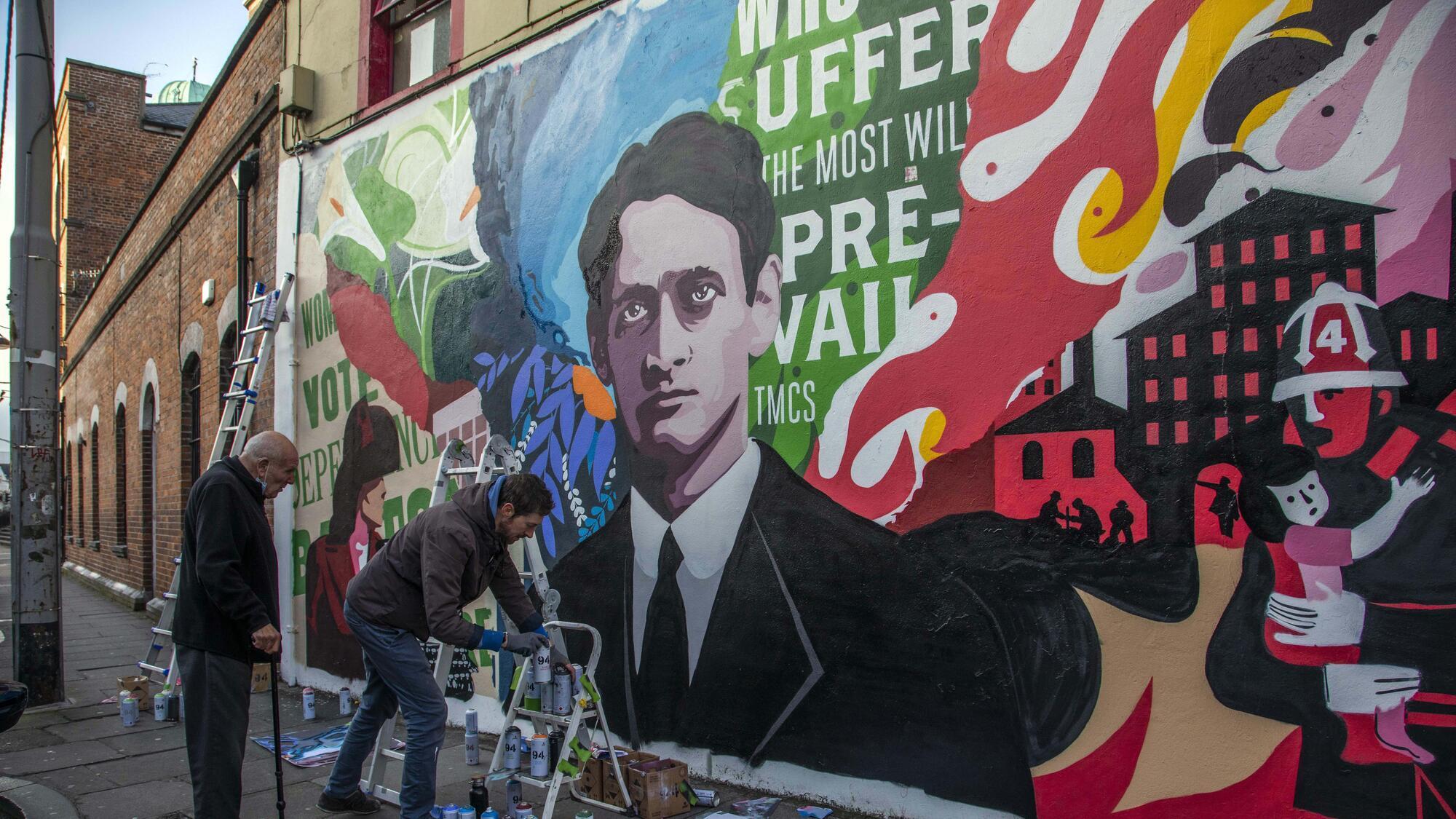
A man stops to look at artist Garreth Joyce at work on his Terence MacSwiney mural titled 'Those who suffer the most will prevail'.Picture: Clare Keogh
Terence MacSwiney’s death was one of the most significant events of the War of Independence. MacSwiney was a poet, playwright and republican activist, and he had recently been elected Lord Mayor of Cork when he was jailed on charges of sedition in August 1920. He joined the hunger strike initiated by republican prisoners at Cork County Gaol, and continued when he was transferred to Brixton Prison. His passing, after 74 days refusing food, caused an international outcry, and his funeral on October 31 was attended by thousands.
In 2020, MacSwiney became the subject of a mural on Liberty St, Cork, completed by local artist Garreth Joyce as part of the Ardú street art project. That scheme, supported by Cork City Council and Creative Ireland, now comprises 11 murals around the city centre.
“Ardú was started by the artist Shane O’Driscoll, and I would have worked with him before,” says Joyce. “The first year they were doing the murals, Shane got in touch. We talked about doing a work that would acknowledge the Burning of Cork, and then we got on to the subject of MacSwiney and his hunger strike.
“MacSwiney would have been talked about at home when I was growing up, but I didn’t really know that much about him, to be honest. It was only when I started researching his story that I realised what a great, all-rounder dude he was. I was surprised he’d been there so far ahead of Gandhi, using the hunger strike as a means of protest, I mean.”
In the end, Joyce agreed to paint a portrait of MacSwiney, with Cork aflame in the background. The mural would therefore commemorate both MacSwiney and the events of December 1920, just weeks after his death, when British troops ran amok in the city centre, burning down business premises and homes.
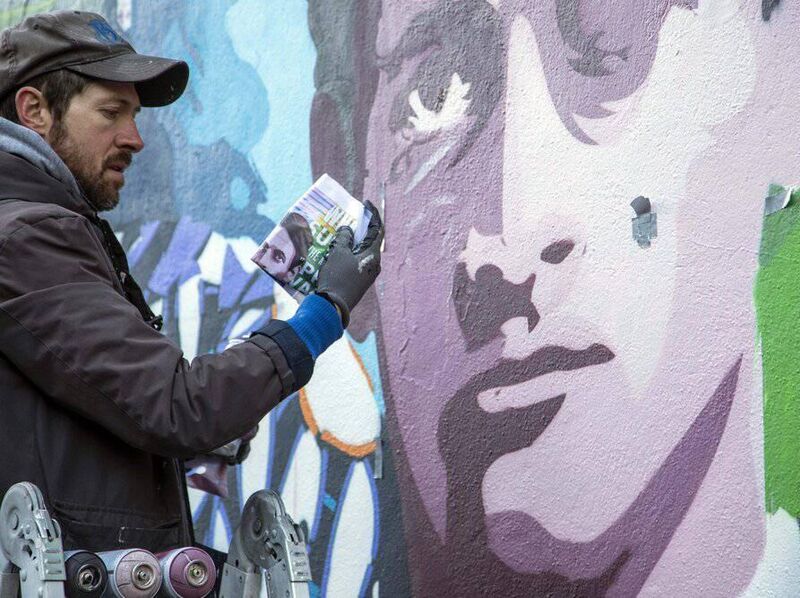
Joyce chose to depict MacSwiney in the fullness of his health. “I found a great photo of him online. There’s a number of photos out there on the internet, but that’s the one I liked the most. It’s very clear in its detail.”
The mural contains snippets of MacSwiney’s famous - and newly relevant - quote, “It is not those who can inflict the most, but those who can suffer the most who will conquer.”
Joyce designs his murals in Photoshop on his computer. “I might not have much of a plan to begin with. I’ll pull in images, and start shaping them. Then I’ll move on to the next section. I’ll have different versions on the go, and I’ll keep reworking them until I settle on the final design. As a process, it’s very rewarding.”
Mural artists use different techniques when it comes to transferring their design onto the wall. “What I do myself is, I print the design out on A1 sheets, and stick it all together. Then I’ll cut the image into a big sheet of cardboard, to use as a stencil. It’s a lot of work, but I find it’s the best way of ensuring the design is very accurate, and sharp. Some artists use brushes when they’re painting, and I’d like to do more of that, but to date I’ve mostly just used cans of spray paint. There’s a great range of colours, and they’re easy to work with.”
Joyce’s background is in graphic design. “I studied at Limerick School of Art and Design. I worked at that for a while, but I found I was very slow, and I was dissatisfied with the work I was asked to do. I preferred doing my own stuff. I volunteered to work on a mural a few years ago, and it took off from there.”
His work has since taken him all over the country. “The only time I’ve worked abroad was at an old cinema in London. I have great memories of that. But otherwise I’ve been all over Ireland. As long as the work is coming in, I’ll keep doing it. At the moment, I’m working on a mural project in Clonakilty. It’s based on Austin Clarke’s poem The Lost Heifer, which is like a symbol for Ireland. I have other projects lined up in Kilkenny and Listowel, and I’m doing a workshop for a college in Dublin, helping the students design two murals we’ll be painting on the college grounds."
“I’ve done some film-making as well, and there’s a lot more I’d like to explore with that, different themes and ideas. Watch this space.”








