In advance of her Irish gig, Laurie Anderson on Lou Reed, Putin and O Superman
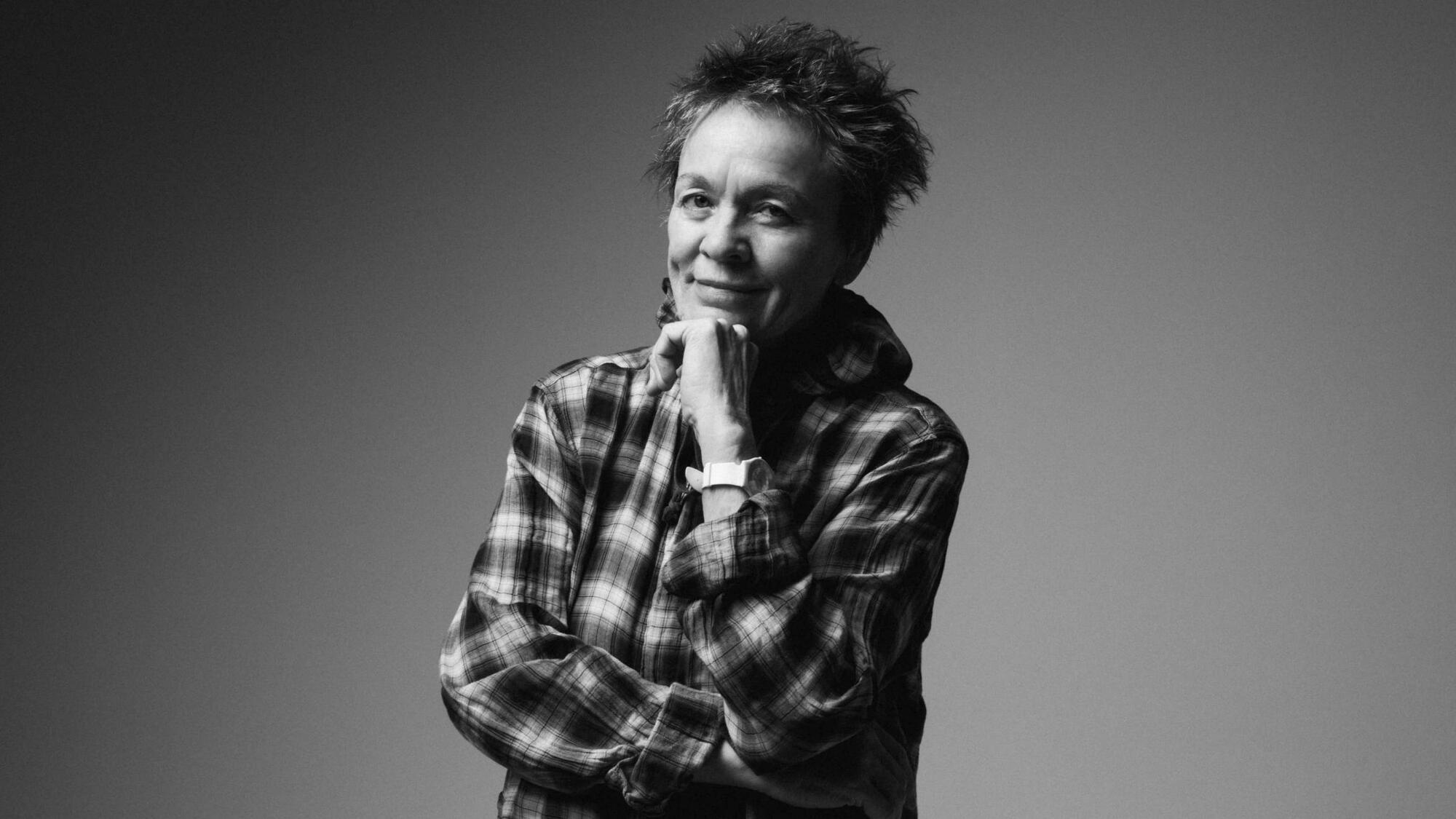
Laurie Anderson plays the National Concert Hall in Dublin in April. Picture: Ebru Yildiz
Laurie Anderson’s speaking voice has the soothing quality of a long walk or a contemplative evening by a crackling fire. And so it is disconcerting, to put it mildly, to hear this icon of the performing arts suddenly emit of sputter of surprise.
“Oh my gosh. Oh, dear. I just saw a little alert here on my phone, unfortunately. It says Putin is putting his nuclear systems on high alert,” says Anderson from her loft apartment on Canal Street in Manhattan. “I feel he’s quite nuts. He does have the ability to do that [use nuclear weapons].”
That the world is becoming a stranger, scarier place day by day is hardly a radical statement. But no artist is arguably better able to help us negotiate these uncanny times than Anderson. She’s a poet of the strange and uncanny. Someone who has, across her decades in the visual arts and music, explored the dystopian aspects of modern life whilst always emphasising the human need for connection and empathy.
Anderson, performing at Dublin’s National Concert Hall on Tuesday, April 26, certainly has never been slow to point out the evils of militarism and warfare. That goes all the way back to 1981, and her UK top five hit, O Superman: a stream-of-consciousness critique of America’s empire-building around the world.
“When love is gone, there’s always justice/and when justice is gone there’s always force,” she intoned through a distorted vocoder, so that she sounded like a Dalek having a breakdown. “So hold me, Mom, in your long arms/your petrochemical arms/your military arms.”
Forty years on, the flags and the faces have changed. Yet, as we watch the news, O Superman’s imagery of “petrochemical arms” and “military arms” feels as horribly relevant as when Anderson wrote the song at her studio overlooking the Hudson River.
“It’s a lot about power and justice,” she says. “And that plays out in many different ways. And it’s playing out in a way now that's quite… I would used the word, terrifying.”
It’s Sunday in New York and unseasonably cold. Anderson tends to follow the same routine regardless of day – a lesson from her upbringing in Chicago as one of eight children. Weekdays were chaotic and so were weekends. In the years since she has learned the value of treating every new morning as if it were the same blank slate. Another opportunity to learn and to create.
“From the time I was a kid I liked to do stuff like go downtown to Chicago and play the violin in the symphony. It's like a vacation at the weekends for me. But it’s still work, I guess, because I’m doing the same thing I was doing since I was a kid. Just doing art projects. But today is a weird one. It’s freezing cold.”
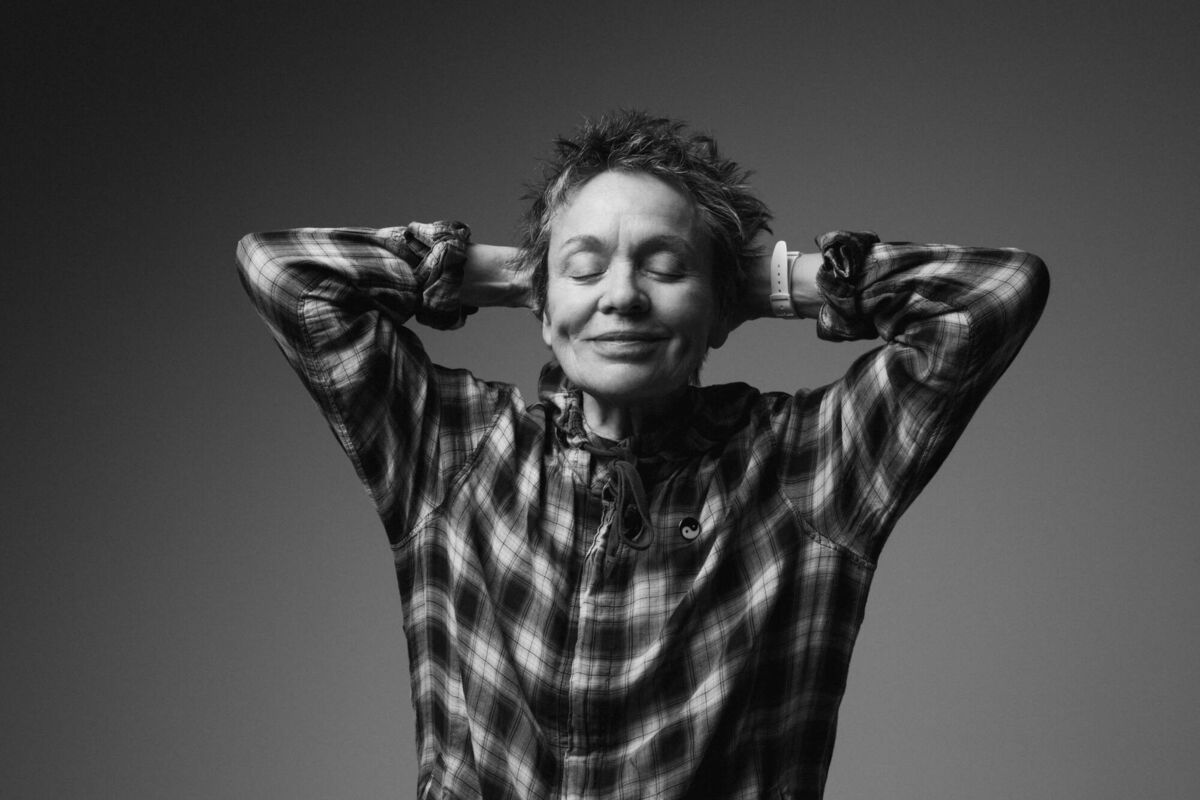
Anderson was born in the middle-class Chicago suburbs in 1947 into a Swedish-Irish family. She went to New York for college, graduating from Columbia with a masters in sculpture before launching herself upon the downtown art scene.
Her work from the outset walked the line between visual art and performance. Or, indeed, skated it as she did with her 1970s piece Duets On Ice, in which she played violin while wearing ice-skates set in a frozen block. The house lights went up only when the blocks melted.
In 1992 she met Lou Reed at a music festival. They would be together until his death in 2013 from liver cancer (having married in 2008). Reed had acquired a reputation for not suffering fools – or, indeed, not suffering anyone at all. Yet, he seems to have gone weak at the knees for Anderson and never quite recovered his composure.
She spoke a lot about Reed in the original version of her spoken word show, The Art of Falling, which she brings to the NCH in April and which she describes as “a masterful mix of stories about falling in love, falling asleep and falling in line”.
In that pre-Covid incarnation, she connected her time with Reed to the experience of finding spiritual peace through Tai-Chi, a non-violent martial art which she and her husband would practice together.
“That’s what I doing before the pandemic. I don't know what I'll do now. I don’t know what to do with titles. So I’m just calling everything the same thing and hoping for the best. It’s all kind of one work in progress in a way. It might have something to do with that [Reed]. Probably not. We’ll see. I’m really nervous about it. I feel like I would like to make something that is really challenging. I’m not sure how to do that yet. We’ll see. Wish me luck.”
Anderson hadn’t known Reed during his days with the Velvet Underground. Nonetheless, it is clear she was less than smitten by Todd Haynes’s recent Apple TV documentary about Reed and the band, which adopted an experimental style to tell the story of an experimental group.
“I think it’s best to ask somebody who is interested in cinema. It was about cinema, so…. It made some interesting points about cinema. There are so many characters from around that era. And a lot of people now are [telling those stories]. There’s a new Netflix series about Warhol [The Andy Warhol Diaries]. I’m really curious. People keep putting that era through the grinder. It’s difficult to get the electricity, the punch of that. It’s always good to take a crack at things.”
Anderson at 74 is still vivacious and keen to try new things. Still, not every new experience is a learning opportunity. Sometimes it’s just something to be suffered through, as we discovered during the pandemic.
“It was very, very lonely. And other times it felt that the electronic connection could be very intimate. So there was a lot of different things. I'm sure everybody would agree with me on that. It was like you got to experience solitude also in a way that I haven't been able to. For me, that was really great."
The downside was alas devastating, she continues.
“Several of my friends died, and one very good friend. We all have different stories. It was a break from that crazy merry-go-round. I was no longer interested in playing that game. Touring a lot. Doing stuff all the time. What is this for? Going so crazy all the time. It was great to stop. I’m trying to remember how to do things in a more relaxed way.”
- Laurie Anderson performs The Art of Falling at the National Concert Hall, Dublin on April 26