At seventy: Janis Ian on coming out, Bill Cosby, and her swan-song album
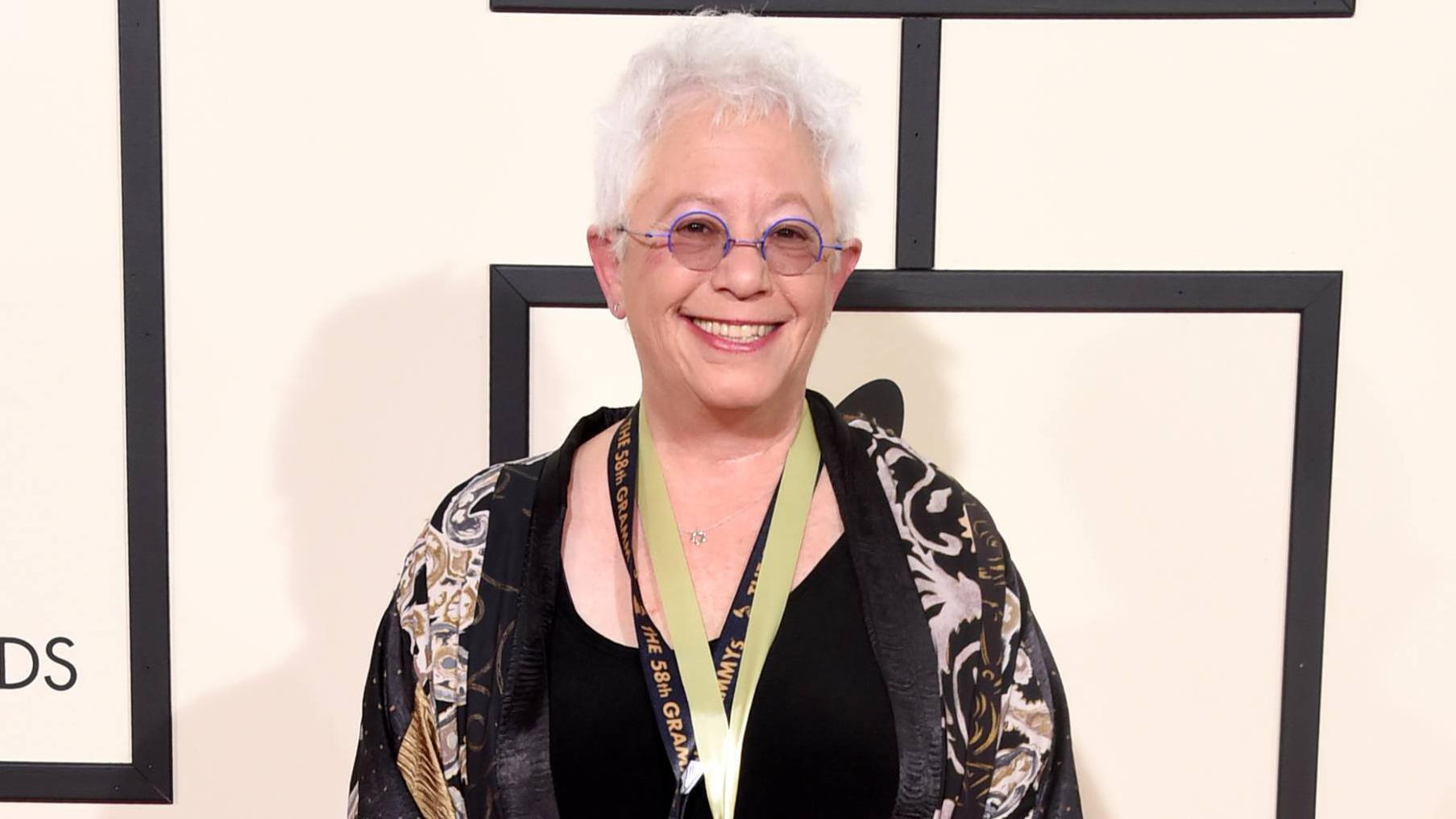
Janis Ian attends releases her new album, The Light at the End of the Line.
In 1966, when she was 16-years-old, a powerful man attempted to destroy Janis Ian’s career. “Bill Cosby tried to ban me from network television because he thought I was having an affair with my tour manager,” the singer recalls. Cosby had seen Ian asleep on her colleague's lap, and jumped to all sorts of conclusions.
“I was 16 and she was 21. I was dressed down by my manager for exposing myself to potential problems. I wasn’t aware. I wasn’t even sexual at that point. Men like that – the ripples they create go on and on and just ruin people’s lives.”
Even as a teenager Ian was not for turning. Twelve months previously she’d had her first hit with Society’s Child, a celebration of interracial romance that drew on Ian’s experience growing up in a largely African-American neighbourhood in New Jersey.
“The producer said that if I literally changed one line [removing the word 'black' from the second line] he could guarantee me a hit record. But he said it was entirely up to me. I am grateful that I got to write the song. It gave voice to what a lot of people were living through day to day. I managed to say things people were uncomfortable saying.”
Ian would clock up second enduring smash with At Seventeen, a US number one in 1975. That song critiqued the music industry’s obsession with beauty and its commodification of youth and ambition. Now, at age 70, Ian is preparing to release what she describes as her swan-song record. Yet while The Light at the End of the Line is, as one would expect, wistful and melancholic in places, it also confirms she has no intention of going quietly into the night.
This fact is boldly announced by the single Resist – a visceral rallying cry and a warning that toxic masculinity is a long way from being defeated. “Tell me that my body bears a permanent stain,” she sings. “Tell me we can marry if I give up my name”.
“Unfortunately we’re having trouble getting it played here in the US,” says Ian from the Florida home she shares with her wife of 20 years, Patricia Snyder. “I said to someone the other day, you really do not want to go out the way are in [with Society’s Child, which was likewise blacklisted by American radio]. I don’t want to keep doing that with my career.”
With the subject of violence against women in the news again for tragic reasons, the song is a reminder society hasn’t necessarily progressed all that far since the 1960s. That isn’t to say Ian doesn’t have hope. “The difference now is that more and more men realise the problem. I was singing it at Cambridge Folk Festival just before coming home for the lockdown and was heartened at how many young men and older men joined the women in singing the phrase 'Resist!' and were fist-pumping. We can’t just do it with some people. It’s got to be all of us."
She wrote Resist after coming to conclude that she had been erased from rock history. “I got tired of people saying, ‘why aren’t you on any of the guitar magazine covers?’ I started thinking about it. And I thought, ‘wait a minute I’m a pretty good guitarist noways. Why is it so much harder?’ Why do I have to keep explaining that yes I do play my own instrument? Why do I have to keep justifying that to people?”
Ian grew up in East Orange New Jersey, just outside Newark and 35 minutes from Manhattan. Her father was a music teenager, her mother a college fundraiser. In the mid 1960s, she launched herself on the Greenwich Village folk scene, rubbing shoulders with artists such as Bob Dylan. Later, she joined Carole King and Joni Mitchell in the vanguard of a new generation of songwriters putting the female experience front and centre of their music.
There was sexism she says – but little awareness of how differently women were treated. People accepted it without complaint.
“We hadn’t had our consciousness raised yet,” she says. “We didn’t even understand as women. It never occurred to me, for instance, that even though we were in the same company [Sony], Springsteen and Billy Joel would be treated differently. It is only in retrospect I realise how differently I was treated because I was a woman.
“I’m not whining about it, I want to be clear about that. It’s only in retrospect that we really began to understand. Without education men couldn’t understand the problem and women couldn’t see the problem. And so that encapsulated the 1960s. We weren’t educated, we didn’t know. When my mom got divorced she couldn’t get her own credit card without my dad co-signing. We just accepted that. It’s your culture.”
Ian came out in 1993, when exiting the closet was still regarded as a fraught endeavour for artists. Times have happily changed today – though perhaps not as much as we might like to imagine. “There’s still country music,” she says. “There’s still gospel. I can’t think of a single gospel singer who has come out. And there are gay people all over gospel.”
Traversing Greenwich Village through the 1960s she was aware of just how indebted folk music was to traditional music from Ireland and elsewhere.
“You can’t get away from it. For such a small country, Ireland has had the most profound effect on the arts, particularly the musical and the written arts. My wife lived in Ireland when she was a young woman and part of our plan before Covid had been to go to Ireland and revisit the places she’d visited in her youth.”
At Seventeen remains her biggest hit. But she never came to resent the song, as artists sometimes do when a track ends up defining them. “I feel incredibly lucky,” she says. “I was very lucky to have the power of Sony behind me at that time. And it’s a great song too. It’s great to have a hit that you’re proud of. And that’s a piece of luck. Most artists don’t have it.”
The Light at the End of the Line is released Friday January 21