Book review: Stone, Bone and Belonging places Irish portal tombs into context
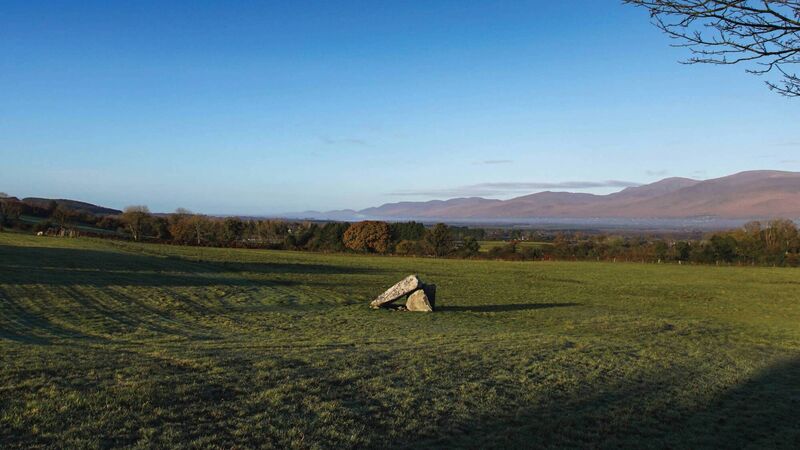
Killaclohane portal tomb is a 6,000-year-old burial site.
THE quote from the American war chief Crazy Horse graces a new book on the oldest monument in Co Kerry, opening the story of archaeology in the much endowed county: ‘My land is where my dead lie buried.'
Cloch, Cnámh agus Ceangal: Stone, Bone and Belonging tells in detail the story of the early neolithic portal tombs at Killaclohane in mid-Kerry.
Six years of conservation and research under the direction of county archaeologist Michael Connolly have been captured in the beautifully illustrated book.
Around 3,700 BC, almost 6,000 years ago, a group of people by the Maine River in what is now mid- Kerry decided to construct two and probably three portal tombs near the base of a north-facing slope of a low ridge in the landscape.
Like a line from TS Elliot — the three low structures on the horizon marked a momentous shift from a nomadic or semi-nomadic, hunter- gatherer type of existence to putting down roots, literally, an agriculture type of existence.
And indeed among the finds are a flint knife — over 10cm in length and finely grained — had been deposited in the tomb. It had been probably used in harvesting grasses.
These stones on what is still good land are the oldest structures among around 12,000 archaeological monuments in Kerry, and are “repositories not just for the dead and ancestral spirits but also as monuments to a settled way of life”, Connolly writes.
The tombs were continuously used to the early Bronze Age with cremated remains placed in them.
Charcoal analysis has helped reconstruct the local landscape of thousands of years ago. Oak, ash, alder, birch, and willow were among the woods along with blackthorn and furze and hazel.
As with the vast majority of other monuments in Co Kerry, the Milltown monuments are on private lands and the goodwill and guardianship of landowners is appreciated.
The townland of Killaclohane derives from the wood of the stepping stones, probably a causeway, we learn. The pale olive coarse sandstone caps on the tombs were probably dropped from the mountains by a glacier during the ice age and the largest continues to look across the Maine valley to the foot of Sliabh Mis.
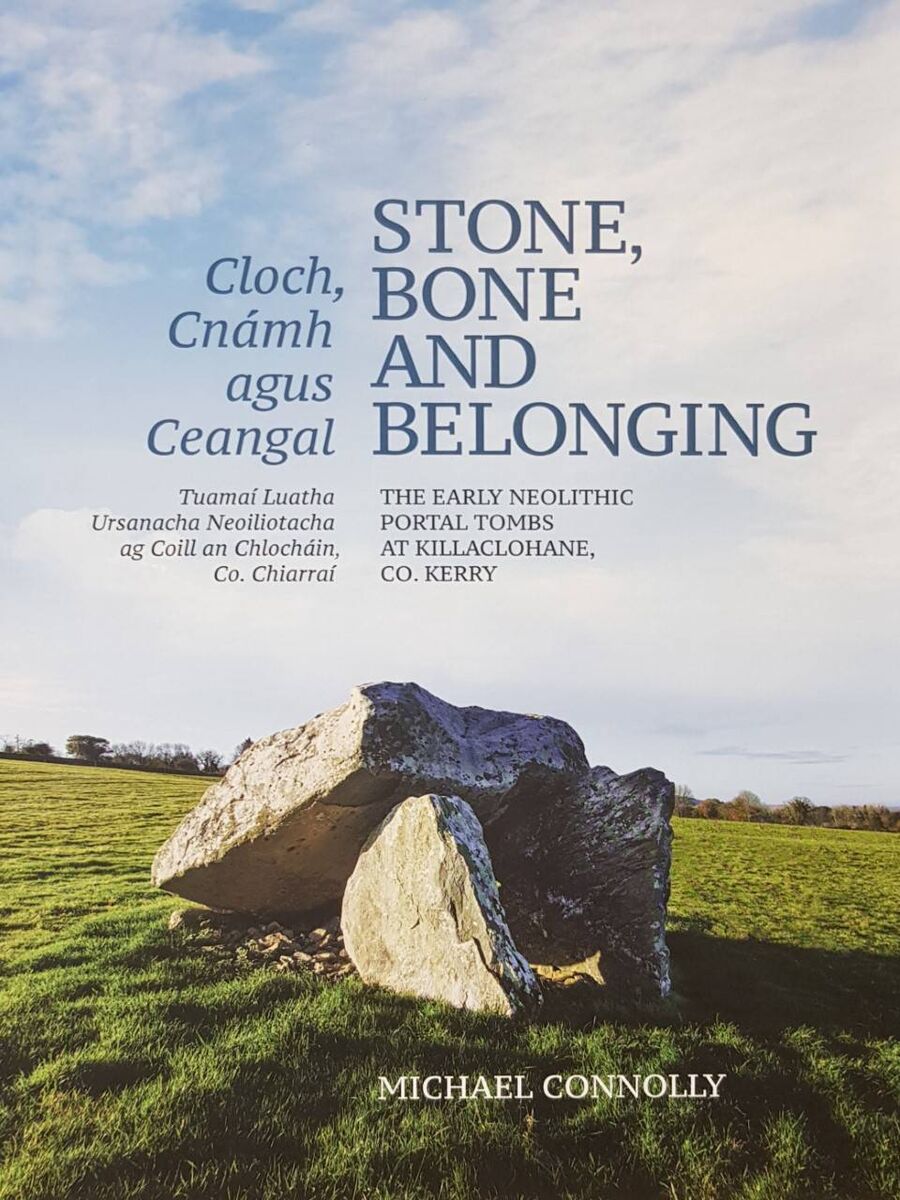
The earliest and biggest of them, Killaclohane 1 was in danger of imminent collapse due to the capstone shifting , while the second tomb in woodland had already collapsed. Before beginning the excavation, and conservation, the massive capstone had to be removed. The single block of green sandstone weighing 13.5 tonnes and 3.75m long by 2.65m wide was shifted with the help of a crane.
Landowner Ken O’Neill made available a water supply. The whole project is precisely documented and illustrated.
In one of the great ironies, agriculture activity probably itself destroyed the monuments erected by earlier workers of the land in Co Kerry and an interesting question is posed by Connolly regarding nearby Killarney where there is a high density of recorded stone axes, including a polished stone axe recovered in the 1980s when a landowner levelled a mound.
The mound was in all likelihood a megalithic cist.
“It is one of the great ironies that many of these artefacts were recovered during agricultural activity that, in some cases at least, may have destroyed monuments erected by earlier workers of the land.”
At the start of the fourth millennium BC, the Killaclohane area was probably sparsely populated by semi-nomadic hunter-gatherers, who took advantage of the wide range of food and natural resources available from the diverse environments immediately around them — mountains, woodland, and sea shore, along with fresh and salt water marshes.
A wide range of significant items were uncovered, including finely crafted flint tools and weapons as well as Neolithic pottery and provided significant evidence about how the tombs were constructed.
“The excavations also showed that the tombs had a long history of reuse both for burial and as focal points in the landscape used to create lineages and connections to both the peoples of the past and, more importantly, the land itself,” said Michael.
Stone, Bone and Belonging although narrowly and precisely focusing on the results of six years of excavation and research also features the history of research into portal tombs in Ireland and places the tombs in their geological and archaeological context before detailing the excavations of the tombs and opens a window to the world of Irish archaeology.
Detailed dating and discussion of the results of the research is accompanied by comprehensive analysis of the finds and environmental data by recognised experts in their fields, all in a fully illustrated and beautifully produced hardback volume.
- The book is available to purchase from Kerry County Museum, Ashe Memorial Hall, Tralee, Co Kerry
- Cloch, Cnámh agus Ceangal: Stone, Bone and Belonging by Michael Connolly
- Kerry County Council, €20