Tori Amos: 'I spent a lot of time by the River Bandon in Kinsale'
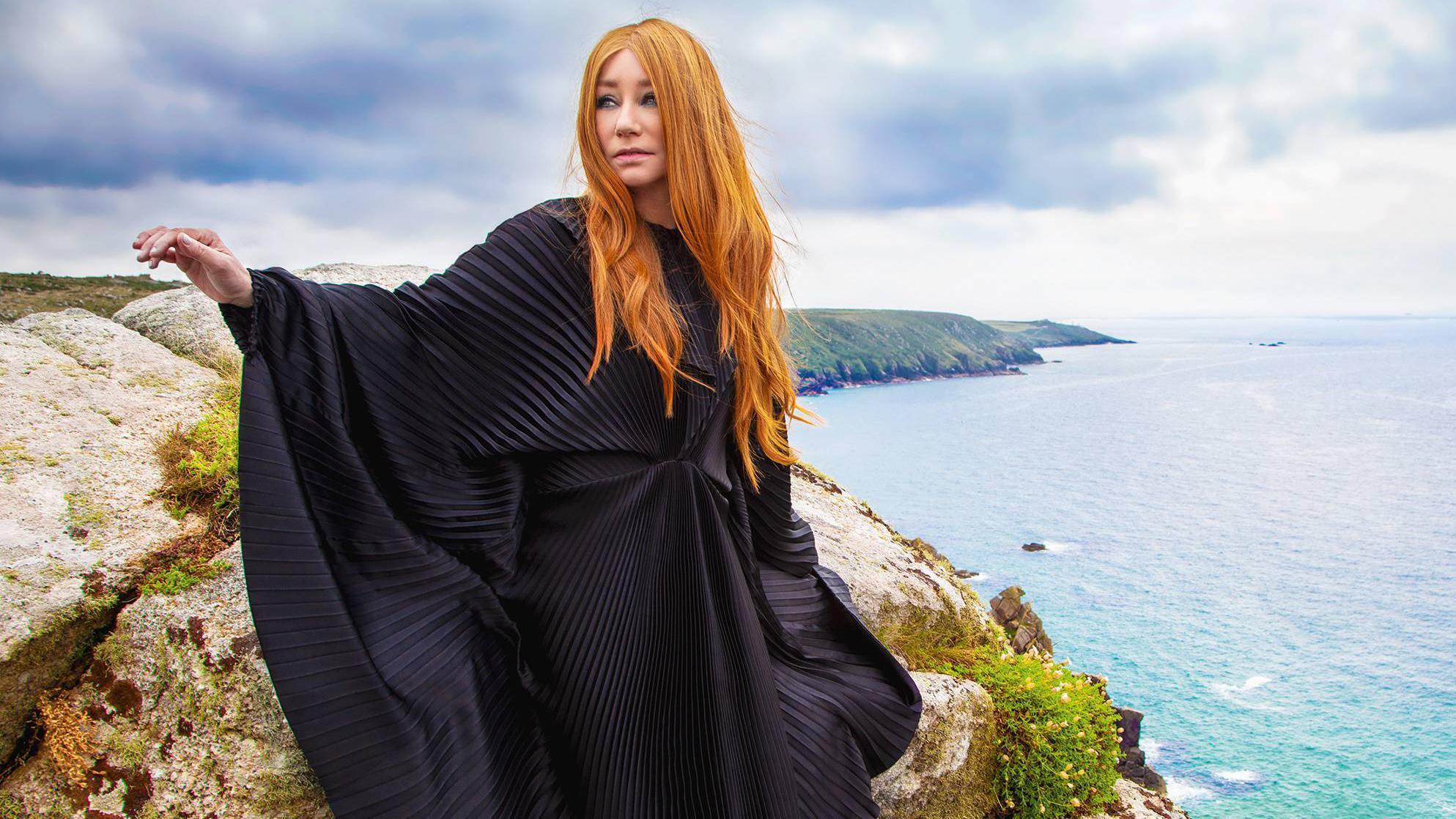
Tori Amos plays two dates in Ireland next year. Picture: Desmond Murray
It’s an immediately striking visual expression to support Ocean to Ocean, the album written and recorded by Tori Amos during the Covid-19 pandemic. The singer-songwriter and virtuoso pianist resembles a character from ancient folklore on the rugged coast, cliffs and caves of England’s south-west, her long red hair flowing over a black dress.
Of the flowing locks, she admits to being “frustrated” as a child for not being born with the flame-red colour: “To me it’s an energetic key, I knew I had to be part of the ginger brigade.”

Amos returns to Ireland on St Patrick’s Day for a gig in Cork, before finishing her European tour the next night in Dublin. Cork has played a significant role in her life. During the 1990s she bought Ballywilliam House, before selling the property again in 2018. “I spent a lot of time by the River Bandon in Kinsale, it’s [the house] very much on the water and surrounded by this ancient land and I loved that… I’d take in the energy of the land.”
The 58-year-old's latest album was written during an emotional crash and while still processing the death of her mother, Mary Ellen, in 2019. Around the same time, she watched the Capitol attacks in America, fretted over the environmental crisis and was left completely bereft and homesick - the album cover art features her gently pointing towards America, her “mother-country”.
It was also during the endless winter of 2020/21 and a third lockdown that creativity proved to be a boon, producing a return to the introspective style that first brought Amos to international attention 30 years ago. The daughter of a Methodist minister, she inherited Scottish and Cherokee roots from either side. Mystical and spiritual language has been a way of life since childhood.
“The Muses were showing me: ‘you are where you are, even if you are despondent, you’ve lost your mom and everything is hitting you right now’,” says Amos. “In America people were at each other’s throats, that wasn’t getting anyone anywhere. I said: ‘I’m on my knees’, I don’t know how to get out of this sadness, I’m in the muck!’ They told me; ‘Swim in it, just be in the muck, let’s hear it, write yourself out of it, you have to figure it out, you have to escape.’”
With travel impossible due to Covid restrictions, it left one less way of processing the grief. “I had to find a chair instead, and ‘travel’ like I did when I was five; in my head.” She describes Cornwall, where she has often recorded and lived since the late 1990s as “saving her life”.
The influence on Ocean to Ocean of the picturesque area in southern England can’t be underestimated, it recalls her early 1990s output from a time when Nirvana paved the way for a decade-long cultural shift after the release of Nevermind in 1991.
A new space was created for more political, feminist and less conventional writers such as Amos in the mainstream. Little Earthquakes sat comfortably next to Nevermind in the coming-of-age record collections of Generation X, while Under The Pink thrust the North-Carolina born and Maryland raised singer/songwriter further into the limelight.
“I was touring and playing six nights a week during that time, not with a band, just me and a piano. In real-time I was playing live while the record was meeting people and becoming part of their lives, things were moving so fast for me, I had to stay very focused on delivering it every night.”
The album provided an international hit with Cornflake Girl, the intricate composition was a difficult birth taking over a year to complete but it remains a solid staple in the singer’s set. “I’m grateful to the song”, she adds, “I have a great relationship with her, she is fun to play live but you need a good drummer to pull that one-off.”
Amos is no stranger to that concept. Before finding success with her solo career she formed the synth-pop band Y Kant Tori Read with former Guns N’ Roses drummer Matt Sorum. The pair reconnected during lock-down.
“Matt is a great drummer, he listened to all kinds of music when I was working with him, it wasn’t just metal. At the time it was a lot of British stuff like Scritti Politti, he was very open to different genres, he played every day and was a real disciplined musician, he was a natural drummer. I can’t even imagine the Guns N’ Roses life but we had a lot of mutual friends and they would run into him. His lovely new wife reached out to me this time last year for his birthday, she was gathering messages that were filmed, I got a real kick out of wishing him a happy 60th.”
It wasn’t the singer’s only brush with metal. On her 2001 covers album Strange Little Girls, Slayer's tune, Raining Blood, was suggested by her bass player. “He said most of the energy is covered here, you have to do a Slayer track. He played me some and a lot was going on politically, it struck me with what the Taliban were doing at the time, and here we are again, but it seemed to me that Raining Blood could utilise the cry of oppression, from all these women, of crushed dreams. I felt in a Biblical sense the menstruation of the Goddesses raining down the power of the blood and the power of what that is, claiming that force and working with it.”
Religious extremities have been a feature of the singer’s life from an early age. While rejecting the more “puritanical” aspects of American evangelical Christianity she adds “there’s nothing anyone can say to me about Jesus that makes me think we got it wrong, like ’love they neighbour’ and all those beautiful ideas.”
Of her Celtic heritage, she adds that her “father’s mother’s side of the family came from Scotland and was part of the John Knox school of thought where the idea of music needed to be in praise of God rather than dancing around the fire with the fiddles and the mead… that’s really my spirit, I’ve known that about myself since I was five.”
Amos suggests she is often asked what has gone wrong in America. “All the fanatics left the old country and invaded the poor Native American nation. My Scottish Grandmother was more connected to some puritanical religion.”
She says that her upbringing was strict, but believes that many people in the modern world are starved. “There is space for an empathy-based kind of ministry that isn’t divisive,” she says.
Before the Cork stint, Amos had also recorded the majority of Boys For Pele (1996) in Co Wicklow. “The stars were aligning and we found a church in Delgany. I was working with harpsichord and piano at the time, we knew we wanted that sound and that a church would cater to the harpsichord in that space.”
Professional Widow from that album would grant Amos with another global success and a defining cultural moment. At the time, sections of the media and fans speculated about connections with Courtney Love in the lyrics. While Amos explains the song took on several guises, she has always denied the supposition concerning the late Kurt Cobain’s wife.
“The dance mix was very different to the one on the record and was very different again from the Merry Widow version which I did live, alone at an organ around 1996. It was a bit of bloodletting about patriarchal control. What I like about that song is that it can hold different versions but it carried the seeds about the abuse of power, you see the DNA and bones of the song.”
- Ocean to Ocean is out now. Tori Amos will perform at Cork Opera House on March 17, 2022; and the Olympia, Dublin, March 18