Book interview: Why Eimear McBride is sick of casual sexism and blatant misogyny

Eimer McBride says the culture of shame and disgust has its roots in Judaeo Christian attitudes towards women’s bodies
Book interview: Why Eimear McBride is sick of casual sexism and blatant misogyny

Eimear McBride

EIMEAR McBRIDE is sick and tired of casual sexism and blatant misogyny. It’s tedious, boring, and infuriating, she says. “It’s still a huge struggle [everywhere] for women to find a place where their bodies are accepted — and just allowed to function [naturally],” the 45-year-old award-winning author explains from her family home in east London.
“A woman is always expected [to suffer in silence] when she is having a terrible period, for instance,” McBride explains. “Or when a woman is having a difficult time, when she is going through the menopause, she is not supposed to talk about in public.

“That’s something women are supposed to privately talk about in the kitchen,” says McBride facetiously.

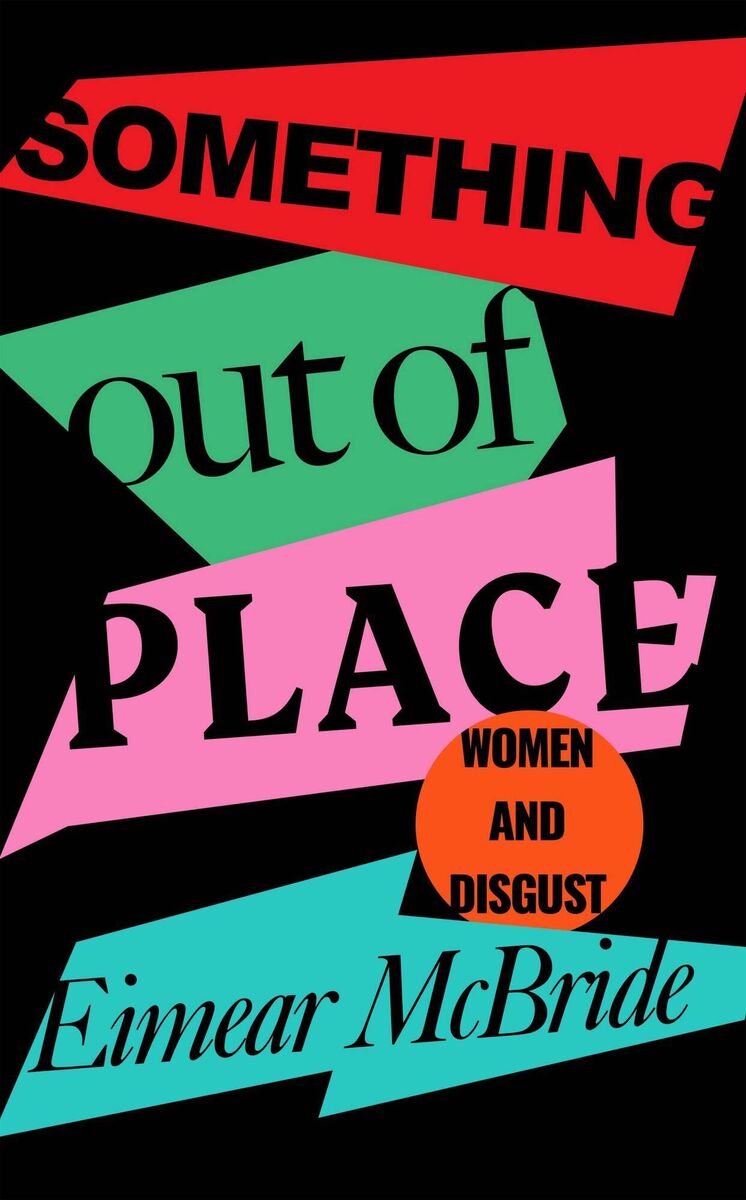
McBride explores this topic with rigorous analysis in Something out of Place: Women and Disgust. The angry polemic begins with a pertinent question: How has disgust and shame become the default reaction to almost every aspect of women’s lives in the so-called modern age of equality?

Historically, religion has played a prominent role in that cultural prejudice, McBride believes.

“This culture of [shame and disgust] has its roots in Judaeo Christian attitudes towards women’s bodies,” she says.

“We have disregarded many other biblical ideas, but this issue seems to have been updated over the generations, and it’s clearly serving a purpose for the patriarchal system that still holds power,” McBride adds.

McBride also points out that there is no promised land to return to in the female imagination when thinking about equality between the sexes. “In a lot of rights movements there is this notion of returning to a better place,” she says. “But [historically] women don’t possess a better place; because there was no time when women’s rights were respected, when women were treated as equal citizens, or their intellectual and physical abilities were appreciated and utilised in ways that were not harmful to them.

“The only place to look towards where this can happen is the future,” McBride adds.

Mc Bride then cites numerous books that served as important points of reference for her current essay. The list includes: Purity and Danger: An Analysis of Concepts of Pollution and Taboo by Mary Douglas; That’s Disgusting: Unravelling the Mysteries of Repulsion by Rachel Herz; The History of Sexuality by Michel Foucault, and, The Sadeian Woman and the Ideology of Pornography by Angela Carter.

The latter book examined the subtle — but important — semantic and metaphorical differences between the words meat and flesh, specifically when seen from the voyeuristic gaze of the pornographer. McBride then briefly unpacks those distinctions, which she has borrowed, updated, and crafted into her own polemic. In its most straightforward definition meat describes the bodies of animals, which we traditionally expect to be consumed. Flesh, conversely, does not hold the same meaning.

“Men are considered [in our culture] to be housed within their male flesh,” McBride explains. “And almost elevated above the world — their bodies are not seen as meat, but flesh, almost divine, separate, and set apart. But women’s bodies go through many more changes throughout their lives.

“This difference has somehow been used as a way to condemn women [in our culture] to the place of the animal.

“The mind that inhabits that body is seen of no consequence, because women’s bodies are seen like pieces of meat,” she adds.

McBride claims today’s multi-billion dollar global internet porn industry is a good example of this theory in practice. She says it exploits, maltreats and dehumanises people, “the overwhelming majority of whom are women”.

“People want to look at other people having sex,” says McBride. “That has always been the case, but how do you create a situation where people who perform and want to do that [as a career] are not being exploited.”

McBride says tightening up rules within the porn industry itself would be a good place to start.

“Regulation is one aspect,” she says. “But there should be a huge amount of education too, especially with teenagers, to educate them about porn; it really isn’t representative of actual adult sexual relationships.

“There is a lot of porn that is violent, abusive, and treats women as though they are [mere] objects.”

McBride then mentions the #metoo movement that emerged on social media in the wake of the Harvey Weinstein sexual abuse scandal in late 2017: “#metoo has made a lot of noise, but the momentum for real legal change has slowed down in the years after that,” she says. “It’s good that women can speak about those experiences, and that men are held responsible for their behaviour, but there is still so much more to be done.”

McBride has directly addressed the subject of the female body, and sexual violence, in three novels she has published: A Girl is a Half-formed Thing, The Lesser Bohemians, and Strange Hotel. Her fiction has received a number of awards, including the Goldsmiths Prize, the Baileys Women’s Prize for Fiction, Irish Novel of the Year, and the James Tait Black Memorial Prize.

McBride was born in Liverpool in 1976 to Irish parents. Her family moved back to Ireland when she was three years old. She spent her childhood in Tubbercurry, Sligo, and Mayo. At the age of 17 McBride returned to the UK, to begin her studies at The Drama Centre in London.

Back in 2004 McBride spent six months writing her debut novel. But it took a further nine years to get it published.

“Clearly nobody wanted my writing,” she says. “I wrote A Girl is a Half Formed Thing and then I didn’t write anything for three years. I then decided to write The Lesser Bohemians. But A Girl is A Half-Formed Thing was still six years away from being published.

“I had a kind of dark night of the soul moment, and had given up on ambition certainly, but I knew there was nothing else I could do with my life,” says McBride. “I kept going even though I thought I was writing into a void.”

McBride says she doesn’t know if she will be interested to write about sexual abuse again, so explicitly. “I feel like that period for me as a writer is completed.

“A Girl is A Half Formed Thing is about situating the reader right in the very moment of the abuse; in that inferno of suffering that the girl goes through. But The Lesser Bohemians is about what it is to be a survivor of abuse when you are alone again in the world and there is nobody no longer putting a hand on you. Then in Strange Hotel there is an echo of those things in the background,” she adds.

McBride speaks fondly of her three biggest literary influences, Gertrude Stein, James Joyce, and Samuel Beckett. She says up until very recently there had been a misjudged assumption in most literary circles that high modernism was dead, and the future of the novel lay in social realism.

“I felt it was worth going back to modernism to look at those techniques again though,” she says. “And to use them in different ways to describe a new kind of experience in contemporary fiction. Life that exists underneath rational thought is a very powerful force that influences the decisions we make for how we behave and who we are.”

McBride feels most literary fiction today lacks experimentation and has been compartmentalised to some degree. But it’s possible to be a bit more promiscuous with form, she believes.

“That’s the pleasure and point of fiction. You write it in order to get to a kind of truth that biography, memoir, or journalism won’t get you to in understanding what it is to be a person. And everything’s fair game when you are doing it.”

McBride is currently working on a new novel. It’s a bit too early in the creative process to elaborate with any further details, she confesses. “I feel as though each book has its own set of rules and its own set of requirements. I don’t feel like there is a trajectory to get to in fiction. Each book is its own thing and feels like I’m starting again, almost like I’m writing again from scratch — and that is a really horrible feeling.”

Something out of Place: Women and Disgust

  • Eimear McBride
  • Profile Books, €12.99

More in this section

Scene & Heard

Newsletter

Music, film art, culture, books and more from Munster and beyond.......curated weekly by the Irish Examiner Arts Editor.

Cookie Policy Privacy Policy Brand Safety FAQ Help Contact Us Terms and Conditions

© Examiner Echo Group Limited