Tom Dunne's Music & Me: Let It Be is a reminder of Beatles' brilliance
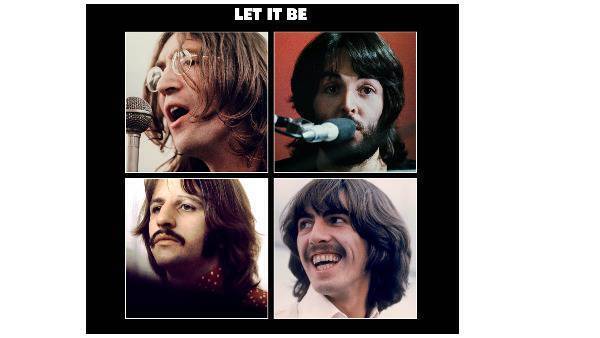
The Beatles, Let It Be.

I remember it so vividly, my older sibling’s distress. The 1970s, instead of ‘teaching the world to sing’ would be teaching it to live without The Beatles. The '70s, saying ‘sing’ when they meant ‘cry'. Our teary faces knew but one culprit, the film, Let It Be.
I grew up with that certainty: If only they hadn’t made that ghastly film. It was the cameras that ruined everything, as they always do. Ever notice that when couples pose for professional ‘look how happy we are’ shots it never ends well? And if there are kids in the shot put an offer on their house now. Hostages to fortune, they are.
Turns out, mind you, we were wrong, at least about The Beatles. The dates alone should have alerted us. They made Abbey Road after Let It Be, and that is a joyous affair with a band at the top of its game. It shouldn’t have taken the Thursday Night Murder Club to join those dots but somehow we didn’t. We were sold a pup.
The first indication that the film Let It Be might have been that generation's introduction to the phrase 'It’s all in the edit' came from director Peter Jackson. When he teased some of the 60 hours of other footage in which the Fab Four laugh, create and joke like school children, the Beatles universe issued a collective 'ooh!'
Full evidence of their innate 1969 happiness will be shown, in true drawn-out Peter Jackson fashion, on Disney+ at the end of November. In the meantime, Beatles fans can make do with the Let It Be re-issues, most notably a five-CD, single-DVD set, available today (Friday).
Giles Martin, the son of the late Beatles producer George Martin, is once again at the controls as he was with updated versions of Sgt. Pepper, The White Album and Abbey Road. Some regard these mixes as heresy, but not me. I think they bring vim and energy and distort nothing. They are wonderful.
He has worked his magic again here. The performances, the playing and vocals are as always godlike. All he ever really does is help you hear how great they are on whatever medium you are listening on. As a result, Let It Be, Get Back and The Long and Winding Road have never sounded better.
So where was all the tension? Listening to in-studio banter between takes, Giles concludes there was very little. What he heard suggested that Paul and John were, if anything, getting on famously. But not so much George.
George, at this point, was writing more and more. But the conditions The Beatles had imposed on themselves, to write and perform a live show within four weeks, while being filmed, didn’t really leave them open to trying his songs. This irked George, but not to the extent of ending the band.
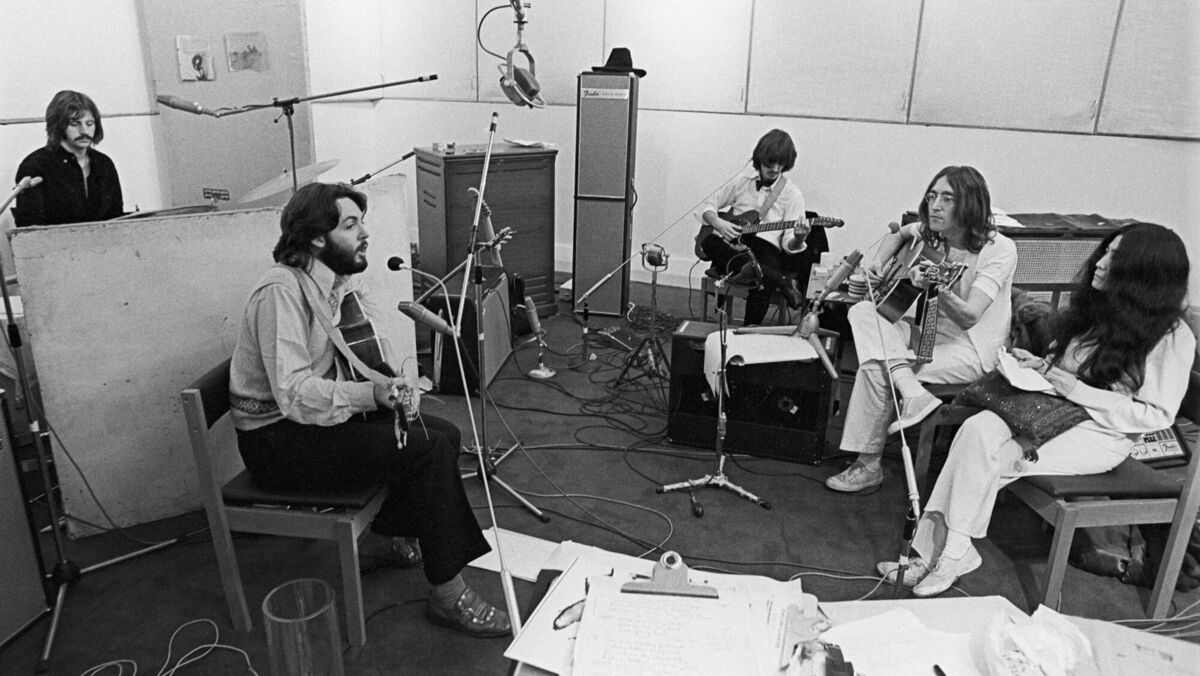
Those tensions came later, when John was determined to do a solo record and he, Ringo and George were electing to appoint Allen Klein, a now known pariah, as The Beatles business manager, a move Paul was vehemently opposed to.
It was at that point two things happened. Paul heard, for the first time, the strings Phil Spectre had added to his song The Long and Winding Road. He was furious, and even if there is much merit to them, rightly so. And then, as the writs flew, Let it Be hit the cinemas. Two and two made Beatles folklore.
The recordings on the Let it Be reissue are almost all made during that one month, January 1969. The set includes the new Giles Martin mix, studio outtakes, alternative performances and a Glyn Johns mix from April 1969 of what the album, then called Get Back sounded like at that point.
This is not quite as impressive a box set as the White Album. That spanned the entire year of 1968 and had material that would later appear on John and Paul’s solo debuts. This is less extensive but, that said, does have a very early rendition of future Lennon solo track Gimme Some Truth.
Missing from the box set entirely is the famous performance footage filmed on the roof of the Apple building. We can only assume this is being held for the Peter Jackson film. Before that there is much to love here, not least the finally revealed truth: The Beatles in early 1969 were getting on fine. It was 1970 that was the problem.