Movie Reviews: Clare Dunne shines in Herself

Herself features an outstanding cast that includes Clare Dunne, Harriet Walter and Conleth Hill.
(15A) stars Clare Dunne as Sandra, a young Irish woman who breaks out of an abusive relationship with her husband Gary (Ian Lloyd Anderson) to start a new life with her daughters Molly (Molly McCann) and Emma (Ruby Rose O’Hara).
With the overheated Irish housing market spiralling out of control (yet again) and unable to find somewhere affordable to live, Sandra has a belated revelation: what if she were to build her own house?
The synopsis for Phyllida Lloyd’s film, which is written by Dunne and Malcolm Campbell, makes it sound like a feature-length version of Grand Designs et al, but this is a gut-wrenching emotional drama that establishes its ambitions with a shockingly violent first scene. Sandra isn’t simply building a house because she can’t afford a pre-built one: she is constructing a home with her own hands, a place of safety where she and her girls will be safe from Gary, and all the Garys of this world.
As her friends and colleagues rally around, and a rag-tag bunch of amateur construction workers lend their questionable talents to the barn-raising cause, the film successfully expands its central metaphor to speak to the power of community, and what can be achieved when so-called ordinary people come together to take on the powers-that-be.
There are a number of charming performances here — Conleth Hill is particularly good as the reluctant contractor Aido — but Clare Dunne outshines them all, delivering a performance that brilliantly blends an irrepressible bloody-mindedness with a heart-breaking vulnerability. (cinema release)
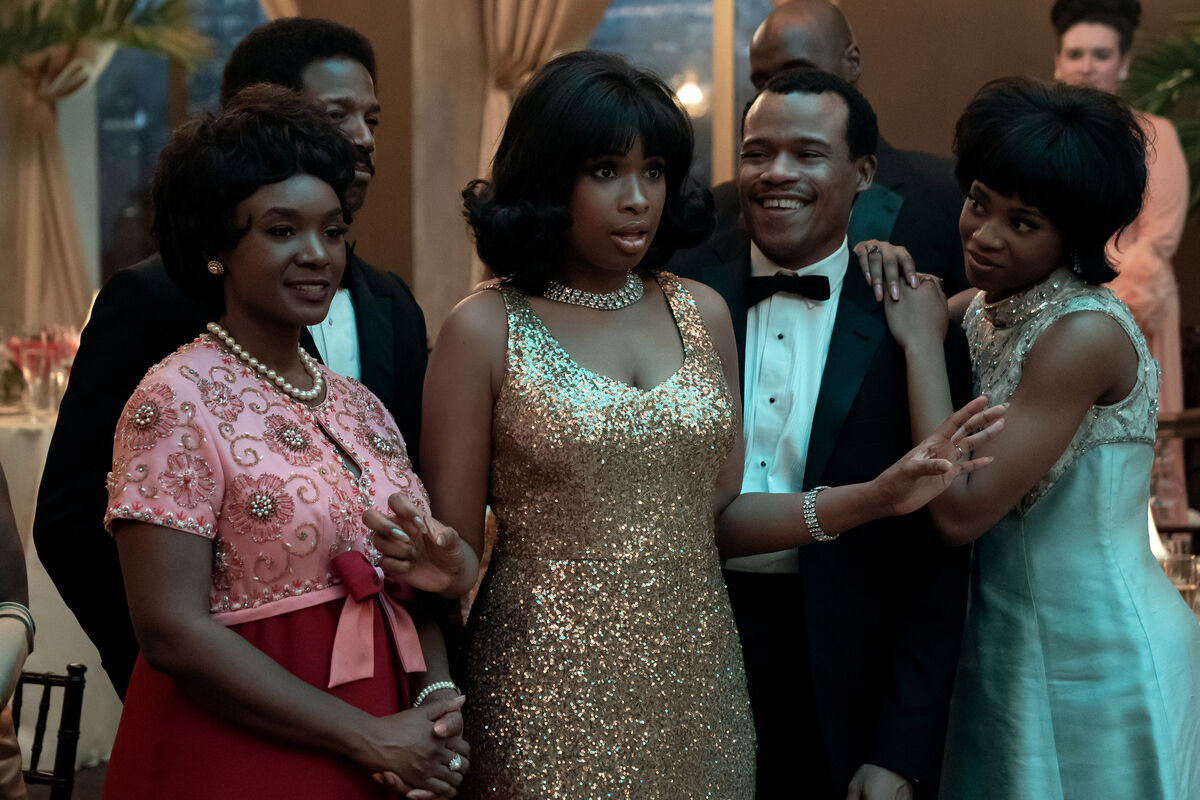
It’s a pity the marketing bods didn’t campaign a little harder for the new Aretha Franklin biopic to be titled R-E-S-P-E-C-T!, because Liesl Tommy’s film is far more dynamic than the straightforward (12A) suggests.
Despite being born into a comfortable middle-class family, and surrounded from a tender age by some of America’s finest jazz artists, the young Aretha Franklin (Skye Dakota Turner) had a traumatic childhood. Dominated by the men in her life, and particularly by her overbearing father CL (Forest Whitaker) and her abusive husband Ted (Marlon Wayans), Aretha (now played by Jennifer Hudson) grew up with a genre-defining voice and no idea of the kind of songs she wanted to sing.
Tracey Scott Wilson’s screenplay focuses on Aretha’s formative years as an artist and her journey towards fusing her first musical love – gospel — with the jazz and soul idioms, which includes fascinating digressions into Aretha’s relationships with the producers John Hammond (Tate Donovan) and Jerry Wexler (Marc Maron) and the Muscle Shoals collective that eventually provided her with the musical backing she had always craved.
More pertinently, perhaps, the film delves deeply into the extent to which Aretha’s music was both personal and political: while she was involved with the Civil Rights movement led by Dr Martin Luther King (Gilbert Glenn Young) from a relatively young age, it was only when she began singing about her own experience of surviving the physical and emotional cruelty perpetrated by the men in her life that Aretha finally connected with a huge audience.
Liesl Tommy expertly marshals a fine ensemble cast, but Jennifer Hudson is front-and-centre for the entire movie, delivering a stand-out turn in which she not only gets under the skin of Aretha Franklin but delivers a fantastic vocal performance too. (cinema release)

It’s quite the week for strong female role models. In some parallel universe, (16s) is a story about on-the-run mob fixer Teddy Murretto (Frank Grillo) and his pursuer, the hired killer Bob Viddick (Gerard Butler), and which begins with Teddy getting himself arrested in the Nevada town of Gun Creek in order to escape from Bob, only for Bob to get himself arrested too, and immediately start planning how best to murder Teddy from his adjoining jail cell.
Standing between them, however, is the police officer Valerie Young (Alexis Louder), whose tolerance for bullshit is precisely what you might expect from a young woman who packs an old-fashioned six-gun for her official police weapon.
While Teddy and Bob preen, threaten and cajole from opposite ends of the cell block, Valerie – arguably the coolest movie cop since Steve McQueen’s Frank Bullitt – deflates their egos at every opportunity; and once the inevitable violence and mayhem breaks out, Valerie isn’t found wanting.
Gerard Butler and Frank Grillo contribute their fair share of menace, of course, and there’s also a blackly hilarious turn from Toby Huss, but Louder doesn’t so much steal the movie as pull off a one-woman heist, in the process transforming what might otherwise have been a formulaic thriller into a quirky and absorbing neo-Western, with Clinton Shorter’s soul-funk score an added bonus. (cinema release)