Jade Jordan: 'I was trying to wash my colour off me; trying to wash myself white'
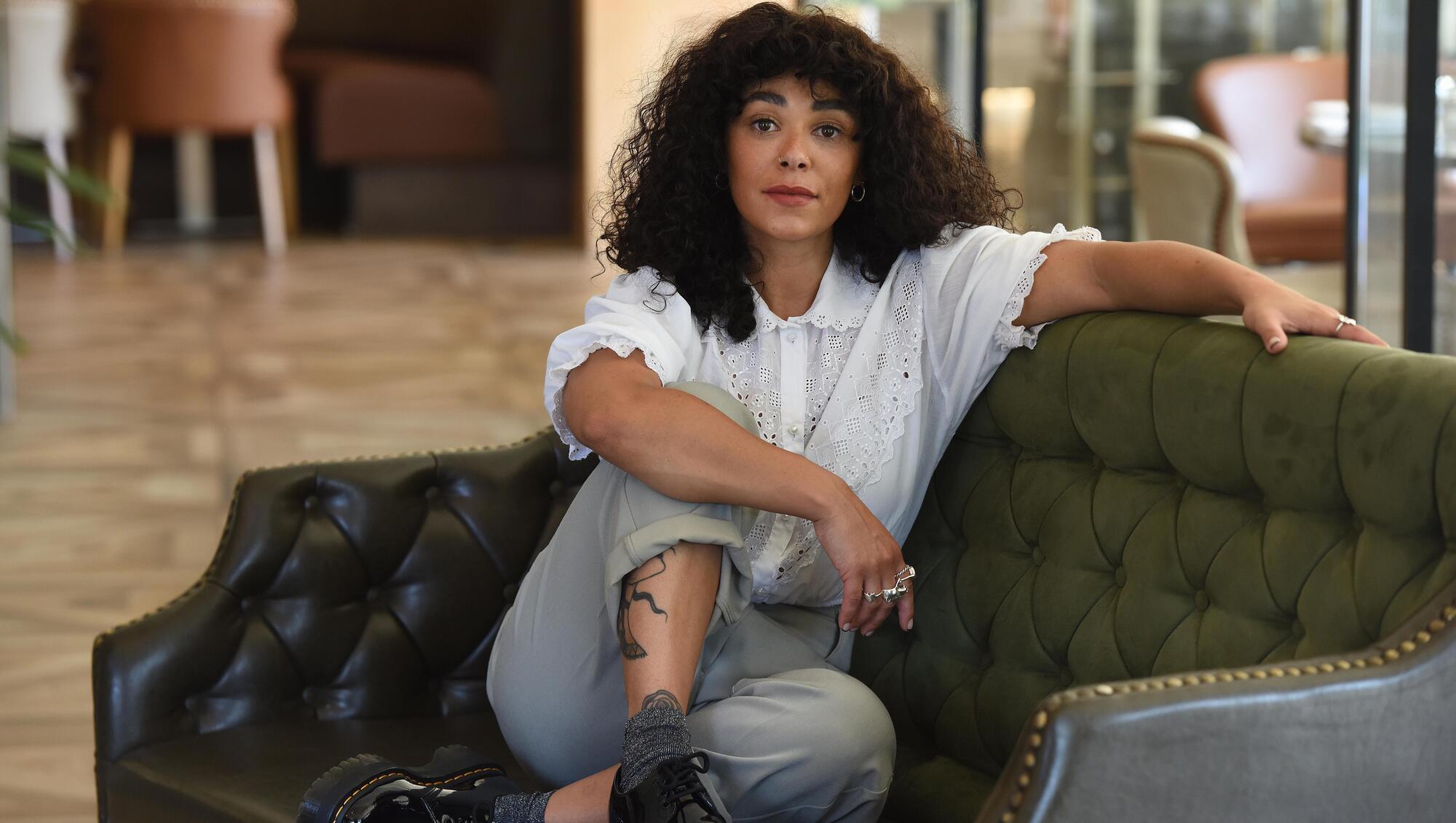
Jade Jordan. Photograph Moya Nolan
My book, Nanny, Ma & Me started its journey in 2020. The world had come to a halt and I sat in lockdown like everybody else and wondered what exactly I would do with my time. In the months prior to lockdown I had begun documenting my family history, asking my nanny and ma questions, probing their pasts. Iâm a Black Irish woman, the daughter of another Black Irish woman who struggled for a long time because of her skin colour.Â
Iâm the granddaughter of another woman exposed to the icy winds of society because she loved and married a Black man and had three Black children. The killing of George Floyd and the protests over his murder take place as Iâm learning about and documenting my family history. I feel sick, horrified and furious.

The violent end to George Floydâs life sparks a conversation about racism around the world, and still that reaction persists here, in Ireland: that racism is not something that affects people in the country where I live. Weâre grand â nothing to see here. I feel raw, like an exposed nerve. I canât believe the number of people who donât believe discrimination happens here. And in the days and weeks that follow, I sit and think about it. Well, maybe thatâs because they arenât Black or brown and have never experienced racism. And that gets me thinking. If people havenât seen discrimination or understood what theyâre seeing, how would they know that itâs a problem? How can we address or even discuss the problem?
At this juncture, I need to state that Iâm the only one in my immediate family who feels the need to talk about this or talk about our history. Iâm the awkward person in the room confronting things, poking around, asking questions. It has been a struggle at times to get my nanny and ma to open up, but when they do, their recollections blow my mind. My family story shines a spotlight on a darker side of Irish society.Â

It contains some bitter truths that should end any misconceptions that racism does not exist in Ireland. So I decide to put pen to paper in the hope by relating what I learned from my family narrative will give some insight into the experiences, the struggles and the everyday life of one family of colour in Ireland today. Like many young women of her generation, my nanny Kathleen left Ireland for London in the late 1950âs to train as a nurse.Â
Whilst there she fell in love and married a Jamaican man, named Larry who was part of the Windrush generation. Nanny marrying a Black man was a big deal back in the day and she didnât tell her own family at home for some time for fear of their reaction. At the time of my nannyâs wedding in 1963, it was still illegal in America for a white person to marry a Black person and continued to be for four more years. My nanny Kathleen and Larry went on to have two sons along with my ma Dominique and they settled in Londonâs diverse Walthamstow.

The city was a multicultural city with people from all walks of life, class and race. In 1978, my nanny Kathleen decided make the move back to Dublin alone with her children. As soon as they arrived in Dublin, they knew that their lives would be very different to the one they had known in London. The colour of my nannyâs childrenâs skin set them apart. In my maâs words... âwe fit in there and when we came to Ireland, we were different, we stood out, my skin was far darker and my hair was far curlier than everyone elseâs.âÂ
People didnât understand a white woman with three Brown children â and my nanny was regularly asked if her children had been adopted. Ma explains the arrival as âhellâ it was new, nobody looked like her or her siblings, it wasnât home, their looks, the comments, and the questions. The children having to explain why they look the way they do, telling people over and over again that they werenât adopted and in some cases lying that they had been adopted because it made life easier.
My nanny Kathleen had to build a life for her and her children in Dublin without the support of her family. My ma recalls that whenever they went to visit nanny Kathleenâs mother, her grandmother, they would never be invited into the house, but would have to sit outside and wait. Nanny, my ma and her brothers eventually settled in one of the old tenement houses in SeĂĄn McDermott Street.
In later years, when the tenements were being demolished, the family were relocated to Blanchardstown. When they made the move to Blanchardstown in 1980, it was in the middle of the school term. My nanny Kathleen went to the local Blanchardstown school to try and enrol my ma but was told there were no places left. However, when my nanny spoke to one of her new neighbours she learned that they had just enrolled their daughter who was the same age as my ma in the local school without any issues. My nanny Kathleen marched right back up to the school for another meeting and called them out on their discrimination. Needless to say, my ma got her place in school but they gave it grudgingly and she was made feel very unwanted. Over the next few years, my ma was picked on by the nuns who consistently found ways to humiliate her in front of the class.
It was mostly the adults who treated my ma as being different, but she had a wonderful group of friends that rallied around her when things were tough. My maâs brothers however, had a different experience with their peers and were often picked on. There was a particular song in the charts at the time called âBrown Girl in the Ringâ, and the boys would surround my ma and her brother and sing it at them. Shortly after starting school in Dublin, my uncle recalls one of the boys announcing to the class, âLook, Iâm sitting beside a bar of chocolate.â
Both of my maâs brothers ended up leaving school when they were aged 12 and in their first year of secondary school. They could handle the bullying from some students, but they couldnât cope with the brutal treatment they received from teaching staff and school authorities.

My own recollection of my own experience with racism took place when I was 10 years old. We were staying in McDonoughâs Caravan park in Bettystown in County Meath. I had a little spat with a boy in the park and when I tapped him on the arm he shouted, âdonât touch me, yeh dirty Paki!.â They were his words. I tried to pretend that I didnât care, but the row shook me. I remembered Eoin pointing at his white arm, and I looked at mine, and I thought, my arm does look dirty compared to his. I remember going into the mobile home and getting into the tiny shower. I felt upset. Once I was out of sight of everyone, I started sobbing.
I can remember standing in the shower, scrubbing and scrubbing and lifting my arm to re-examine it and then scrubbing it again until my skin was burning red.
It was the first time that Iâd ever really noticed the colour of my skin. Is this dirt, I wondered, or is it the colour of my skin? Or is the colour of my skin dirty? Iâd never been self-conscious about how I looked before. He said I looked dirty, but I didnât want to look dirty. Do I look dirty?
I kept scrubbing myself, thinking my skin would get lighter and I might start to look cleaner. I was trying to wash my colour off me; trying to wash myself white. I remember coming out of the shower and sobbing to my nanny. âI just want to be like everybody else!â I didnât want anyone looking at me and seeing me as any different from all the other kids.
At the time my dream of becoming an actress seemed very far away as I thought Iâd never get an acting job in Ireland. I left for London in 2009 knowing there would be a better chance of me working in the performing arts in a massive multicultural city. Even in London, there were times where I struggled with my sense of identity.
At the end of our second year in drama school, we had to fill out our CVâs to send to agents. One of the forms contained a simple ethnicity box-ticking exercise to identify ourselves for potential employers. There were lots of boxes and options. âWhite Englishâ, âwhite Welshâ, âwhite Scottishâ or âwhite Irishâ? âBlackâ, âmixed-raceâ, âmixed Caribbeanâ, âmixed Africanâ or âmixed Asianâ? âIndianâ, âPakistaniâ, âBangladeshiâ, âChineseâ or âArabâ? There was a huge selection of identities to choose from.Â
I ticked my usual box. Our dance teacher went through our forms, and then she called me over. She was a bit hesitant and clearly confused. âJade, why have you ticked âwhite Irishâ?â she asked. Up until then, Iâd always struggled with these ethnicity boxes in Ireland because the only way to identify as Irish was to tick the âwhite Irishâ box. Obviously, I knew I wasnât white, but there was never a box to accommodate âmixed-raceâ or âBlack Irishâ. It was like we didnât exist. It always made absolute sense to me to tick the âwhite Irishâ box.
âYou canât describe yourself as âwhite Irishâ when your headshot shows that youâre dark-skinned with curly hair,â she said. âNo one looking for a white Irish actor will hire you.â Of course, I understood what she was saying. But it was the box I ticked all my life. I never wanted to lose my Irish identity. I wonder why I never thought of asking, âwhy isnât there a black Irish box?â I never did. I had to process what she said for a minute or two. âSo what box do I tick?â I asked.

âYouâre mixed-race, so tick the âmixed-raceâ box. It will open up a whole new range of roles you could be cast in.â I look back now, and it makes me laugh. That poor teacher must have thought I was bloody blind to describe myself as âwhite Irishâ. That was the first time my identity became âmixed- raceâ.
There have been big changes in Ireland over the last few years, many positive ones where people of colour are concerned. Modern Ireland is a great place to live, but racist abuse still happens. Colour is, as they say, only skin deep, yet so many people still face shame, victimisation, marginalisation and other obstacles because their skin contains more melanin than others. How mad is that? My nanny went through this in Ireland more than 50 years ago.Â
My ma went through this after her. And a middle-aged man felt he had the right to racially abuse me just recently on a Dublin street. These kinds of experiences are soul-crushing. I donât want anyoneâs children to encounter the mindless harassment of earlier generations. We can all play our part by educating ourselves and others as best we can and to do our part by calling out casual racism when we hear it.
I am proud to be Irish and proud of my Jamaican heritage too. When I look in the mirror, I see a brown person; half Black, half white.
To me, this means something special and beautiful. I am mixed- race, and I represent what happens when a man and a woman see beyond stereotypes, reach across the racial divide and fall madly in love.
- Nanny, Ma & Me: An Irish story of family, race and home by Jade, Dominique and Kathleen Jordan is published in trade paperback by Hachette Ireland, ÂŁ14.99