B-Side the Leeside: Cousteau - Cousteau
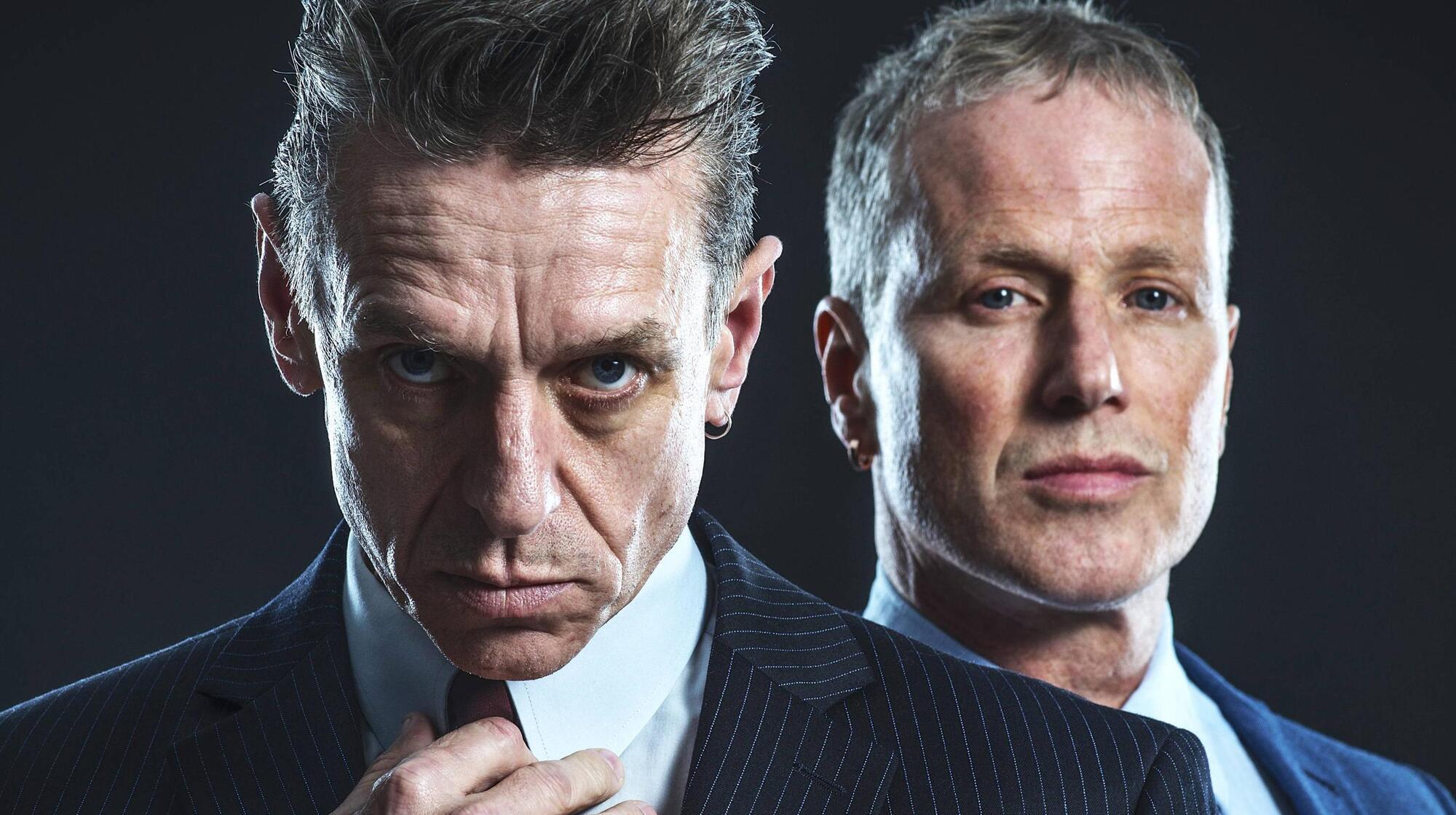
Liam McKahey from Cork, and Australian musician Davey Ray Moor, of the band Cousteau
“Toto, I've a feeling we're not in Kansas anymore.” For Corkman Liam McKahey and Australian musician Davey Ray Moor, of the band Cousteau, their 'not in Kansas' moment came in Italy.
“We were playing at a temple in Sicily, a gorgeous temple that had been built by the Greek Empire,” recalls Moor. “We had been selected to play at a fashion showcase event but actually it was a ludicrous gig, totally ridiculous.”
McKahey laughs as he remembers the night: “Imagine we’re on a mountain in Sicily, and I’m miming ‘The Last Good Day of the Year’ and we’re in the middle of two catwalks going in a criss-cross pattern. Some of the most beautiful women in the world are modelling and we’re performing in front of the Greek temple at Agrigento, it was just crazy.”
Another 'pinch me' moment for Cousteau was performing for Italian television at the famous Roman amphitheatre of Cagliari in Sardinia on a bill with Shakira, Beverley Knight, Avril Lavigne and Sugababes probably runs a close second.
“It was so weird, here’s a London band, with an Australian songwriter and an Irish singer who have a French name and we’re getting gold albums in Italy, it just doesn’t make sense,” says McKahey, a native of Blackpool in Cork city.
“But the baritone voice in Italy is culturally quite a nostalgic thing, it reminds people of their Dads and it makes people feel safe, at least that's what a lot of Italians have told us.”
Explaining Cousteau’s success in Italy and Latin countries Moor says, “It’s clearly got something to do with the fact that our music intends to be beautiful and the Italians particularly like that - they appreciate the intentional beauty.
“There’s also a masculinity to it, the biggest city that streams our stuff is Mexico City, I think there’s something somehow written into our music that allows males to be emotional, it’s a theory anyway.”
In 2002, at the end of the promotional treadmill for Cousteau’s self-titled debut album, the record had reached sales of 230,000 and had gone gold and platinum in countries across Europe.
The album’s single ‘The Last Good Day of the Year’ had become a staple of Triple A (Adult Album Alternative) radio stations across the United States. Nic Harcourt, the host of KCRW’s influential radio progrmme Morning Becomes Eclectic declared that ‘The Last Good Day of the Year’, “jumps out of the radio, shakes your hand, and reminds you just how good a great song can make you feel.”
The song would soundtrack advertisements for disparate products including Nissan cars in the US and Borsci rum in Italy, and would be licensed for TV and film worldwide.
Cousteau played on Later with Jools Holland in the UK and The Late Late Show with Craig Kilborn in the US. They had signed a record deal with Chris Blackwell’s Palm Pictures and the former Island Records boss told The New York Times that, “Artists who can convey their essence onstage still are the ones who build a lasting following. Cousteau has toured, and they now have a strong base. I love their presence onstage, the suave look and feel they have. They almost have a cabaret aura to them, and people really respond to it.”
The New York Times wasn’t the only publication that praised Cousteau’s album, Rolling Stone declared that their music was, “a lush yet unsettling sound that runs counter to every new trend.”
Billboard stated that the band had, “a timeless feel in the spirit of songwriters like Burt Bacharach, Elvis Costello, and Leonard Cohen” and the NME proclaimed McKahey, “the Barry White of indie.”
Cousteau’s success didn’t happen overnight, “the suave look” and “cabaret aura” that Blackwell eluded to had been perfected years earlier in small London jazz clubs and wine bars.
Press officer Alan Jones remembers those early gigs. “It was Scott Walker, Tindersticks and Black all rolled into one,” he says. “I've never seen anyone play the trumpet and the piano at the same time as Davey did and Liam’s voice was as good live as it was on record, he had a real - almost menacing - presence on stage.
McKahey and Moor’s first forays into the music world had happened earlier still.
McKahy left Cork for London in the mid-80s. “I saw The Smiths in the Savoy - I've still got the ticket stub somewhere - no band had ever spoken to me like this, everything they did seemed like it was written for me, it was just so emotive and personal,” recalls McKahey. “When I saw them live, it just took my head clean off, then and there I decided to move to London, my main objective was to be a comic book artist, but I also had aspirations to sing.”
Aspirations aside, there was the small matter of McKahey’s severe stagefright. “I was terrified, I had a really bad fear of performing live,” he remembers. “I never did a gig in Cork in my life. I used to sing at home and on building sites, but I’d run a mile from an audience.”
Eventually McKahey plucked up the courage to sing and his band That Mangled Langer played a few gigs in London even once supporting his older brother Rob’s band, Stump.
Moor, a multi-instrumentalist from Sydney, formed psych-rock band The Crystal Set with Russell Kilby and played keyboards on an album by The Church, the band of Kilby’s older brother Steve. By the mid-90s he was offered a job in a studio in London producing soundtracks for TV and film.
“I had a little drum machine and a sequencer and I was doing music for little films trying to make a living,” he recalls. “All the while I had this idea of a dream project that would make the kind of music I always favoured - the second last song on an album, the long epic sad song. I thought one day I'll really indulge myself and put together a project that just does that.”
Moor put together a group of musicians that would form the nucleus of Cousteau but the band was missing a strong lead vocalist. “I met Liam at a friend’s dinner party,” says Moor. Liam smiles and picks up the story, “Davey started playing guitar and singing and I started harmonising, that was it. We recorded the first demo a few weeks later.”
The band gathered in the studio to hear Liam’s rich baritone played back through the speakers. “I'll never forget it,” Moor says. “It was just one of those moments it sounded like the music that I always wanted to make, suddenly it all came together.”
It was the start of a crazy couple of years that would see Cousteau release three albums and tour the world a few times over. The band fizzled out by the mid-Noughties with McKahey and Moor continuing to make music.
Moor co-wrote songs for Libertine Carl Barât’s debut solo album and McKahey would contribute vocals - alongside Midge Ure and Heaven 17’s Glenn Gregory - to Stephen Emmer’s Tony Visconti-produced International Blue project.
In 2015, after 10 years apart, McKahey and Moor reformed the band as CousteauX. The silent “X” was added after a ‘cease and desist’ request from the Cousteau Society (the oceanographic society founded by Jacques Cousteau in 1973).
CousteauX’s latest release Stray Gods continues in the dark romantic furrow that the duo has carved out. It includes ‘When the Bloom Has Left the Rose’, a gorgeous slow lament, that easily rivals ‘The Last Good Day of the Year’ as the band’s greatest moment.
“The reason we do it is because of those moments of unbridled joy and excitement, of hearing this amazing music that you’ve created,” says McKahey. “We have to do this, if I’m singing Davey’s music then I’m happy. I think ‘When the Bloom Has Left the Rose’ is the best thing we’ve ever done. It’s definitely the best thing I’ve ever done in my entire life.”
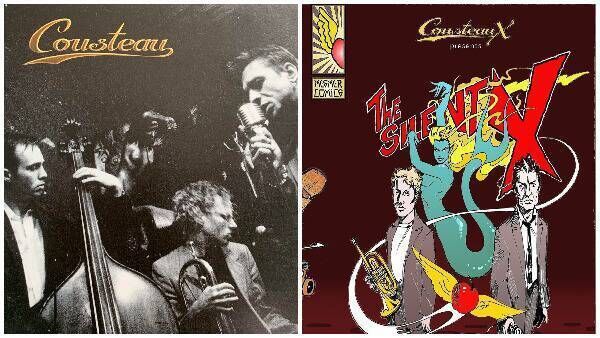
McKahey mightn’t have ended up a comic book artist but CousteauX’s story was immortalised in the comic book The SilentX by artist and illustrator Michael McDonald. The panels detail the recording of their first album. An album that took Cousteau far, far from Kansas.