Whipping Boy and the story of Heartworm, the classic album that deserved more
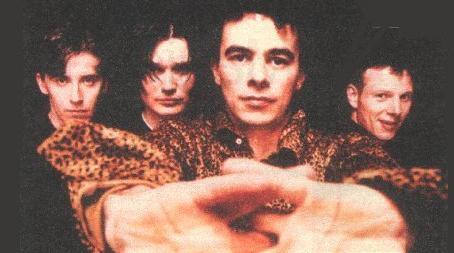
Whipping Boy are rereleasing their Heartworm album.
The windows in Bono’s downstairs loo were round, like portholes on a ship. Outside glittered Killiney Bay, and further off, the lights of Dublin. But as he gazed out, Whipping Boy singer Fearghal McKee, visiting Bono’s residence as a guest of a member of U2’s road crew, spotted a design flaw in the room. The apertures were too low in the wall, resulting in a partly obscured view. Somewhere at the back of his mind the spark of an idea twinkled.
“Fearghal found himself in Bono’s house one evening,” explains Whipping Boy guitarist Paul Page. “And he noticed the portholes were quite low in the toilets. He put this random line in the song. People thought we were taking a pop at Bono. We weren’t… We were in a way taking a pop at the Celtic Tiger, where there was this side of Irish society where it was about pursuit of money and of status.”
McKee would draw on that strange incident – the toilet, the porthole, Killiney Bay, just out of sight – during the writing of Whipping Boy’s classic single, We Don’t Need Nobody Else.
“They built portholes for Bono,” he half croons, half enunciates. “So he could gaze out across the bay and sing about mountains.”
The lyric is a little bit poetic, a little angry. In that way, it captures the essence of Whipping Boy, whose landmark 1995 album Heartworm is to receive an overdue deluxe reissue on music journalist Pete Paphides’ Needle Mythology label on Friday, September 3.
That Heartworm is a masterpiece has long been beyond dispute. But in 2021 what is important is that it is a particular kind of masterpiece.
Drawing on Whipping Boy’s love for Joy Division, and The Velvet Underground, it’s a record made without compromise and which doesn’t really care whether you like it or not. It wears its heart on its sleeves and dares you to avert your gaze.
“The first song from the album I heard was Twinkle,” says Paphides, referencing Heartworm’s lead single. “I suspect they might hate me for saying this but a lot of what I loved about it was what I loved about U2 up to The Unforgettable Fire: their incapability of being anything other than utterly sincere, to a ridicule-defying extent.”
Unfortunately for Whipping Boy, their classic album, released on November 1, 1995, was not a commercial success.
"If we’d have sold something like 60,000 copies overall, that would have been good on an independent label. On a major label it was a drop in the ocean," says Page.
This was during the imperial phase of Britpop – Blur’s Chas ’n Dave opus The Great Escape had come out two months previously. Whipping Boy were the wrong musicians in the wrong place at the wrong time.
“Admittedly, this was also the year that Radiohead had released The Bends and Manic Street Preachers had put out The Holy Bible," says Paphides. "To a degree, I do bunch Heartworm with those records a little bit. People forget that Radiohead and the Manics weren’t selling huge numbers at this point. These groups were making the music they were making in spite of the zeitgeist, not in sync with it.”
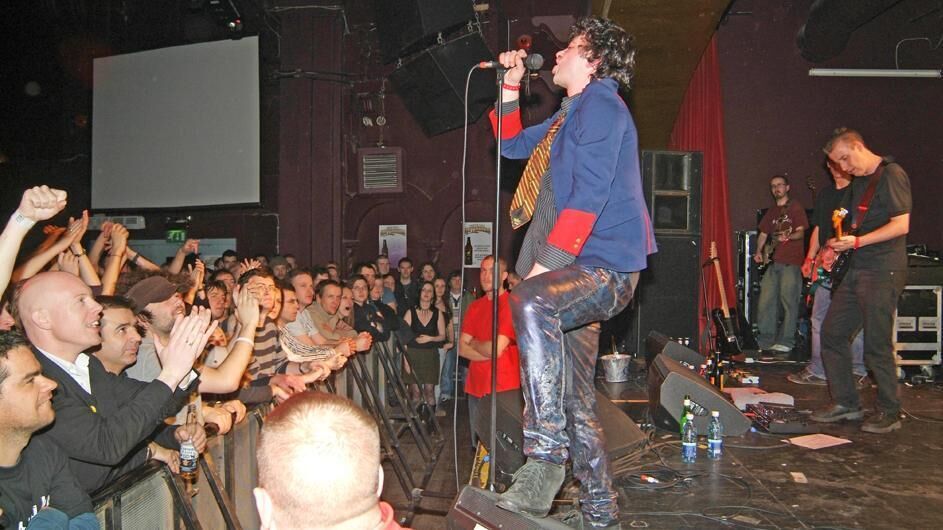
The Whipping Boy story has its share of turmoil. McKee was an intense and incendiary frontman – which was his gift to the band but also made them unpredictable on stage. They did go on to record one final LP, 2000’s Whipping Boy (which they hope to reissue). And then it all fell apart.
The actual making of Heartworm was nonetheless relatively straightforward. Oceans of blood and sweat were expended as the group bunkered down in Windmill Lane – another U2 connection – with producer Warne Livesey (House of Love, Midnight Oil) for two months. Conflict, though, was in short supply. Everybody just got on with it.
“We had demoed the whole album in advance. That’s how we came to the attention of Sony,” says Page.
“We hadn’t even shopped the demo around. The engineer passed it to a Sony A&R man and all of a sudden, there was interest in the band. EMI became interested at the time, too. We went from a band who’d had a couple of independent deals to, all of a sudden, people were really interested in what we were doing.”
Whipping Boy had formed in the early 90s. Page and his cousin, Myles McDonnell, decided it was their destiny to start a band when they attended a gig by Echo and the Bunnymen at Dublin’s SFX. They met McKee after seeing his group, the Large Pink Devil, at the Underground Bar on Dame Street. With Colm Hassett on drums, Whipping Boy were born.
“Something clicked,” says Page, who today works in IT. “We could barely play – we weren’t proficient musicians by any stretch. We made a noise. But we knew there was chemistry there.”
Page and McDonnell were from Dominic Street and Kilbarrack in Dublin’s north inner city. McKee was from Carbury in Co Kildare, just over the border from Edenderry in Offaly. Hassett was from Kill, near Naas. And they were a study in contrasts. Page, McDonnell, and Hassett were the type to keep their heads down. McKee, by comparison, became a different person under the spotlight.
“When we first met Fearghal he was a regular guy,” says Page. “On stage, he transformed. It was never to get noticed. We would see him do it when there were 10 people in the audience. It’s hard to explain. He just became someone else. He had a knack for both unsettling and thrilling an audience. We did the Late Late Show and the audience looked genuinely terrified. Gay Byrne was less than impressed.”
For Heartworm, Whipping Boy had considered collaborating with Pixies producer Gil Norton. In the end, however, they felt Livesey a better fit. McDonnell recalls being slightly underwhelmed at first.
“I might have expected more,” says the bassist, who today works with An Post and who would go on to form the project Yelling Bones with singer Gerry McGovern.
“But maybe what he recognised was that less was more. Sonically he brought something to the table. Structurally he didn’t have to [as all the songs were written in advance].”
Heartworm was well-reviewed in Ireland. In the UK, though, it disappeared immediately, despite the best efforts of their big-name manager Gail Colson (best known for working with Peter Gabriel and Morrissey). The media was too busy swooning over Blur and Oasis, who had just emerged from their ding-dong chart battle.
With hindsight, McDonnell believes Whipping Boy would have fared better by prioritising America over the UK. Alas, they sabotaged their American dreams by crying off a US tour with the group Stabbing Westward in order to support Lou Reed in Europe.
This was over the objections of their record label. The compromise was that they would finish the Reed dates then join Stabbing Westward for six weeks. Yet even that was nixed at the last minute.
“It was an itinerary that would have sent the band all over America,” says McDonnell. “We got home expecting to go out to American two days later. We got a call that night saying [the Whipping Boy management] was pulling the US tour as it was going to cost £140,000 for us to do it. The killer quote was, ‘this should be all media led’. My instincts were telling me it was a bad move.”
Given time and resources, it isn’t unthinkable Whipping Boy might have broken America. If The Cranberries could do it, why not them? In the UK, they were out of synch with the prevailing mood. And it wasn’t as if the London press was eager to anoint the next new thing from Ireland anyway.
“I think that when bands like Power Of Dreams, Something Happens and An Emotional Fish arrived in London on the back of press campaigns that trumpeted their popularity in Ireland, there might have been an element of 'Well, is that so? Well, you’re not in Ireland anymore!',” says Pete Paphides.
Paphides recalls attending a Whipping Boy show in the Astoria in London and having a sinking feeling. "They were utterly incendiary, but the venue was half-full if that, and I guess that any record company people in attendance might have thought, ‘Why should we stick with this band when they’re so out of sync with everything else that’s happening in London right now?’”
And yet, Heartworm would go on to weather the ages. It is today regarded by some as one of the greatest Irish albums ever – and an influence on artists such as the Murder Capital and Fontaines DC, who carry on the tradition of singing in their natural accents.
“By rights, it should have sunk without trace, ended up in the bargain bins,” says Page. “Somehow it’s still there. People have kept it alive. It’s extraordinary really.”
- Heartworm is reissued on double vinyl and CD on September 3