Cork In 50 Artworks, No 18: Michael Quane’s Riders and Horses at Mallow Roundabout
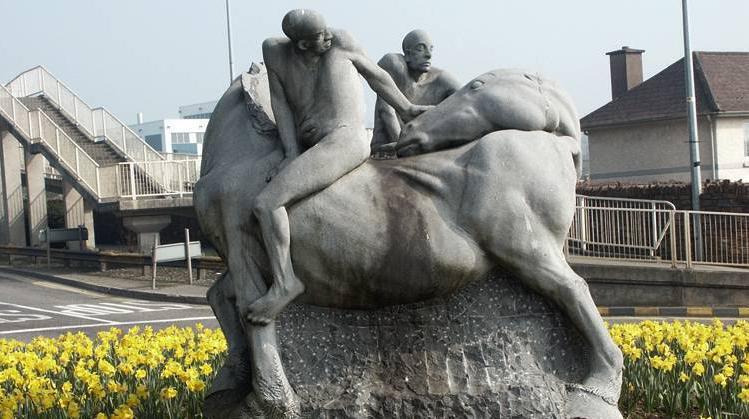
Michael Quane's sculpture, Riders and Horses, in Mallow.
Michael Quane’s Riders and Horses appeared in the centre of the Annabella roundabout in Mallow in 1995. The sculpture, which depicts two human figures circling each other on horseback, was carved by hand from a 25-ton block of limestone, a process that took Quane nine months to complete.
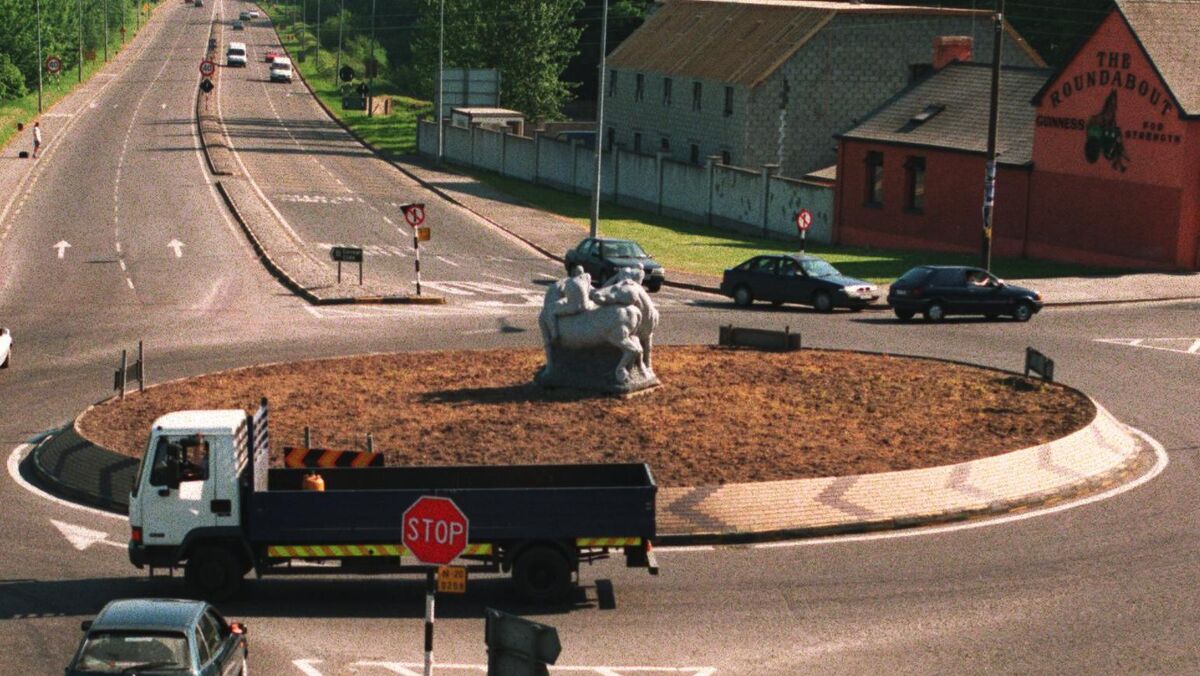
It remained on the roundabout until 2017, when it was relocated to another site on the N20 Cork to Mallow Road.
Riders and Horses was commissioned through the Per Cent for Art Scheme, whereby a percentage of the budget for public works is set aside for an arts project.
“I think Cork Co Council and the National Sculpture Factory were among the first to implement the Per Cent for Art Scheme in this country,” says Quane. “Norah Norton was running the Sculpture Factory at that time, and they were heavily involved. And Brendan Devlin, who was country engineer that time, had a great interest in the arts and was very supportive.”
As Quane remembers, “that was a particularly generous Per Cent for Art Scheme project. There were actually three artworks commissioned for the one stretch of road; my horsemen sculpture, Eileen McDonagh’s Milk Churns, and Kevin Holland’s Great Irish Elk.”
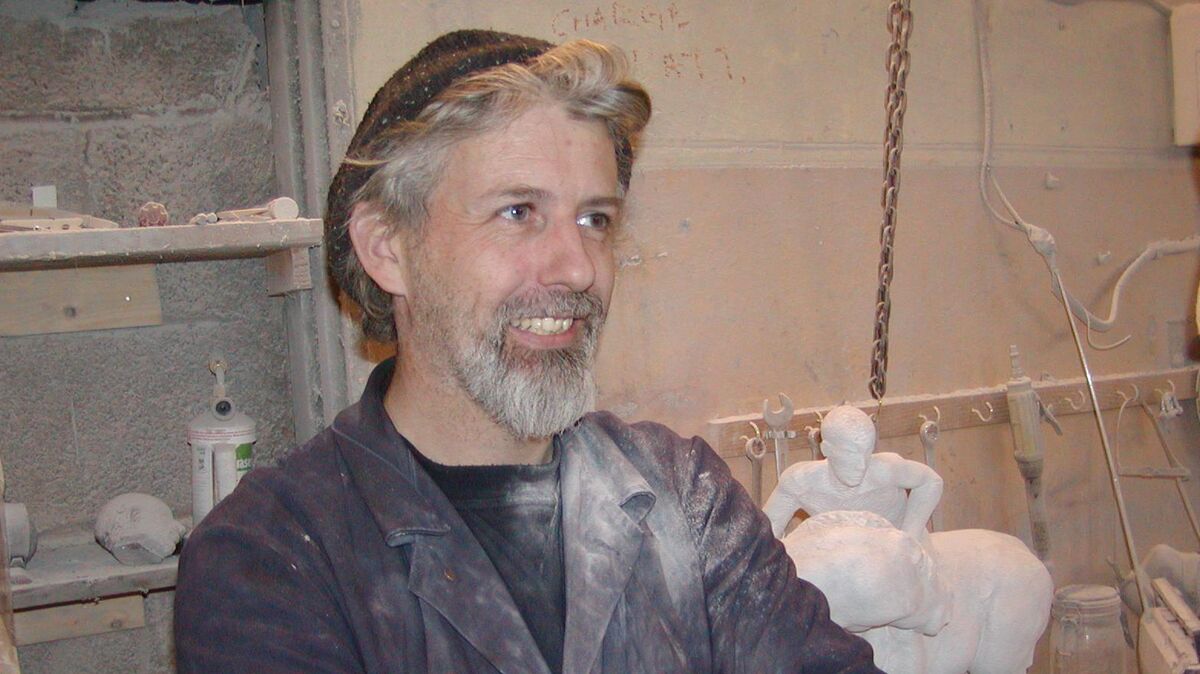
Each of the artists won their commission through an open competition. “Later on, the sculptures would have had to fulfill certain conditions, but back then, at least, we had an awful lot of freedom. What I submitted was a very rudimentary drawing. We were given the commissions on the basis of our past work, rather than a committee trying to imagine from the submitted materials what our work might be like in the future.”
Quane is now one of the best-known artists in the country, a member of Aosdána and the Royal Irish Academy. But even then, having graduated from Crawford College of Art in 1987, he had completed a number of public commissions, and was pretty well-established, “though I still rode my bicycle everywhere.”
Those previous commissions included An t-Oileánach at the Blasket Centre in Dunquin, Co Kerry, a representation of a single figure, commemorating the Blasket Island author Tomás Ó Criomhthain, and Fallen Horse and Rider in Midleton, which, as its title suggests, was a more dynamic and ambitious piece.
Quane’s plans for his work at the Mallow roundabout were more elaborate again, and required the preparation of the largest block of limestone he’d ever had cut.
“It was twenty-five tons,” he says. “I’d have made it even bigger, but the quarry could not have coped with it. As it was, their trucks were only supposed to carry a maximum weight of twenty-two tons, so twenty-five was the most I could get away with. The crane wasn’t designed for that kind of load at all. They had to lift the block one foot at a time, and even that was straining it at its limits.
“But they got it on a truck, and brought it down to the old creamery in Killumney, where I had my studio at that time. The block could barely fit in my studio, so I put it on rollers, and pushed all twenty-five tons of it back and forth into the yard every day. Later on, two of us used a block and tackles to move it into a larger studio so I could work on it indoors. When it was finished, the crane driver came back to drop it out to the site, and he couldn’t believe we’d managed to move it on our own.”
Quane designed the foundation for the sculpture to sit on, and supervised the siting, on December 8, 1995, which he remembers as “a frosty morning.” There were fears that the sculpture would distract motorists, but as far as Quane is aware, it has never been the cause of a road accident.
About four years ago, however, it became necessary to re-align the roundabout, and a NRA directive specified that, henceforth, nothing could be sited on it that was more than 1.73 metres high.
“Riders and Horses is 2.1 metres, so it had to be moved. We looked at different locations, and settled on the present site on the basis that it was still on the Mallow Road, and everybody passing would have a chance to see it.”
Quane completed a number of other public art projects after Riders and Horses, including History And A Dustsheet in Ballincollig, and Kingdom Of Plants Arising at the Botanical Gardens in Glasnevin, Dublin. He remains grateful for the work, acknowledging it paid for the former Church of Ireland chapel in Coachford he calls home, but he no longer pursues public commissions.
“There’s a lot more red tape and bureaucracy built around them now. Like any kind of human activity, the more people get involved, the harder it gets. And I don’t think you can design an artwork by committee.
“I just love going out to the studio and starting a piece and not knowing where it’s going to take me. The odd time, I’ll do a private commission, but I think the client, by way of the artist’s history, should have enough faith to let them explore an idea, rather than having to work to a brief.”