Mo Laethanta Saoire: Cónal Creedon pays homage to his ancestral home of Inchigeelagh
In the first instalment of our weekly summer-themed reads, the Cork writer recalls ancient heroes and childhood visits 
Mo Laethanta Saoire: Cónal Creedon pays homage to his ancestral home of Inchigeelagh

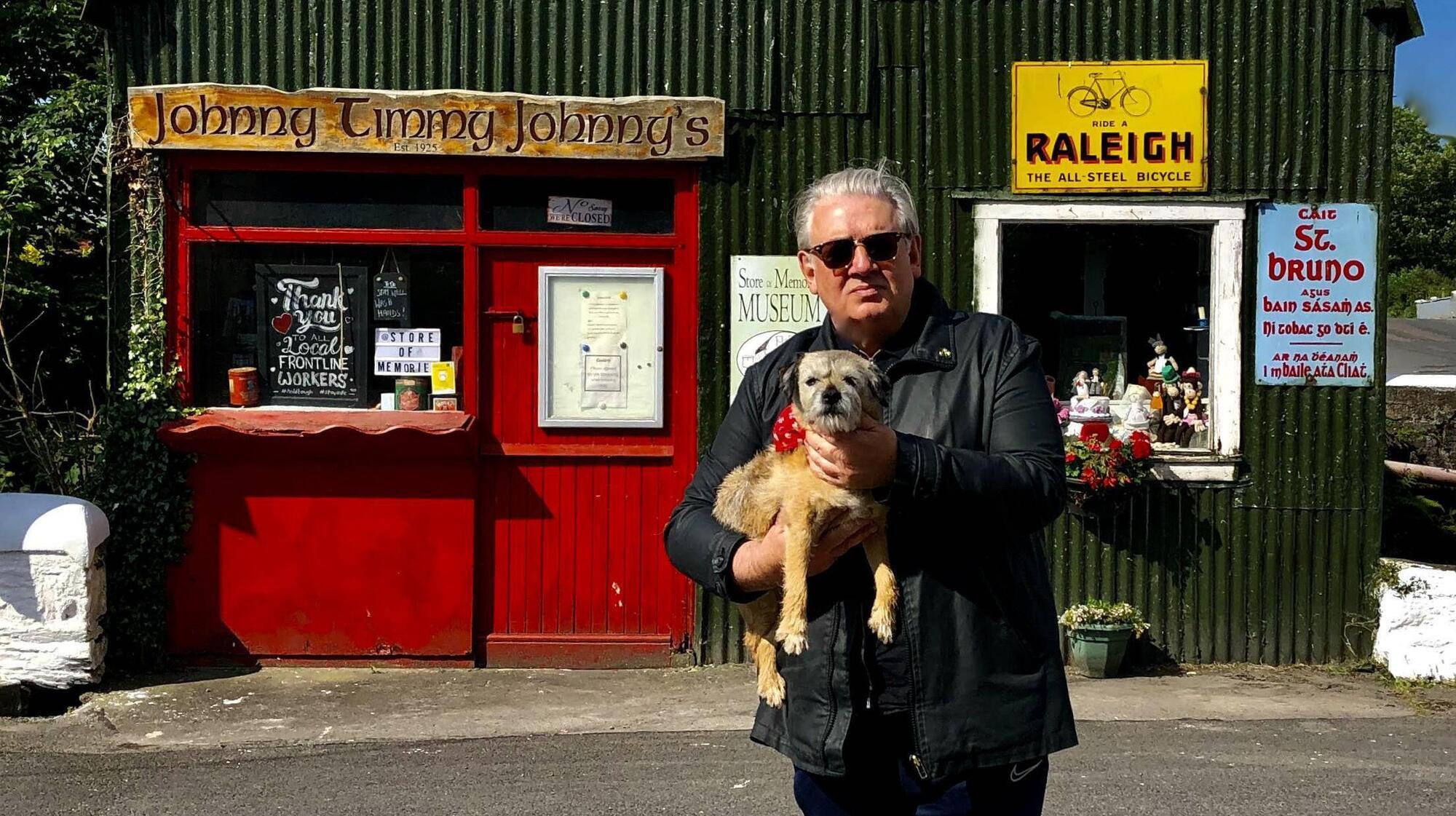
Cónal Creedon and Dogeen outside Johnny Timmy Johnny's in Inchigeelagh.

And so, this winter of discontent draws to an close, the time has come for us to shake off this global hibernation and emerge from these dark days of social isolation and walk towards the light of a new dawn.

When the bells ring out for VC Day [Victory Covid] I will not dance bare foot in the streets or splash about in some public fountain. No. When covid-tide is past it will be my time for reflection. I look back on 2020 with 20:20 vision and the clarity of hindsight brings. Like the wild Atlantic salmon that risks life and fin to return to the mountain stream where it all began, I will answer the call of the wild and go back among my own to that place called home.


I was born and bred on the north bank of the river Lee in the heart of Cork city. My family has traded on this spaghetti bowl of streets since the beginning of the last century. The Inchigeelagh Dairy, the name over our door, stood testament to the ancient homeland of my father’s people, also known by the tribal name Iveleary.

Our shop was an outlet for butter, cream and eggs and garden-fresh vegetables from the home farms of Iveleary. Exiles would meet at our counter. They came for that taste of home, but they stayed to talk. It was nothing out of the ordinary to hear Irish, the language of Iveleary spoken at our shop counter. Lovers of the native tongue would drop by for an opportunity to joust their eloquence. They talked of births, deaths and marriages, and age-old challenge matches between rival townlands were re-played, blow-by-blow like ancient battles between warring clans – the epic intensified with each retelling.

Like exiles who gather anywhere across the globe, home will always be the birthplace of past generations. Maybe that explains why this boy from downtown Cork city, grew up with a sense that home was another place called Iveleary.

Iveleary is a mysterious and enchanting land where history and story go hand in hand, fact and fiction dovetail together seamlessly and the spiritual and natural complement each other without contradiction or contrivance. It was here, in the 6th century, that St Finbarr drove out Luiwee, a lake monster immortalised in stained glass in the lakeside chapel at Gougán. Another window is dedicated to Gobnait renowned for sending out her squadrons of bees to defend neighbouring parishes. 

Devotion to this female divinity is still palpable at the old abbey near Ballyvourney. There you will find her miraculous ‘Iron Ball’ concealed within the ancient wall. Gobnait’s Well has been a place of pilgrimage long before the chime of Christianity’s bell. As an echo of that pagan past, a provocative Síle na Gig sensually stretches her thighs high up on the old abbey wall, offering unconditional fertility to all.

This is a land where legend and landscape become one. These hills hold the secrets of stone circles and megalithic alignments. Bronze Age dolmens span time just as the ancient clapper bridges span the river Lee at Ballingeary. On the outskirts of Inchigeelagh, a prehistoric crannóg on Lough Allua was once a place of sanctuary to a long-forgotten people, yet their blood and sweat has enriched this soil, and the imprint of their footsteps laid the foundations for what is now the scenic South Lake Road.

The Ballingeary to Inchigeelagh road in 1932. Picture: Irish Examiner Archive 

Iveleary is a land of poets and patriots. Ever since my cradle days, I knew the story of the fugitive, Art O’Leary, immortalised in the words of his wife, Eibhlín Dubh’s passion-fuelled ‘caoineadh’. I had often heard my father sing the seditious verses of Máire Bhuí’s Cath Chéim an Fhia. We celebrated my grandmother, Nora Cotter’s family connection to the infamous Mother Jones, identified as “the most dangerous woman in America”, her war cry, “Pray for the dead and fight like hell for the living!” still resounds wherever blue collars assemble.

 The litany of heroes and heroines is endless: from the wild and fiery Auliffe O’Leary who rode with The Great O’Neill, to brave Kedagh ‘Lieutenant to the King’, who led the men of Iveleary at the head of James II’s Jacobite army.

 My childhood curiosity had been held spellbound by the seanachaoí-inspired tales of An tAthair Peadar, and later my boyhood imagination ran wild with the swash-buckling Daniel Florence as he rode with Simón Bolívar’s Liberation Army across the plains of South America. I was weaned on stories of the Fenians, such as ‘Pagan’ O’Leary from Inchigeelagh and the simple message of his war cry, ‘No Crown! No Collar!’. 

The bravery of the women of Iveleary is often eulogised for their frontline action standing shoulder to shoulder and breast to bayonet among the defenders at Drom an Ailigh and the subsequent all-female ambush of the landlord’s agent Terry at Inchigeelagh. And of course, Máire Ní takes centre place in the local anthem celebrating her quick-witted bravery in securing the escape of a Fenian on the run. 

Since the dawn of history, this land has offered sanctuary to fugitives, not least the IRA flying columns as they led the Black and Tans on a merry dance around the hills of Iveleary before driving them into the sea and away from our shores, just as Patrick drove out the vermin.

And so, when the bells of VC Day ring out across the world, I will travel west to Iveleary. It’s there you’ll find me, happiest among my own in the heart of Inchigeelagh in company of my cousin Joe Creedon. There we will drink tea.

Maybe it’s the stag’s head above the fireplace stirring up long-forgotten memories of Máire Bhuí and the Battle of Chéim an Fhia, or the photograph of General Tom Barry sitting proud among by elderly Boys of Kilmichael. Whatever the reason, there we’ll sit and talk, because the time is always right for storytelling in Inchigeelagh.

 Later, me and my cousin Joe might amble east along the village to the old graveyard. We might stop at an ancient tilting headstone, all trace of etched words wiped clean by time, yet Joe will identify the remains buried beneath the soil as some relative of vainglorious Art O’Leary. Or he might place his hand on a lichen encrusted sepulchre and utter the words, Maire Bhuí. Every stone tells a story like a benchmark through time itself. Joe will find a moment to remember those who went before, sometimes in a verse of song or a line of poetry. Then we’ll return to the fireside for more tea and apple crumble hot out of the oven – the best this side of Kaelkill.

And so, the stories will flow, and a new generation will learn and know, and at some future date they will step into the shoes that have been worn by many generations before.

The story of Iveleary is a tango of love and war and passion. It sweeps and swirls along the beautiful green and leafy Lee valley, from its mystical source high up over Gougán and all the way to the broad meandering latticework of waterways of the great southern delta of Corcach Mór na Mumhan.

Iveleary is not a destination. Iveleary is a sound, a scent, a state of mind.

  • Cónal Creedon is a novelist, playwright and filmmaker. Pancho and Lefty Ride Again, his latest collection of short stories,  will be published in October 2021

Your home for the latest news, views, sports and business reporting from Cork.

More in this section

Scene & Heard

Newsletter

Music, film art, culture, books and more from Munster and beyond.......curated weekly by the Irish Examiner Arts Editor.

Cookie Policy Privacy Policy Brand Safety FAQ Help Contact Us Terms and Conditions

© Examiner Echo Group Limited