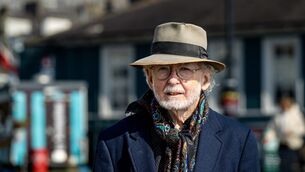
From pirate stations to murder cases: Paul Byrne marks 40 years in media
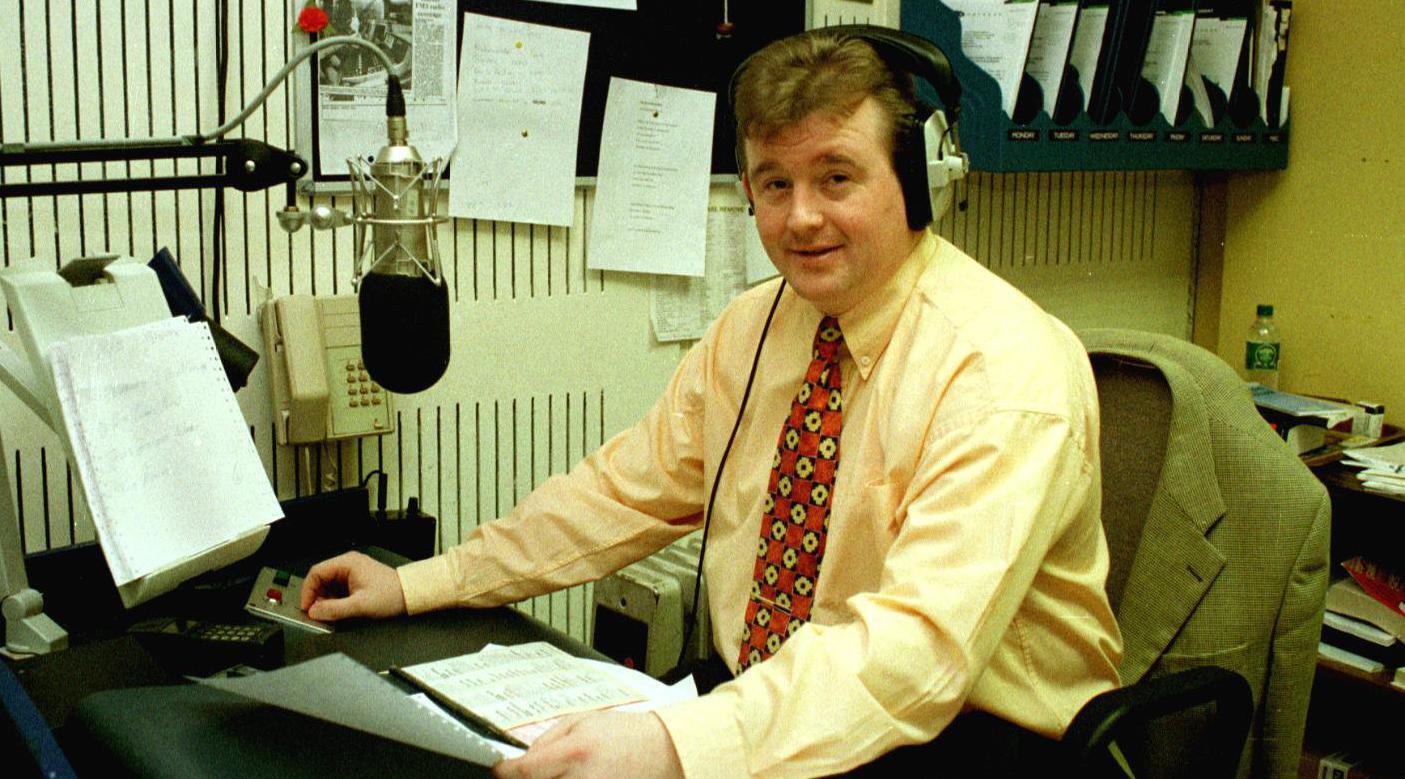
Paul Byrne in 1998. Picture: Billy Higgins
Paul Byrne says he will never forget that first morning, four decades ago, his stomach sick from nerves, as he climbed the steps to Cork City Local Radio (CCLR), a pirate radio station based on French Church Street, and the first words he spoke on air, at 14-years-of-age: “Good morning everybody, welcome to Teen Beat.”
A demo tape submitted a week or two earlier had yielded his big break, his 15-minute Saturday slot soon being extended to 20 minutes, and later an hour. From there, he worked in most of Cork’s pirate stations, before landing in the original South Coast Radio, and then ERI, working alongside John Creedon (then John Blake) and Neil Prendeville (then Jim Lockhart), two men he credits as broadcasting heroes.
“John Creedon is world class. He just has that special something, he speaks in plain language, and he just connects with the listener. Neil Prendeville has that quality too.”
Byrne says his broadcasting ambitions began when he was a child sitting in front of a record-player, speaking into a hairbrush, and he describes the pirates as “the FÁS of radio”, providing training to so many broadcasters. Never having had any interest in school, he persuaded his parents to allow him to leave early, before his inter cert. Entertainment was in his blood; his father, an auctioneer, moonlighted in the showbands as Johnny Byrne and the Avalons.
He recalls telling a career guidance teacher that he wanted to work in radio and television, and being told to sit down. Years later, doing a series on studying for the Leaving Cert, Byrne met that teacher and enjoyed reminding him of that moment.
“I worked from 15 and 16, doing teenage discos, teenage birthday parties, in community centres, eventually starting in the nightclub scene. I was resident DJ in DeLacy House for years, four nights a week there, and three nights a week out on the circuit.”
He also brought game shows to the stage, before moving to Multi-Channel television, where he hosted a shopping programme, music shows, and a series of candid camera pranks.
He remembers catching out PJ Coogan (now with 96fm) as Coogan attempted to record a piece to camera. Unshaven and disguised in dirty clothing, an unrecognisable Byrne pretended to be drunk, ruining multiple takes, as Coogan struggled to keep his temper.
After a year away from radio and TV, Byrne became a roving reporter for 96fm, before working with Neil Prendeville. It was there that Byrne became involved in a story known as the 'House of Horrors', covering the disappearance of three men from a Cork address, and discovering the site in which the remains of one of the missing men had been temporarily buried.
Joining Virgin Media One at its inception as TV3 in 1998, Byrne is now the station’s southern correspondent, a job the Blarney Street native relishes.
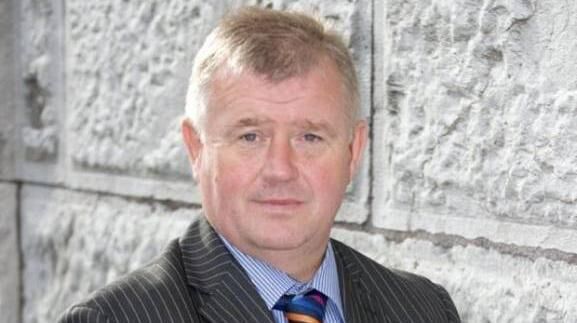
Byrne’s advice to any young person starting out in media would be that they shadow whoever they can, never be afraid to ask questions, and as many questions as possible, because, he believes, that is the only way to get along.
“Keep asking questions, and if the person you’re asking questions gets annoyed, that’s okay, just move along and ask the next person questions. Keep reading the newspapers, keep listening to the radio, keep watching the television news.”
Byrne believes that a grounding in news, local, national and international, is essential for any journalist, and he encourages any aspiring young reporter to “just go for it”, because, he says, journalism is a career in which no two days are the same, and one which will give an education beyond imagining.
“I have met the richest of the rich, the most unfortunate of the unfortunate, I have seen things, I have heard things, I have been introduced to things that you could only imagine.
“I’ve been in the best of houses, I’ve been in the worst of tenements, I’ve interviewed major drug-dealers in their homes, where their livelihoods are scattered out there in front of you on a table, where there’s an array of mobile phones ringing and people looking for drugs.”
Now 55, and living in Ovens with his wife Deirdre, his son Callum, who’s 11, and his daughter Charlie-Mai, who’s six, Byrne has thoroughly enjoyed the first 40 years of his career.
“It’s just an extraordinary life,” he says. Despite worrying that journalism is “a young person’s game”, he remains in love with his trade. He doesn’t get as nervous as he was when he first headed up those steps on French Church Street, but he still gets a buzz from live reporting.
“You go to bed at night and, for the sake of argument, you know you’re doing a story tomorrow about a jobs announcement, and then, overnight, somebody might have been murdered. You get a call in the middle of the night and suddenly your jobs story is gone, and you’re there filming at a murder scene.
“You just don’t know what’s around the corner.”
- "I was threatened with murder once. A very famous armed robber couldn’t get bail, and he stood up in a court in Co Cork and threatened to murder me. I had to take it seriously, but he eventually did apologise to me one day when we bumped into each other on the street."
- "During the search for Robert Holohan, the 11-year-old Midleton boy who was killed in 2005, I suggested to the guards that we do a reconstruction. I spoke with the principal in St Anthony’s in Ballinlough, and we selected a boy to play the part of Robert in the reconstruction. I’ll never, ever, forget, we were outside the house, filming this boy going around on Robert’s BMX, and I turned around there was Robert’s poor mother Majella looking out the window at this boy who was a double for Robert, and it just cut me in two. The pain that woman went through. They are such a beautiful family."
- "I loved reporting from New York. We spent two nights filming with the police in Fort Apache, The Bronx, wearing bullet-proof vests throughout our time there. Their captain was from Donegal, and the head of the bomb squad was from Mallow."
- "The disappearance of Tina Satchwell from her home in Youghal is a story which has gripped the nation. I’ve interviewed her husband Richard on several occasions, and it’s terribly sad to think that Tina has not yet been found."