John Bruton: Billy Hutchinson biography an insight into life within Loyalist paramilitarism
Understanding loyalism is more important than ever, says John Bruton as he surveys a biography of Billy Hutchinson, one of its most controversial figures
John Bruton: Billy Hutchinson biography an insight into life within Loyalist paramilitarism

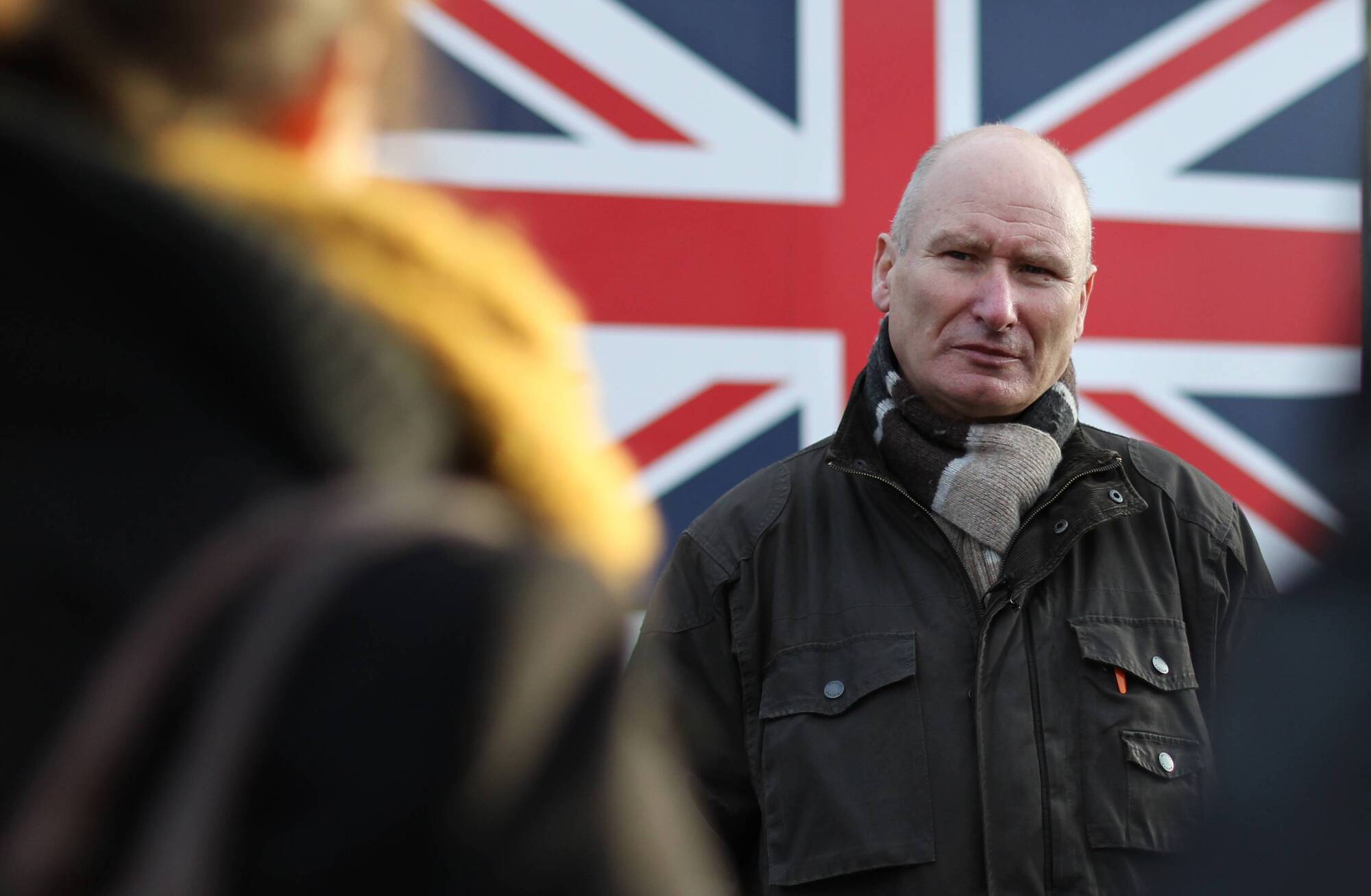
Progressive Unionist Party leader, Billy Hutchinson: Spent 15 years in prison, but encouraged loyalists away from violence. Picture: Peter Muhly/AFP via Getty Images

  • My Life in Loyalism
  • Billy Hutchinson (with Gareth Mulvenna)
  • Merrion Press €18.95 

Billy Hutchinson is the leader of the small Progressive Unionist Party (PUP) and represents it on Belfast City Council. He was, for a time, a member of the Northern Ireland Assembly.

He played an important part, while in prison in the 1980’s and later on, in encouraging the Loyalist paramilitaries towards political accommodation, instead of violence. As Brexit creates a new relationship between Loyalism and the rest of us on this island, understanding Loyalism is more important than ever. So this book is timely.

Hutchinson, as the leader of the UVF prisoners in Long Kesh, through contacts with Pat Thompson, his republican counterpart, helped get Catholic and Protestant clergy involved in exploring political ways forward.

The UVF was founded in 1965 and was a violent response to a perceived IRA threat in the late 1960’s. The PUP was formed in 1975 and later became the vehicle the UVF used to move away from violence.

The UVF was one of a proliferation of Loyalist paramilitary groups. It was a rival of the Ulster Defence Association (UDA). The UVF was the more disciplined terrorist organisation and operated through a cell structure, whereas the UDA tended to hold public parades, and act as an umbrella under which several groups could shelter.

Billy Hutchinson was born in 1955 as a proud native of the Shankill Road. His father was a NI Labour supporter, with numerous Catholic friends, but his mother was a more traditional unionist.

Billy was first drawn onto political activity through soccer.

He was a supporter of Linfield FC. To get to Linfield’s ground at Windsor Park, Shankill supporters of the club had to cross the Falls Road and walk past the nationalist Unity Flats. This fortnightly procession of Linfield supporters, before and after home games, became an occasion for mutual provocations between the two communities.

This became especially acute when the sectarian temperature rose in the late 1960’s. Hutchinson, then a tall teenager, older looking than his years, took a leading role in managing these confrontations. He saw himself as defending his locality. He also saw the Civil Rights movement as a front for the IRA, and the IRA as attempting to force unionists into a united Ireland.

As he admits, the crude view of the UVF was that, if they killed enough Catholics, the Catholic community would pressurise the IRA to disband.

This sort of thinking also had echoes in more “respectable“ unionism. Former Home Affairs Minister, Bill Craig, told a Vanguard rally in 1972, to “build up the dossiers on the men and women who are a menace to this country, because if the politicians fail, it may be our job to liquidate the enemy”.

Of course, the IRA was equally brutal and indiscriminate. For example, Protestant families were being forced to abandon their homes in the New Barnsley estate. Catholics were also forced out of their homes in other parts of the city.

Hutchinson and his friends felt, in the early 1970s, that the RUC and the British Army were not protecting the Loyalist community from IRA intimidation.

Sinn Fein’s Martin McGuinness (left), Progressive Unionist Party’s Billy Hutchinson, and Ulster Unionist Ken Maginnis (right) in 1998. Picture: Brian Little/PA

Still a teenager, Hutchinson became an armed bodyguard for the UVF leader Gusty Spence. He also undertook offensive operations, and gave weapons training, while holding down a legitimate day job.

This book gives an insight into the life, and the infighting, within Loyalist paramilitarism. Many people were shot on the basis of suspicions, often unfounded. Hutchinson is a teetotaller, but much of the social life of Loyalism took place in pubs and clubhouses.

The reader is introduced to many unusual characters. One was a Catholic, Jimmy McKenna, whose brother Arthur had been killed by the IRA. Jimmy was determined to get revenge. So he offered his services to the UVF. After some hesitation they accepted him. He proved very useful because of his knowledge of republican areas Although there was much indiscriminate violence, there was also some political thinking taking place among Loyalists as early as the 1970’s.

For example, in January 1974, the UVF gave cautious support of a proposal by Desmond Boal, a former Unionist and DUP MP, for a federal Ireland , with autonomy for Northern Ireland . Boal had worked on the idea with Sean McBride, a former Irish Minister for External Affairs.

At the time, Hutchinson did not dismiss it, but asked a reasonable question. How could concessions to republicans be considered, while the IRA was still in existence, and people were being killed?

Then, at only 19 years of age, in late 1974, the law caught up with Billy Hutchinson. He was convicted of the murder of two Catholics, Michael Loughran and Edward Morgan.

As he puts it; “ Even though the evidence was pointing toward my involvement in the shooting, I tried to maintain an air of defiance,” and disingenuously added “Loughran and Morgan had been identified as active republicans. How accurate the information was, I don’t know”.

This amoral detachment about the ending of two young lives is chilling. But this sort of amorality is intrinsic to all “armed struggle”.

If one does not want that form of psychological and moral deformation to occur, one should not start armed struggles at all, especially if other potential remedies had not been exhausted. One should never retrospectively justify or glorify such killings. That applies equally to the events of 1916, 1919, and 1970. It applies as much to Kilmichael , as it does to Greysteel or Narrow Water.

Billy Hutchinson spent a long period in jail in Long Kesh for his crime, from 1975 until 1990.

He gives an interesting account of prison life.

My Life in Loyalism - Billy Hutchinson with Gareth Mulvenna

Gusty Spence was the commander of the UVF prisoners and military discipline was maintained among them. A similar regime applied among the IRA prisoners.

Hutchinson maintained a high level of fitness while in prison, running 15 miles a day inside the perimeter of his compound.

He had left school at 14 years of age but, while in prison , he passed his O levels and A levels, and got a degree in town planning, a useful qualification for someone who is now a member of Belfast City Council!

After his release in 1990, he was involved with Gusty Spence and others, in the peace process which led to the announcement, in October 1994, by the Combined Loyalist Military Command (CLMC) , of a ceasefire. This acknowledged the hurt suffered by victims of Loyalist violence, something the IRA has yet to do fully.

One of the principles set out by the CLMC in this announcement was that “there must be no dilution of the democratic procedure through which the rights of self determination of the people of Northern Ireland are guaranteed”.

This vital issue of democratic procedure will take on a new relevance after Brexit.

Under the Ireland Protocol of the Withdrawal Treaty, many of the laws to be applied the Northern Ireland will emanate from the EU, but without a democratic procedure involving elected representatives of the people of Northern Ireland . That will call out for a remedy.

In his treatment of the peace process, Billy Hutchinson gives much praise to the late Irish American businessman, Bill Flynn, for his support for Loyalists on their journey.

On the other hand, he is dismissive of Ian Paisley, quoting his late father as saying that Paisley “would fight to the last drop of everyone else’s blood”.

Billy is self consciously a socialist in his political opinions, although this seems to signify as much a badge of identity as it does a precise political programme.

He may not have won a large number of votes in recent elections, but Hutchinson represents a strand of Unionism that is open to change.

The aftermath of Brexit will increase the importance of understanding the thinking of people like him.

While he acknowledges the help of Dr Mulvenna in preparing this autobiography, the text is very much his own, and will be of interest to future historians. So it is unfortunate that the book contains no index.

x

More in this section

Scene & Heard

Newsletter

Music, film art, culture, books and more from Munster and beyond.......curated weekly by the Irish Examiner Arts Editor.

Cookie Policy Privacy Policy Brand Safety FAQ Help Contact Us Terms and Conditions

© Examiner Echo Group Limited