Hello, Dolly: Caroline O'Donoghue in conversation with Dolly Alderton
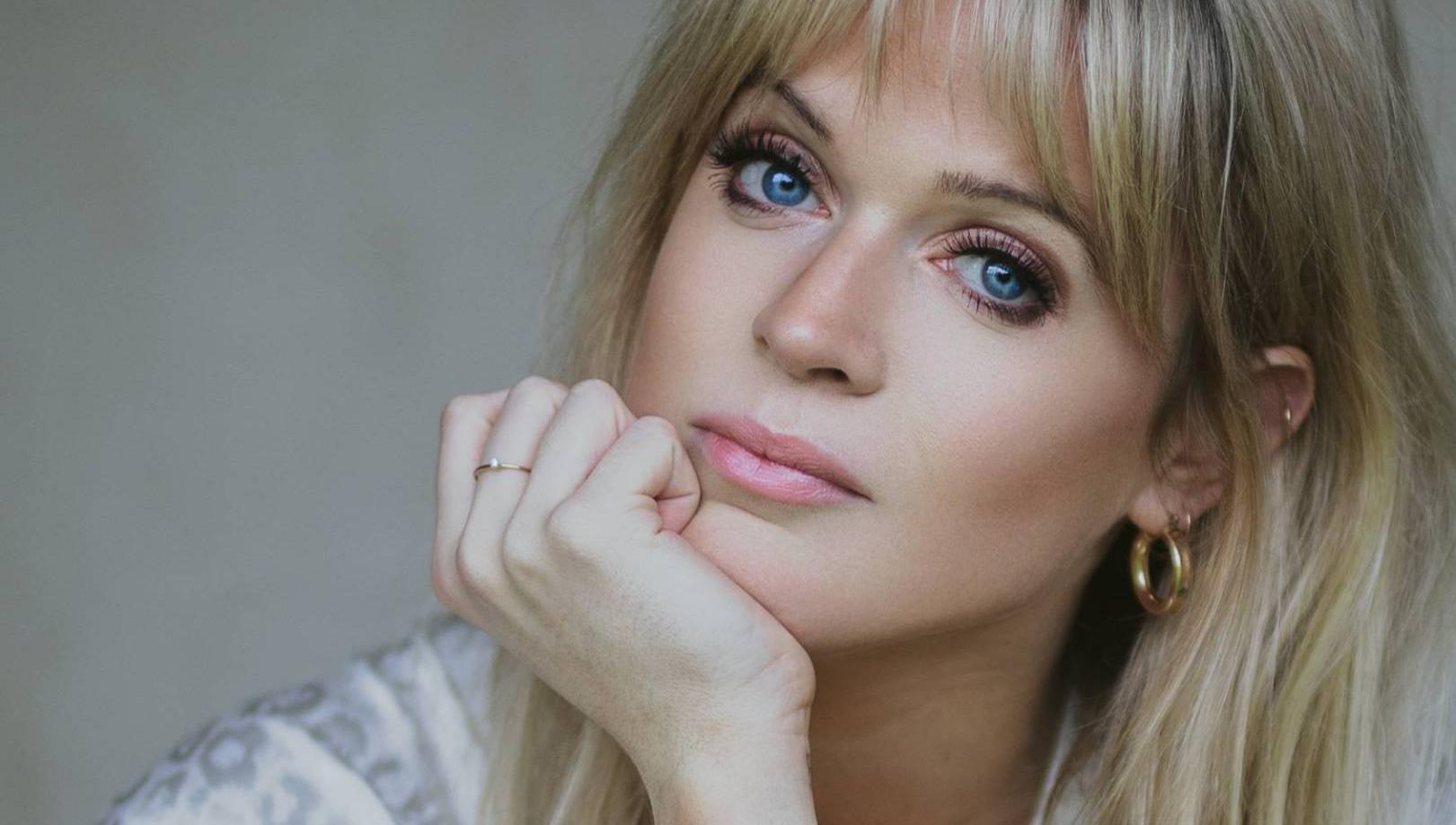
Dolly Alderton: ‘Ultimately I can’t control how people are going to digest my work... I’ve gradually made my peace with it.’ Pictures: Alexandra Cameron
Dolly Alderton is an award-winning columnist, a best-selling author, and the co-host of the chart-topping podcast, The High Low.
She is also my friend. We weren’t always friends.
That’s not to say that we were ever enemies, but we both moved in the same world, and had done since about 2013. It’s hard to explain what, exactly, that world is, except to say that it mostly consisted of millennial women trying to make a city work for them. We all moved to London at around the same time; we all spent our days poring over Twitter while at our desk jobs; we all took a turn at parlaying our one-line observations about packed lunches and public transport into 500-word blog pieces that were then sold to websites that paid us £100 for the trouble.
Eventually, me and Dolly met at a dinner party. I thought she was brilliant. I vowed to get lunch with her. We didn’t hang out again for another four years. We tried, of course, the way women always try, but it never quite took: it was years of “would love to see you!” and “dinner next month?” It wasn’t really anyone’s fault, and plus, her career was sky-rocketing: Everything I Know About Love had turned her into a sort of millennial Carrie Bradshaw, a writer who came to represent the idea of single life to thousands of women across Britain and Ireland. I watched the cult of her mushroom from the sidelines, pleasantly remembering the girl at the dinner party, and quietly resolved that the lunch would never happen. She was just too busy.
But one day, we managed to get a drink. The following week, we went to a gig together. Soon, we were on monthly dinners that went on until two in the morning, holidays in Greece, and three-hour phone calls. It’s a rare thing to have someone enter your life at 29 and climb the charts of your Whatsapp contact list like an Adele single; that, I guess, is just the power of her. I had thought of myself as outside the Cult of Dolly she had created with her book and podcast; somehow, I have found myself a high priestess.
C: I wanted to start with our many aborted attempts at friendship. What was going on there?
D: Here’s my charitable reading. My optimistic reading is that it was stage fright. That we had one hot night together at a dinner party, and the versions we got of each other were really good, and I remember thinking, ‘I’d really like to be friends with that girl’. But I think we were worried about killing the dream, so we kept putting it off. There’s nothing more exciting and romantic than thinking ‘this person exists and one day she’ll mean so much to me’ rather than to be let down if you actually pursue the friendship. That’s my optimistic reading.
C: What’s the pessimistic reading?
D: I think we couldn’t be arsed.
C: I also think there’s this feeling when you’re a woman in this profession that ‘if you’re not with me, you’re against me’. It’s a bitchy profession. You want to get everyone on-side.
D: Definitely. Yes. I hate that.
C: Before I even knew you I felt like I was supposed to get your approval, which is a weird vibe.
D: I think journalists are inherently gossipy people, and the entire peer group exists online, and there’s this disgusting sense that you’re supposed to have a girl in every port. You need a girl at Grazia, a girl at Cosmo, a girl at The Debrief, and you need to be feeding through the correct information to those girls. It’s so cynical. It’s all about having a false sense of control. In your early 20s, you spend so much time online just watching people being snarky to each other, and you get this feeling of ‘I can control how many people are talking about me’. It’s such a draining and an inauthentic way to start a relationship. So I think you and I probably just saw one another as an extension of that culture, and just couldn’t be bothered.
C: When I was a staffer at The Pool, you were an occasional freelancer and even then — this would have been before The High Low, before Everything I Know About Love — your pieces would always perform extraordinarily well online.
D: That’s baffling to me.
C: I think you were just unafraid of being specific. You were zoning in like a laser on extremely nuanced observations and you didn’t care who it alienated. And people just got it, instantly, which really is what good writing is about. And then that writing came to represent a certain kind of messy single girl, which then became more about you then it did about the writing. You became a very visual emblem of your own work. I saw this with Ella (Risbridger, author of Midnight Chicken). She wrote very specifically about care-giving and she became the girl everyone wanted to protect. You became the girl everyone wanted to get a drink with.
D: Yeah. And when Everything I Know About Love first got really big, I noticed there was a certain kind of stereotyping of me that I completely brought on myself. I really felt the weight of other women putting it on me. I would get messages from women, like… I remember getting messages of girls doing lines of coke on the back of a DVD case and saying ‘You’re our hero! This one’s for you!’ And even then I was like: ‘oh, no. Something’s got lost in translation’. And I would get messages from girls who just had a one-night-stand that made them feel like shit and they would say they did it because of me.
There was this girl, a student, who was a first-year and wrote about anal sex for her uni paper. And she said that she did it because of me?! I was so worried. That girl has two years of Uni left. She told me I was the inspiration for this.
C: You became a patron saint of something you never wanted to be the patron saint of.
D: I remember really freaking about it. But ultimately I can’t control how people are going to digest my work or attach their own ideas of womanhood to it. I’ve gradually made my peace with it.
C: Do you ever think about writing a second memoir?
D: No. Never ever. Never again. It was an extremely painful, hard thing to write. You don’t think about how hard it is to reflect on the bad choices you’ve made and why you made them. It’s not a nice experience! I was glad when it was done but I found writing it so unpleasant. And then talking about my personal life in the publicity for the book was really hard, the scrutiny was hard. That’s not a manifestation of regret, though. Would you ever write a memoir?
C: No. I don’t think so.
D: Why not?
C: Watching other people do it has given me this passenger-seat view of what it takes and what people expect from you after a memoir is out. Readers start thinking of you as a sister or a daughter or a twin, and I don’t think I could handle that kind of pressure at all.
D: If you hadn’t been a passenger, would you have tried to do one?
C: Probably? But I’m glad I didn’t. Even though I haven’t sold in the kind of volumes that you have, I have this relationship with my readers where no one needs anything from me personally. They don’t really care about who I am when I’m not writing. But with you, they want a good writer and they want everything else.
"You go into dates already feeling jaded"
C: Let’s talk about the writing of Ghosts, which focuses more on the struggles of heterosexual relationships in the way that, Everything I Know About Love was about the celebration of friendship.
D: I was really angry when I was writing Ghosts. I felt really conflicted and confused and cynical about being a heterosexual woman. And that’s not to say that the book is about ‘dating apps make men behave badly and women behave well’. It’s so much more complicated than morals. What dating apps do is exacerbate ancient structures that already existed in how men and women typically relate. How they conduct their romantic and domestic lives together, which is historically and biologically attuned for men to just have a much nicer time than women do. Dating apps haven’t done anything evil, they’ve just made the flaws in that system more obvious.
C: I completely agree, despite… never having been on them.
D: When you read Ghosts, did you feel a yearning or a relief for not having been through that?
C: It’s complicated. Sometimes I feel like, as a writer, I have missed out on this fundamental experience that’s so much a part of what women of my generation have to contend with. That I should know what it feels like. But mostly I just feel grateful to be with someone I love. But there’s something you get at in Ghosts which is that, women in relationships often think they will be brilliant at being single and on the apps.
D: That’s the thing about it though, is that sometimes it’s exciting. I really wanted those first couples of dates between Nina and Max to be cinematic, full of stardust and magic. Because that’s part of it. People write about how grim dating apps are, but they can also be really exciting. Cities can be so isolating, and there’s a reason people think they’d be great if they tried Tinder. Initially, it is fun. Initially, you are great at it. I remember my friend getting out of a 12-year relationship and saying, ‘I can’t believe I now get to walk around all day with millions of fit men in my pocket’. And it does feel that way, for a while.
C: You wrote in your advice column recently for the Sunday Times Style to a man who was very short and couldn’t get a girlfriend. His letter was quite bitter, and you wisely said that he was bringing his bitter energy to his dates, and that was why they weren’t working out. I think the same could be said of cynicism in dating culture. You go into dates already feeling jaded.
D: Yes. I see this a lot. A lot of women, as a way of coping with this endless string of disappointments with straight men, can create a kind of misandrist, fatalistic agenda as a protection and an explanation for why they can’t control their romantic life when the rest of their life can be controlled. I totally get it, and I relate to it. ‘This is what men are like, this is the sum total of who they are, this is why I’m always disappointed’ — you go to a date almost desperate for these men to prove you right. You then have scientific data to prove your theory: ‘This is why I have bad luck because men are fundamentally like this’.
C: Still though, men ARE providing the scientific data. There’s definitely this sense since dating app culture began that every man, no matter how boring or plain or stingy he is, somehow deserves a 23-year-old girlfriend who is a Boohoo model.
D: Hahaha, I mean, that’s the root of incel culture, isn’t it?
C: Yeah, and it’s kind of thrown off the dating eco-system. Because there’s this endless supply of bored, lonely, broke 21-year-old women on the apps who just want some guy to take them for a Pizza Express and will probably shag them afterwards — and I’m not judging those girls! We’ve all been there! — it’s increased this sense that men don’t need to bother with women their own age.
D: Which then becomes complicated if you’re a woman who is in her 30s who wants to have a child. That’s when it becomes political. That’s a tension that so many switched-on women are working with every day. We don’t want to be a part of this. We resent it, but we have to acknowledge it. There’s a difference between wanting a child as a woman, and wanting a child as a man. That’s not to say that all men are putting it off and will just grab the youngest woman he can find to do it with, not at all. But there’s a power imbalance there if you’re dating in your 30s and you want a child. I don’t like admitting it, but I don’t think there’s anything feminist about trying to ignore a biological truth. We have to talk about it.
C: Totally. Like, I’m in a six year-relationship, and even I feel vulnerable when that subject comes up. It never feels like a relaxed or joyful conversation, even though we’re in love and we want to have a family. It feel so mired in: ‘when can we have them? when’s the best time if we take into account my biology vs my career ambitions? How am I domestically and professionally going to be wounded by this? how much can I rely on you to step up and share the parenting even though historically men have not done this?’ We were talking about it recently and I was ranting on and on about this, and Gavin just quietly said: ‘You know you’ve never once asked me how I feel about maybe being a father.’ I felt so cruel. It was awful. I was so frightened of what I might lose with motherhood that I was ignoring his feelings on it.
D: But you can change it. Especially if you do it with someone like Gavin. We have to be able to change it, we have to believe that. But I think so much of women feeling helpless in their relationships comes down to this fundamental anxiety of ‘ooh, don’t scare him off’. And there’s no male version of this! In Ghosts, Max says to Nina “I’m going to marry you someday” on their first date, and she thinks it’s the most romantic thing she’s ever heard. A woman couldn’t do that without being called insane. But she wants him to be this fairytale romance, and so she lets him become this princely character. He’s not really a full person to her.
C: She always talks about him as a combination of things he owns and things he does.
D: Yes, she makes him into this two-dimensional character who is devoid of insecurities and is rock-solid. She didn’t really want to know who he was. Which is why she’s so shaken whenever he’s petulant or weird with her.
C: I think that happens when we make a person be ‘The Answer’ to who we are. So we invent a character for the person we’re in love with, and we’re so mad when they don’t fulfil it.
D: I think dating app culture encourages that. You become your own Communications Department. You have these carefully selected array of words and photographs to communicate your brand and why it will work with their brand. It’s so depressing.
"Everyone needs a space to be ungrateful"
C: I remember over the summer, we were so worried about our books coming out that we decided to write rave reviews to each other and just Whatsapped them to one another.
D: Oh god, that’s so embarrassing that we did that.
C: It’s a bit cringe, but it made us feel better! At the end of the day, the only thing that makes me feel sane about this industry is having friends who are also going through it.
D: I’m so grateful for it, because actually when we were getting close I was having a horrible time online, and you were one of the reasons I decided to take a massive step back from social media. My other friends had suggested I do this before, but I would always say ‘you’re not in the industry, you don’t get how this is necessary’. But actually, you convinced me that the professional opportunities I would lose out on from not being online was not worth the personal solace I would gain. You said to me ‘you need to make your whole operation smaller. You need to become a cottage industry now’.
C: I think it’s tricky because when you do something and it’s successful, everyone in your life wants you to do your best to make it even more successful. They put you up for more events, more interviews, more public appearances, more magazine covers.
And you think by agreeing to do this stuff you’re just doing your job, but the whole time, you’re flooding the market to the point where people don’t see you as a person. You’re a product that they feel very comfortable in being cruel to. You become shop spoiled, and a bit of a punchline. I could really see how that was hurting you.
D: It’s a small price to play, being a punchline. But… yeah, I’m glad I have people like you to process this stuff with. One time when we were being bitter and whiny, I remember you saying to me ‘it’s important we have these conversations with one another because we should never have them with anyone else’.
C: Everyone needs a space to be ungrateful!
D: You need people to share your dark mess with. I feel very lucky.
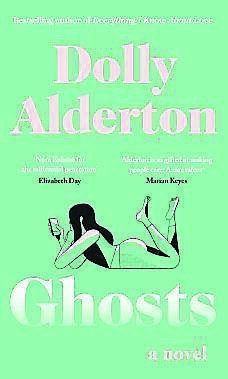
Ghosts by Dolly Alderton is published by Fig Tree (€14.99)


Cancel anytime