Tom Dunne: Scoff if you want, but I'm still enjoying my own Abba voyage
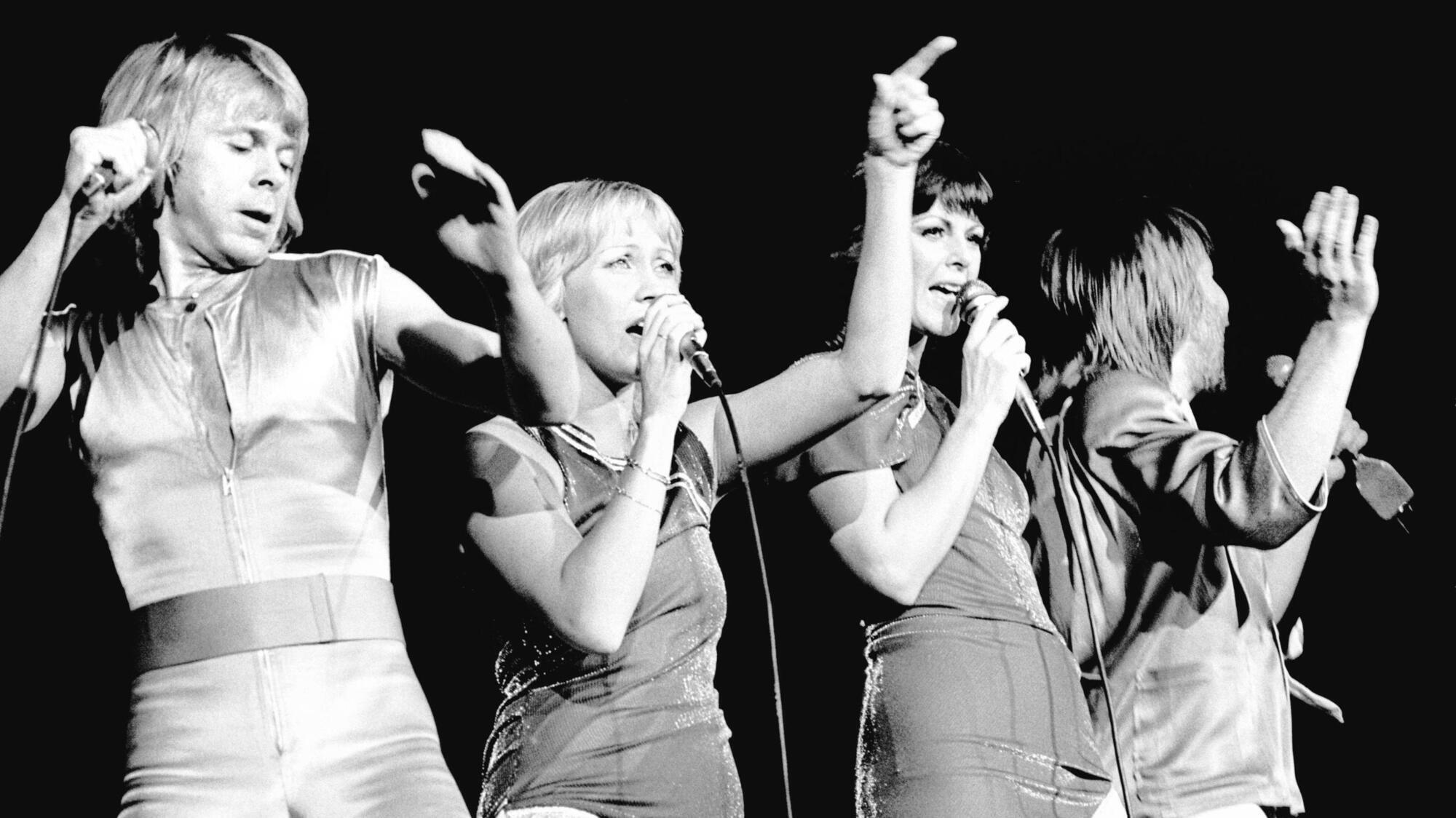
(Left to right) Bjorn Ulvaeus, Agnetha Faltskog, Anni-Frid Lyngstad and Benny Andersson in their ABBA heyday. Photo: Gus Stewart/Redferns
In its three-and-a-half-year run at the Queen Elizabeth Olympic Park in East London, ABBA Voyage has done some serious business. Its taken about £250m (€284m), played to 3.5 million people and had been worth about £2bn (€2.27bn) to the local economy. On December 8, I became its latest stat.
Twenty-two songs, costumes changes, a 10-piece live band and proof positive that to men of a certain age the debate over “who is your favourite?” has carried on into the digital/hologram age. And its Agneta obviously, no wait, Frida! No wait! Agneta! No! Frida!
I was slightly iffy to begin with. ABBAtars and all that and nothing aging faster in the post-AI world than holograms, but by the midpoint I was bowled over. It was magic. — with actual footage — and were stunning and emotional. There was the odd tear.
I first became aware of ABBA on a school trip to the Wexford Slobs in 1974. They had just won Eurovision and were the talk of the bus. I hadn’t seen them but colour photos in the confirmed I’d missed something special. I couldn’t get home fast enough.
It gets vague after that. I had assumed it was just instant world fame but it really wasn’t. They celebrated their success in the Napoleon Suite at the Grand Hotel in Brighton where, 10 years later, the IRA would almost assassinate Margaret Thatcher, but their fame wasn’t carrying far outside that room.
the follow up was a flop. With the phrase “one-hit wonders” being bandied about, songwriters Benny and Bjorn were wondering what they could do to be “a bit more like Sweet”. was offered to and turned down by Brotherhood of Man. Humanity dodged a bullet there.
As 1974 gave way to 1975 no one was talking about ABBA. It would be late 1975 before the single got them back in the charts. continued this and a , in 1976, promoted by the single kept them bubbling along as punk started to make inroads.
It was the release of in October 1976 that signalled the actual arrival of pop music royalty. and included again, were brilliant but and were different class. was played off the radio. A US number one, in 1977, it was unavoidable.

was the biggest selling album of 1977. The zeitgeist belonged to punk, disco and ABBA. Personally, I was knee-deep in punk by this stage, but as I bought on 7-inch single I’d slip a copy of picture sleeve in behind it. My secret, no one need know.
I was in a record shop on Stephen’s Green in late 1982 when I heard I knew it was their last single. Abba seemed incongruous at that point in a world of albums like Costello’s The Clash’s or ABC’s but I still loved them. A bit of my youth was going, and I knew it.
The rise of ABBA tribute bands in the 1990s came as no surprise to me. I couldn’t see the joke in it though or the irony. These were class songs by a songwriting partnership on a par with Lennon/McCartney or Marr/Morrissey. You can argue this if you want, but I am happy to fight you outside if you do.
I kept this secret love to myself until interviewing John Grant of Queen of Denmark fame about 10 years ago. “Do you have any posters on your wall?” I asked. “Just Nina Hagen [a German punk goddess] and ABBA ones,” he told me.
“Tell me more,” I told him, and he did. I haven’t looked back since.
Enjoying the show, fancying Frida again and contemplating how unbelievably well the songs are put together, how seamlessly the voices dovetail, my mind wandered. Is the ABBA Voyage winding up, as they seem to indicate, in May of next year, or is it just starting?
Advances in AI have overtaken the Voyage technology. Retooled AI avatars would make these 2022 versions look Stone-Age. And a big question as you face into 2026 and the 50th anniversary of punk: would you attend an avatar version of The Sex Pistols? Yes, me too. Name your feckin’ price, I say!