Movie Reviews: Borat returns with an assault on good taste
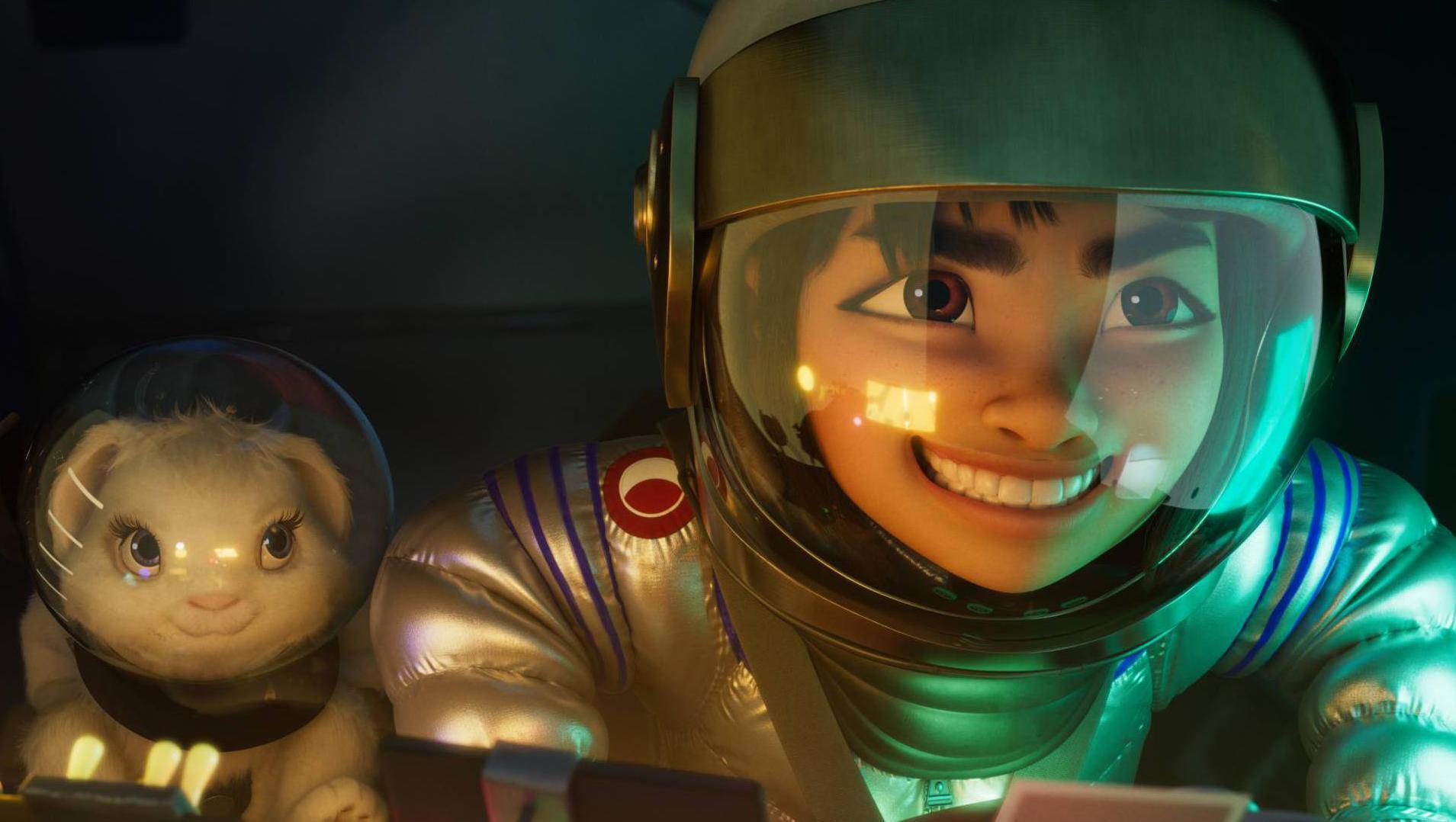
OVER THE MOON - (L-R) "Bungee the rabbit" and "Fei Fei" (voiced by Cathy Ang). © 2020 Netflix, Inc.

New York author, Laura (Rashida Jones), believes that her life is (12A), and not just because she suspects that her husband, Dean (Marlon Wayans), is having an affair with his work associate, Fiona (Jessica Henwick).
Frazzled by trying to rear her two daughters whilst struggling with writers’ block, Laura confides in her father, Felix (Bill Murray), who immediately decides that Dean’s behaviour warrants a full-blown undercover investigation.
Written and directed by Sofia Coppola, On the Rocks is a beautifully judged character study of a woman in the throes of crisis.
Rashida Jones plays Laura with a deft touch: where Laura might easily have come across as neurotic and whiny, Jones invests the character with a stoical air as she goes about her multi-tasking whirl of getting her children to school, procrastinating over her writing, and resisting the instinct to believe the worst of the man she loves.
Her heroic perseverance isn’t helped by Felix, however, who is a doting father but the kind of charming womaniser who may well have irrevocably undermined Laura’s faith in men when he abandoned his young family some decades previously.
Jones and Murray make for a terrific pairing: she’s patient, long-suffering and resolute, whereas he’s feckless, charming and idiosyncratic (the kind of man, for example, who thinks nothing of setting out for a stake-out in a tiny red convertible with a super-size can of caviar for nourishment).
“Can a man ever be satisfied with one woman?” Laura asks at one point, although the real issue at play in Sofia Coppola’s script is whether a woman should allow herself to settle for a man who can’t be satisfied, and especially when she’s raising her daughters to be strong, independent women. A blackly humorous, thoughtful and slow-burning drama, On the Rocks blends whimsy, grief and doubt to superb effect.
(Apple TV)
Set during the early years of WWII, A Call to Spy (12A) stars Sarah Megan Thomas as Virginia Hall, a young woman working in the American embassy in London when war breaks out.

Frustrated in her ambition to become a diplomat, Virginia volunteers for a new SOE spy programme overseen by Vera Atkins (Stana Katic), ‘a secret army of spies’ composed of women rather than men. Virginia her fellow recruit Noor (Radhika Apte) wreak havoc behind the lines after being parachuted into France to foment sabotage and subversion, but there is a price to be paid for their success: when the women come to the attention of the infamous Klaus Barbie, aka ‘the Butcher of Lyon’ (Marc Rissman), a deadly game of cat-and-mouse ensues.
Written by Sarah Megan Thomas and directed by Lydia Dean Pilcher, A Call to Spy offers a fascinating insight into the particular difficulties experienced by female spies during WWII — Virginia, Vera and Noor aren’t just fighting the Germans here, they’re also battling against chauvinist prejudice (not to mention anti-Semitism on both sides).
The script and acting is rather mechanical at times, and the scenarios frequently seem overly familiar, although that may well be because Sarah Megan Thomas has adapted her script from historical testimony; the various vignettes may not make for very persuasive fiction, but they certainly have the ring of truth. Director, Lydia Dean Pilcher, maintains a tense narrative throughout, despite the multiple storylines, and delivers a solid if uninspired addition to the canon of WWII spy narratives.
(multiple platforms)
Opening in contemporary China, Over the Moon (PG) is an animated tale in which young Fei Fei (Cathy Ang) is devastated by the death of her mother.
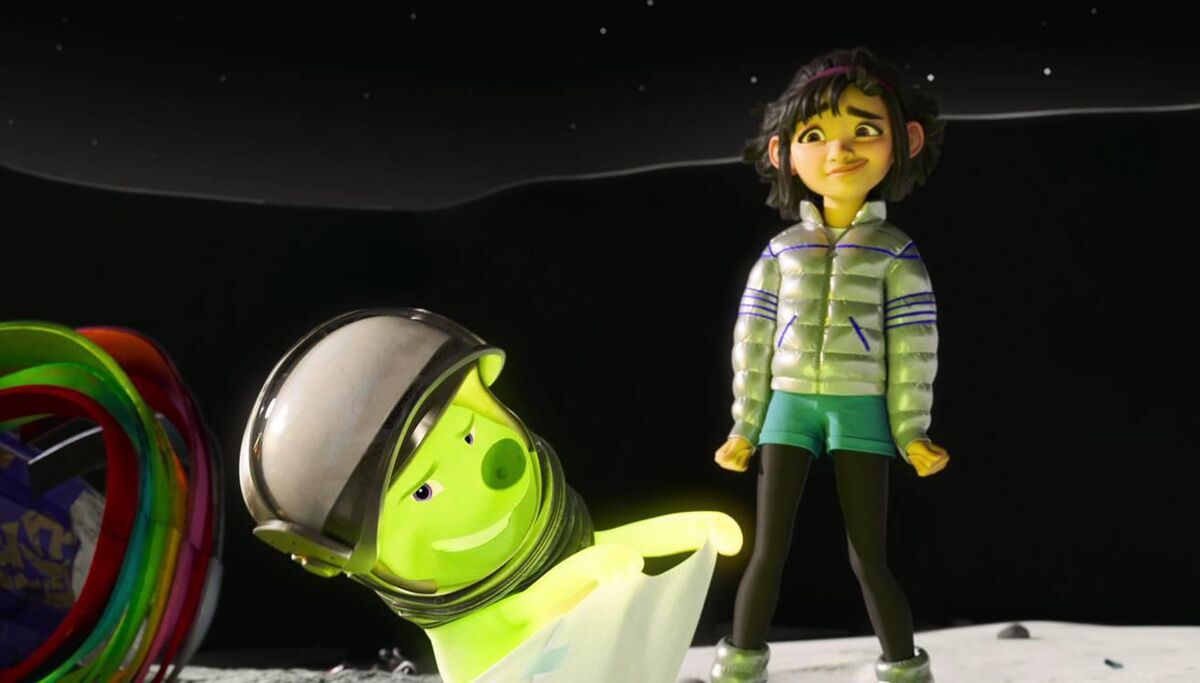
When her father, Ba Ba (John Cho), decides to remarry, the outraged Fei Fei plans to travel to the moon to bring back evidence of the goddess Chang’e (Phillipa Soo), a symbol of eternal love. Things, alas, do not go according to plan.
A Sony Animation production, Over the Moon delivers a modern spin on an ancient Chinese folktale, and does so in spectacular style.

The story itself, in which the mourning Fei Fei gradually learns to live with her loss, is tender, sweet-natured and ultimately uplifting, but it’s the animation itself that gives the film an unexpected edge.
Indeed, the makers have employed a number of animation styles: the conventional, Pixar-like animation of Fei Fei’s reality, a beautiful approximation of hand-drawn animation when the story digresses into its folktale origins, and a gorgeously surreal and hallucinatory style reminiscent of Disney’s Fantasia when Fei Fei finally makes it to the moon.
The blend is very impressive, and especially as the story itself combines science, science-fiction and mythology to enable Fei Fei to achieve the impossible. Funny, charming and visually entrancing, Over the Moon is a treat from start to finish. (Netflix)
Fourteen years on from his big screen debut, the inimitable Kazakh journalist Borat (Sacha Baron Cohen) returns in the aptly titled (16s).
Previously sentenced to hard labour for single-handedly causing his country’s economic collapse, Borat is offered a reprieve: travel to America and offer US Vice-President Mike Pence a gift – Johnny the Monkey, the Kazakh Minister for Culture – designed to restore harmonious relations between the US and Kazakhstan.
Alas for Borat, his teenage daughter Turat (Maria Bakalova) eats Johnny the Monkey, leaving Borat with no choice but to offer Turat instead … Citing the more outrageous aspects of Borat Subsequent Moviefilm would take up most of the review: suffice to say that the sting in which Donald Trump’s attorney Rudy Giuliani is caught in a hotel room in a compromising position with Turat is merely one of a long line of scenarios in which the ingenuous Borat lays bare causal sexism, racism and anti-Semitism as he motors his horsebox from Texas to New York.
The story, of course, is largely irrelevant: Sacha Baron Cohen’s modus operandi is to present Borat as a bumbling, inarticulate fool who says the unspeakable aloud, and thus allows his targets to feel free to speak their own minds.
There’s a strange kind of pathos at play here, in that it occasionally seems to be the case that Borat’s targets play along with his dim-witted schtick simply to spare his feelings; that said, when Borat is encouraging people to agree with what amounts to a fascist philosophy, it’s hard to feel sympathy for those who get caught out.
Some of the scenarios feel too good to be true, and give rise to the nagging suspicion that they may have been staged, but it’s in the more audacious, off-the-cuff scenes – Rudy Giuliani’s honey-trap, Borat’s invading a Mike Pence speech dressed as Donald Trump with Turat slung over one shoulder – that the movie really earns its stripes.
Blackly comic, and at times breathtakingly brutal in its assault on good taste, Borat Subsequent Moviefilm is funny, flawed and unmissable.