Book Review: an insight into the enduring love and personal battles of Irish novelist Elizabeth Bowen
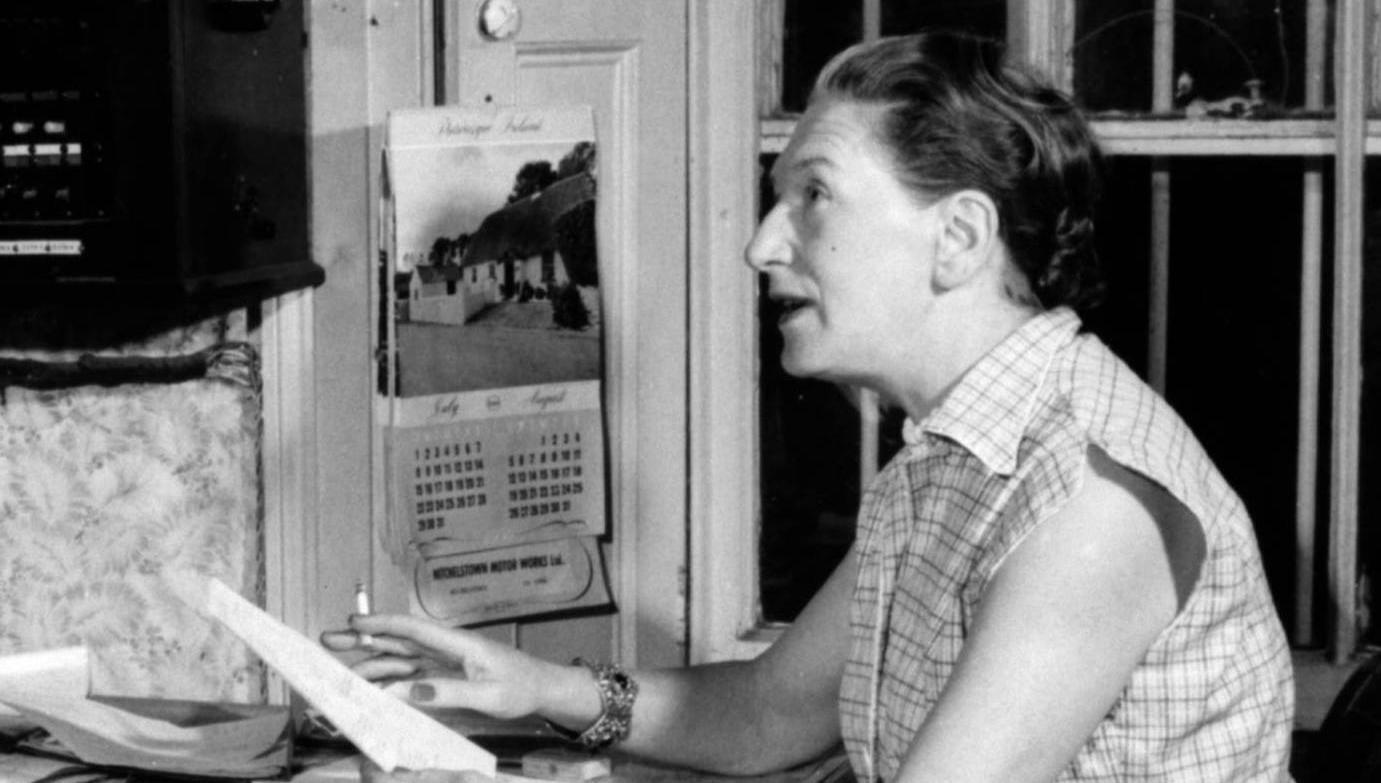
Irish novelist and short-story writer Elizabeth Bowen (1899 - 1973) working at her home, Bowen's Court in Kildorrey, County Cork. (Photo by Hulton Archive/Getty Images)
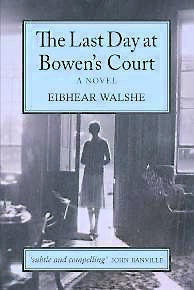
- The Last Day at Bowen's Court
- Eibhear Walshe
- Somerville Press, €15.00
The Blitz years in London provided Elizabeth Bowen with a precarious, emotionally-heightened environment in which she wrote some of her most compelling work.
Eibhear Walshe’s new novel, The Last Day at Bowen’s Court explores some of Bowen’s more intimate battles during this time that also played a pivotal role in her writing and her personal life.
One of lines attributed to Bowen early in the book is striking, both in how it applies to our current uncertain circumstances and how it encapsulates her state of mind and creative sensibilities while living through the war; “The world is so much more itself than ever before, frightening, more alive, more vulnerable, more exposed. Writing is the only thing that makes sense of it.”
It’s a deeply personal and profound statement to make on behalf of the author, but we see throughout the novel how the depiction of Bowen’s relationships and creative process are deftly supported by Walshe’s years as a literary critic of Bowen and his talent for biographical writing.
The novel reimagines the intense affair between Elizabeth Bowen and Canadian diplomat Charles Ritchie, beginning in WW2 London and spanning North Cork, Dublin and Europe.

It also captures the writing process of one of her most celebrated novels, inspired by her affair with Ritchie, The Heat of the Day.
It’s narrated by Bowen herself, and at times is told from the point of view of her husband Alan Cameron, Charles Ritchie, and Charles’ wife Sylvia.
During her marriage to Alan Cameron, Elizabeth had several lovers; the Irish writer Sean O’Faolain, Oxford academic Humphrey House, May Sarton the Belgian-American poet, and Goronwy Rees, a journalist and spy.
By the time she met Charles Ritchie he was still unmarried and seven years her junior. He was working in London as Second Secretary at the Canadian High Commission, and had already developed a reputation as a womanizer.
The early days of their affair in war-time London and their trips to Bowen’s Court in North Cork are characterised by Elizabeth’s eager interest in Charles and his comparatively more casual attachment to the relationship.
However this changes over time, as we witness the couple navigate Charles’ marriage to his cousin Sylvia and Alan Cameron’s acceptance of his wife’s personal life. By the closing of the novel and Elizabeth’s death it’s made clear how the relationship developed to become a guiding light for both of them throughout their lives.
The affair lasted 32 years until Bowen’s death, and has been studied by critics and academics through a combination of Ritchie’s diary entries and her letters to him.
The Last Day at Bowen’s Court is thankfully well-informed and well-crafted enough to succeed, which is no doubt owing to the Walshe’s extensive background in both creative writing and non-fiction. A lecturer in the School of English at University College Cork and Director of Creative Writing, Walshe has an impressive range of publications to his name.
Some of his non-fiction publications include; Elizabeth Bowen Remembered, Kate O'Brien A Writing Life and his own memoir, Cissie's Abattoir. He also edited Elizabeth Bowen: Visions and Revisions for Irish Academic Press in 2008.
The Last Day at Bowen's Court is his third novel, and is an impressive, rare combination of academic insight and a skill for storytelling.
Some might enquire as to the usefulness of recounting such a famous figure’s life through fiction, when there are so many academic and historical accounts of Bowen’s life and work. Walshe’s book provides a good answer to this question.
His portrayal of Elizabeth and Charles’ affair is psychologically astute without being overly familiar, and we are offered a unique view of the impact the relationship likely had on her writing process and work.
As well as providing a compelling depiction of a crucial stage in Bowen’s writing career, there are also opportunities to explore some of her personal struggles that give further substance to the novel. Elizabeth recounts the difficulty of witnessing her father’s mental illness and its effects on his work, as well as her mother’s death and its profound influence over her.
Through the lens of her relationship with Charles we watch Elizabeth struggle with the completion of her novel, the changing nature of some of her closest relationships, and the eventual loss of her voice through lung cancer. It seems inadequate to quantify the impact of these developments in non-fiction or academic accounts.
Of course, the exploration of these real-life events in fiction is by its nature not a factual retelling; but what it does offer is a deeply empathetic view of one of the most renowned figures of Irish literature and some of the personal challenges that moulded her writing.
While there are many facets of Elizabeth’s life explored throughout the novel, it’s unsurprising that there is not adequate time or intention to examine all of the interesting elements of her life during the war. Her time spent spying for the UK government on Irish neutrality is an intriguing topic that is referenced rather than explored.
She worked for British Intelligence during the Second World War and wrote numerous reports for MI5. While this is mentioned in passing one of her and Charles’ early trips to Dublin, it’s never deeply examined in the novel - despite also being mentioned in the synopsis of the book.
The personal story of Charles’ and Elizabeth’s affair is in fact more than enough to sustain the novel, and it’s understandable that the book’s detailed focus on their complex dynamic leaves little room for study on the contentious issue of Bowen’s MI5 post.
It’s a good example of the limits that can be encountered in any fictionalised version of true events, and while it might be a disappointment to some readers to miss out on further insight into Bowen’s espionage it’s a credit to the author’s commitment to avoiding conjecture.
Walshe’s reimagining of Elizabeth’s Bowen’s life-defining affair with Charles Ritchie is a persuasive and powerful portrayal of living through uncertainty and the far-reaching effects of a relationship.
The Last Day at Bowen’s Court offers a captivating portrait of the acclaimed Irish author at her most alive, vulnerable and exposed.
The novel is also an illustration of love’s ability to endure formidable challenges like national upheaval, long absences and questionable choices; and is a timely reflection on how personal relationships can still easily eclipse the most extraordinary events.

BLACK FRIDAY
Already a subscriber? Sign in