Tenet: Could it be the movie that will save our summer?
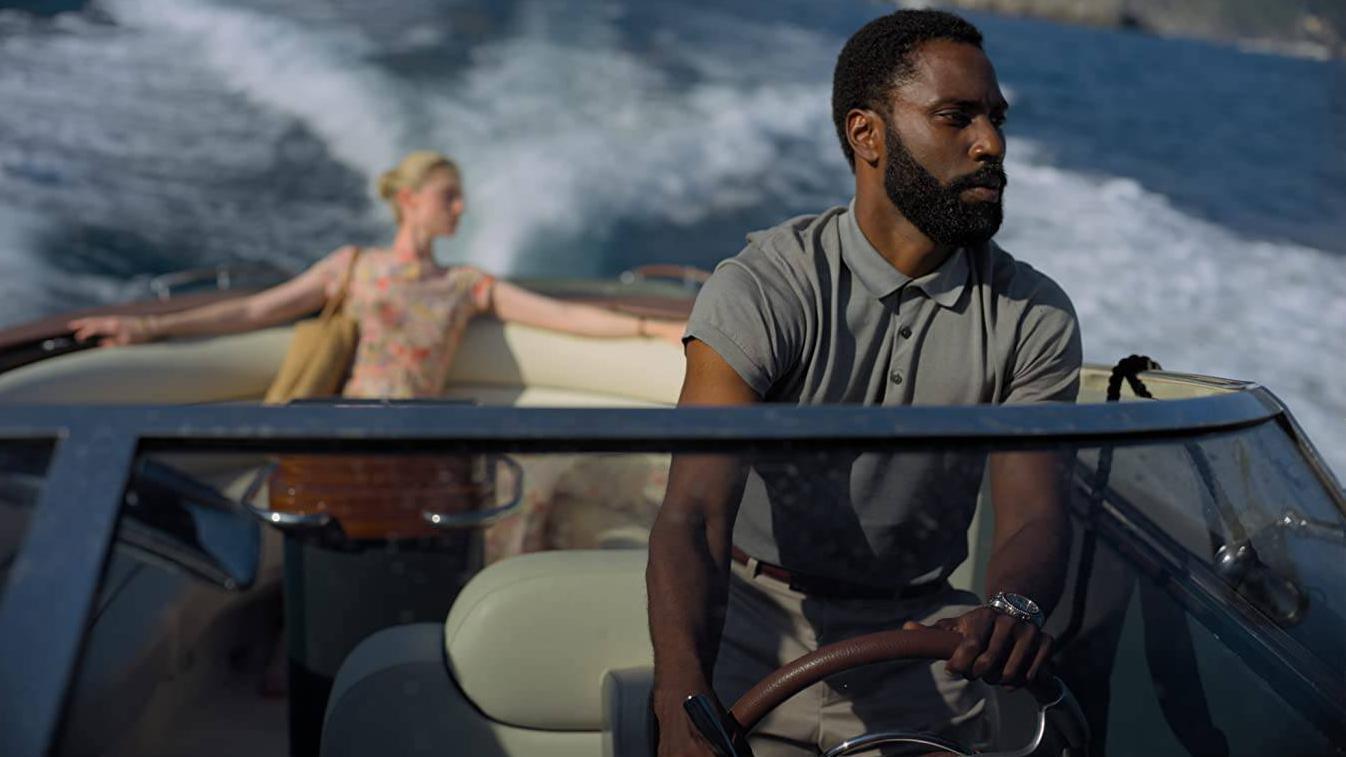
It's been hailed as the movie which could help cinema worldwide begin to recover from the devastating impact of Covid-19, but if Christopher Nolan is feeling the pressure of expectation he’s certainly not showing it.
This week the filmmaker’s time-twisting spy movie, Tenet, opens in cinemas here after its scheduled release date was changed three times in what has been a chaotic summer blockbuster season. US audiences will have to wait more than another week for its release.
It’s a relief to the filmmaker that the glamorous action thriller starring John David Washington, Robert Pattinson and Elizabeth Debicki will finally get to bow on the big screen, having spent years developing its ‘time inversion’ concept, where time travels backwards into the present.
“There are certain images and certain devices in the film that I've been thinking about for a long time, decades really,” he says at a virtual meeting to discuss the film. “People who know my earlier work will recognise some of the tropes like the bullet coming out of the wall and going back into the gun. It's something that's used for metaphorical purpose in Memento.
“But here, we try to actually make it concrete, make it a real thing. I've been playing around with some of these ideas for a very long time, this particular script and the idea of taking the spy genre and really trying to use it as a vehicle for taking the audience on this journey through all of these bizarre concepts of time.” The Briton who brought us such films as Interstellar, Dunkirk and The Dark Knight has frequently worked in a non-linear narrative style. He’s also long wanted to make a spy movie, having fallen in love with the genre as a child.
“The first James Bond film I remember going to the cinema to see was The Spy Who Loved Me with Roger Moore,” he says. “That still is a great favourite of mine. It's a film that I try not to watch too often, but when I've watched it recently - I've shown it to my kids for example - you can tap back into that early experience.
“I think I was about seven years old when I saw it. I went with my dad to the cinema. And what I remember and what I've tried to retain from that experience is the feeling of possibility, that you could jump through that screen and go anywhere in the world and see the most amazing things.

“It had such scale. It was pure escapism and had an excellent fantasy component to it as well - the car that turns into a submarine and all that stuff. I think I've spent a lot of my career trying to get back to that feeling and trying to give that feeling to audiences - back to that sense of wonderment about the possibilities of what movies can do and where they can take you.
“Really it was about reconciling concept and genre and constructing as engaging a spy story as possible. To embrace the concepts of time in the script with the relatively straightforward experience for the audience of just being on a thrill ride. Stepping into the shoes of the protagonist and going on that ride all around the world with him through all these action set-pieces.” Nolan turns to many different elements and artists when it comes to creating his worlds on film. On this film, the celebrated Dutch graphic artist MC Escher proved to be an inspiration. “I actually take a lot of visual inspirations. I’d cite Escher as a main inspiration on the script actually - those fantastic prints of The Penrose Steps, The Eternal Staircase and things like that. I tend to think in diagrammatic terms when I’m writing and try and lay out directions of time and how they might fold in on each other.” Some have been critical of Tenet’s convoluted and loaded storytelling style - a criticism that has also been levelled at the director for some of his past films. But there has been wide praise for the glamour and scale of the stunt and action sequences. They are epic, with a scene involving a 747, an elaborate heist and extended car-chase sequences.
Yet it’s the hand-to-hand combat fights involving Washington’s Protagonist (that’s his character’s actual name) that are the most impressive of all, making use of inverted time to bring something truly inventive.
“The complexities of fighting that this concept of inversion of time presents were clearly going to be an important part of the story,” he says. “And so I sat with the stunt team very early on.
“The physical choreography of the film is one of the things that we approached first, and spent a lot of time in preparation, working with very talented stunt people, as well as some dancers, looking at dance choreography and how that could inform things.
"I felt like if we could crack that and how we approach filming that, the rest of the film would start to fall into place as we got more and more complicated larger and larger scale action. When you're trying to create large scale entertainment, you bump up very rapidly against the limitations of what you can build or what you can conceive of.”
Tenet’s striking score is remarkable and sees him working with a new collaborator as long-time associate Hans Zimmer has been working on Denis Villeneuve’s forthcoming sci-fi movie Dune. Ludwig Goransson, an Oscar winner for Black Panther, got on board.
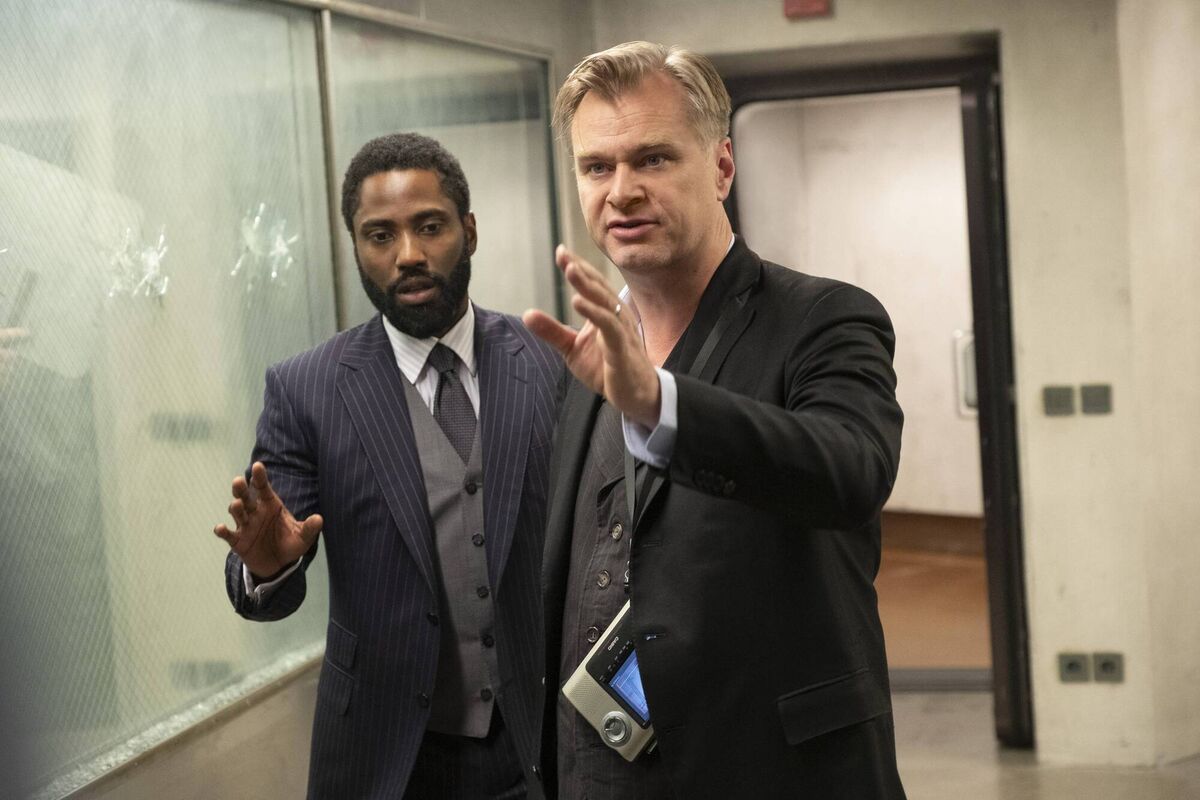
“For me, one of the most important things is that the music be cohesive with the overall sound design of the film,” says Nolan.
“One of the great things about working with Ludwig was his approach to building the sounds from the ground up from nothing. And so there's nothing that has specific associations, everything is fresh in some way. And I think that allows the music to function more the way that the traditional sound design functions in a film where it's very subliminal in a lot of its effects.
“Yes, there's the emotionalism of the music, too, the driving themes and excitement of it, but it's also having another effect in terms of its audio characteristics and how it's built. It's informing the DNA of the film, really, it's really integrated fully. And part of the reason for that was when I edit films, I don't use what's called temp music. I don't take music from other films or earlier films and put it on to show Ludwig the kind of thing we want.