Nicholas Romeril: Antarctic ice-olation was the perfect training for lockdown

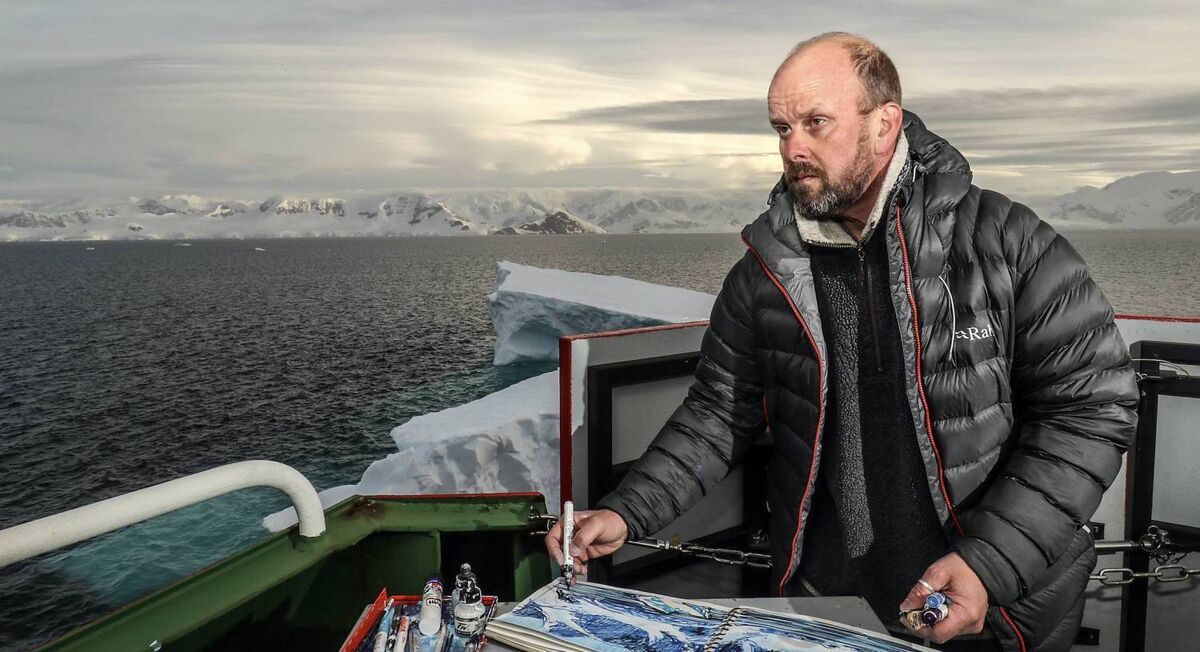
“Do you know what penguins smell like?” Landscape painter Nicholas Romeril asks, and then laughs at his own question.
The answer, apparently, is terrible: an overpowering combination of ammonia and fish oil. Romeril has had far too much contact with the odour, he explains.
“I worked with a perfumerist to try to replicate the fragrance of the penguins,” he says. Romeril was working on a 5D exhibition, involving all the senses. But the sense of smell had posed a problem.
“We spoke a lot about what the smell of the Antarctic is, and it really doesn’t smell much, apart from the penguin colonies, which you can smell from about two miles away,” he says.
“It’s also a very quiet place. It was devoid of noisy birds; you see a lot of whales and you can hear them when they come up to breathe, but is basically a very quiet, non-smelly place.”
Romeril spent six weeks as artist-in-residence aboard the HMS Protector, the British vessel responsible for transporting goods and personnel to and from The Antarctic, in 2018. Over the course of the 5,600 km polar expedition, he made over 200 paintings and drawings, and also recorded 3D film.
“I’d had this idea before we set off that I was going to create 30 or 40 paintings while we were going along and have an exhibition of them when I got back,” Romeril says.
“But of course, the ship was always moving, because as well as bringing stuff and people, it’s also mapping the ocean floor. So I realised the landscape was moving past me and that if I just concentrated on making one painting I’d miss loads of fantastic opportunities.
“I moved to working really quickly in sketchbooks, much more reactive, quicker, looser. Then I filmed some virtual reality films; I set up a camera and did a few sketches whilst being filmed, so you could see me working and the landscape I was painting moving by.”
Of 30 applicants who applied for the unique opportunity through Cambridge University’s Scott Polar Research Institute, Romeril, whose landscape paintings frequently explore the movement of water and the effect light has on pale surfaces like snow and foam, was chosen.
For the painter, the almost abstract scenery, the juxtaposition of land and sea, the extremely limited palette of colours, the skewing of scale, made it a once-in-a-lifetime experience.
“The way the mountains join the sea is quite exceptional,” he says.
It all has quite an abstract quality and the shapes of the mountains are just phenomenal. They’re huge. It’s very difficult to describe; they’re just towering above you.
"And because the polar regions are flat, you see for a really long distance and it’s very hard to get a sense of scale. You’ll think something is half a mile away and it’ll be two and a half miles away.
“The colours are very limited: it’s basically blue, black and white. I had very little use for the oranges, reds and greens that I took with me. I ran out of white and I ran out of blue and I think I ran out of black.”
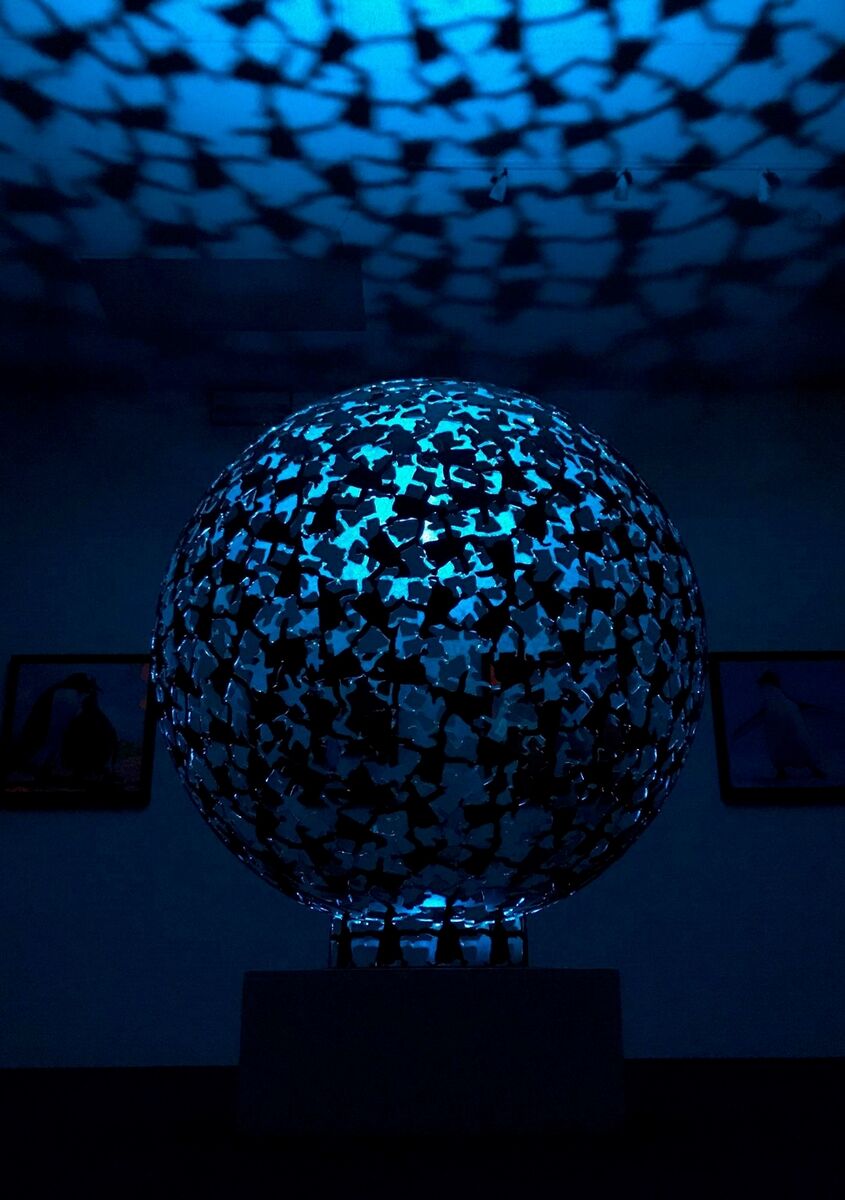
Romeril’s work was included in a London-based exhibition called Polar Encounters, displaying 200 years of contemporary and historical Polar Art, after his return. For the early explorers, drawing was, after all, the original method of keeping a visual record of their voyages, he points out.
“Artists have been going to the polar regions since before the invention of photography,” Romeril says.
“If you were a gentleman explorer, you’d learn to draw so you could record what you were seeing. They’ve always sent artists too.”
The public response to Romeril’s depictions of Antarctica is one of curiosity, the artist says; people want to know exactly how bad the impacts of climate change are from someone who’s seen it for themselves. “They always say, ‘so, is it really disappearing?’” he says.
“But it’s very difficult for me because I’m not a scientist and I’ve never been down there before. Even the scientists that spend a lot of time there say that one year can be different to the next.
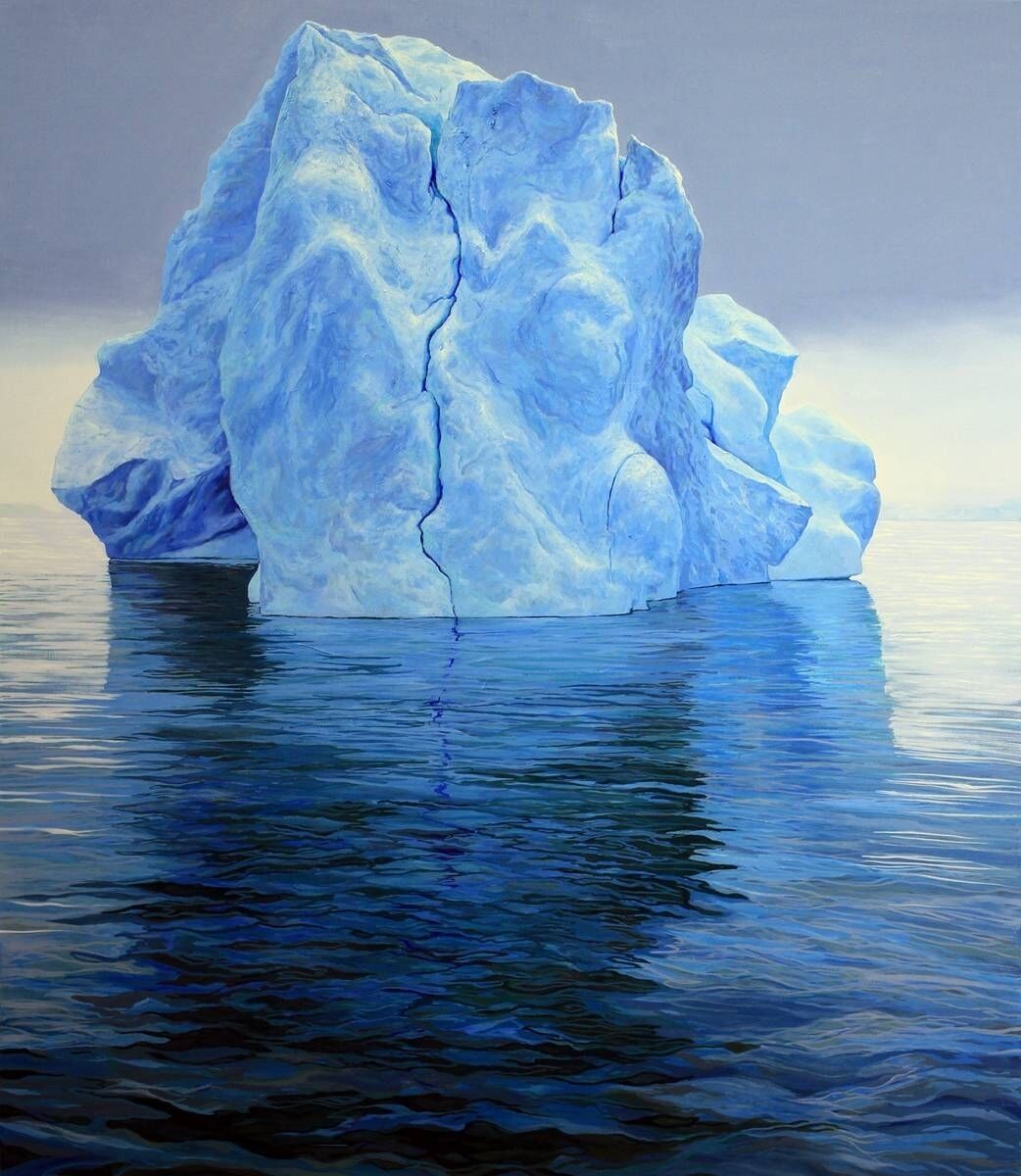
“The ice moves; one place could be clear one year, and it could be totally full of ice the year after because there’s tidal movement. There’s still huge icebergs floating around. It still looks like lots of ice; it’s three miles deep in the middle of the Antarctic.
"Some penguin populations are thriving, but there are sub-species that are in decline. Are we destroying it? All the research is saying that yes, it’s disappearing at a rapid rate.”
A West Cork connection for the Jersey artist had meant he was working towards a 5D exhibition, combining his oil on linen paintings and steel sculptures with 3D film, audio recordings of poetry written by the HMS Protector’s crew, and the aforementioned penguin perfume, for Schull’s Fastnet Film Festival, which was, of course, cancelled alongside every other live event due to the Covid-19 response.
The Channel Islands are also operating a Stay At Home policy and there have been several cases of Covid-19 on Jersey.
Isolation, Romeril says, is something the Antarctic and his own artistic practice have prepared him for.
“On the return journey, the HMS Protector picked up a team of scientists who had been researching chinstrap penguins in this barren place called Harmony Point,” he says.
“They’d been there for four months, so they were pretty relieved to be going home.
“I’ve always marooned myself; I was thinking this about the crisis at the moment; I’ve been self-isolating for 30 years.
“But there are specific parallels with the Antarctic trip and our current situation, I think.
It’s kind of isolated there, and you’re in this deep-freeze scenario where everything looks pristine on the surface but then you read all these scientific facts and you realise that 20% of it has disappeared in the past 30 years and you think, wow, that’s just terrifying. You kind of associate it with this current crisis in your head.
“Is there something we’re doing, have we forced this on ourselves? Is this the end? That’s all a bit doom and gloom: basically my paintings are celebrating this wonderful landscape we live in, so I’m trying to be positive about this fantastic world.”
CONNECT WITH US TODAY



Be the first to know the latest news and updates














