This Much I Know: Writer and Director Stephen Bradley
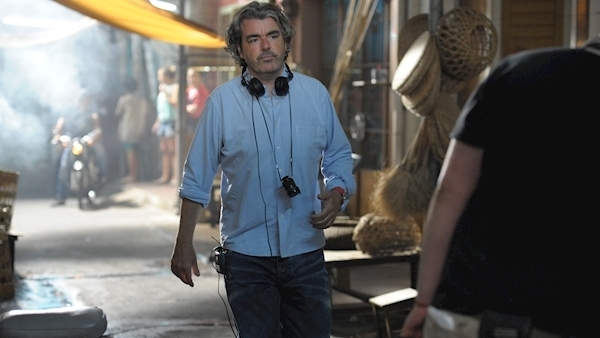
Growing up in Cork, Stephen Bradley dreamed of becoming an actor.

This Much I Know: Writer and Director Stephen Bradley

Writer and director Stephen Bradley n in conversation with Hilary Fennell.

Growing up in Cork, I dreamed of becoming an actor.

I don’t know where the desire came from. I was quite a shy child and acting often appeals as an escape. When I went to Trinity to study law I was very involved with Players and even set up a student theatre tour of the States one summer. But I had a naive idea of what acting was and soon realised it wasn’t for me. I became an assistant to James Hickey, who was a leading media lawyer at the time, and found out that what I really wanted was to write and direct films.

I believe in serendipity.

Like how I met my wife [comedian Deirdre O’Kane]. I moved into a house with two other guys on the same day that Deirdre moved in next door with two other girls. We were friends for years before we started going out because I thought, oh, oh, she’s trouble! We’ve been together for 26 years.

The best advice I ever received was from Deirdre: to keep your eyes on your own page, and not to get distracted by outside criticism. Which is easier said than done of course. But it is a useful thing for anyone who works in the creative industries, in particular, to remember, as there is so much that is beyond your control. It helps to focus on what we can control.

I write in concentrated bursts. I’ve learned to write in libraries and cafes, as well as in an office.

My idea of misery is when the writing is not going well. Screenwriting is a mathematical as well as a creative process. If you change one scene, it can affect all the others.

My idea of bliss is an absolutely great day on a film set, when everything is going right and you are suddenly aware of that feeling of happiness, in the moment. It is rare, but it does happen.

One of the most rewarding work experiences I ever had was making the film Noble, about Christina Noble, whose Foundation has helped thousands of children in Vietnam and Mongolia. Deirdre had wanted to work with her ever since she read her book. It was stressful too, of course, as we were in development for five years but my antennae were well tuned to the pitfalls of production by then as my previous project had fallen apart at the very last minute in 2011.

The biggest challenge I’ve had to face was moving back from London to Dublin three years ago and finding out three weeks later that I had stage four cancer. It’s what my book Shooting and Cutting is about.

I was bed bound for the first year and I wrote about the treatments I was getting, as a form of therapy.

It was all very technical. The idea of turning it into a memoir, about my life in film as well as my treatment, came much later. It helped to give meaning to the last three years.

The experience of being ill challenged every one of my beliefs and attitudes. I found out that it is the mind that panics, not the body. You have to reevaluate everything. I did a lot of reading, on an array of subjects. I am still not a fan of organised religion, but I’m more open-minded about ‘spirituality’ than I was before.

I do believe in some kind of afterlife but I find it very hard to articulate what I think happens when we die, except to say that something of our energy remains.

My biggest fault is a lack of street smarts. I’ve had to learn the hard way.

I’m not good at having a work/life balance. My projects can become all consuming. I try to have six to eight horses in the race at once, all at different stages of development. I’m working on a series with Deirdre, a film about a young singer and about five other projects right now.

Our two children, who are eleven and fourteen, keep me sane. As does walking by the sea.

The trait I most admire in others is a sparkling kind of energy. I love crazy people.

The thing that most irritates me about others is unpunctuality.

I don’t have many fears left, although I still don’t like flying.

So far life has taught me that it is important to understand the significance of both positive and negative events. To try and stand outside of yourself so that you can observe your journey from above, in a dispassionate way.

Shooting and Cutting: A Survivor’s Guide to Filmmaking and Other Diseases is out now, from Mercier Press. It alternates between the journey of Stephen’s life-changing treatment, his renewed sense of purpose in current work projects and war-stories from twenty years of filmmaking.

x

More in this section

Cookie Policy Privacy Policy Brand Safety FAQ Help Contact Us Terms and Conditions

© Examiner Echo Group Limited













