Food for thought — let’s go back to the old ways
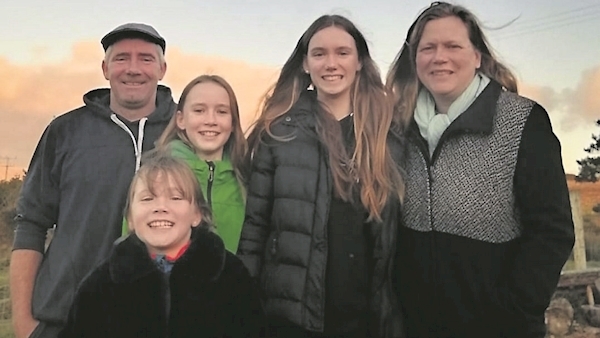
Anja Gohlke has been the head gardener at Kylemore Abbey and Victorian walled garden in Connemara for over 16 years, where she has overseen various initiatives.

Food for thought — let’s go back to the old ways

Anja Gohlke has been the head gardener at Kylemore Abbey and Victorian walled garden in Connemara for over 16 years, where she has overseen various initiatives.

Born in Germany, she studied for her MA in Landscape Architecture and Environmental Planning in Berlin before coming to Ireland and meeting her husband, groundskeeper David Coyne. They live in Lettergesh with their daughters Lina, 13, Erin, 12, and Nora, seven.

“I got my Masters in 2001 and came to Kylemore to the walled garden on a work placement for three months. I wanted to travel a bit before I started work, and I loved Ireland. I was just going to work for the summer, but after two weeks I met David, in the very traditional way: in the pub.

“I extended my stay to five months, and then I went back to Berlin but it was hard to find work, and I wanted to come back because of David. I was lucky enough to be offered the assistant head gardener job at Kylemore, and after six months, the head gardener left.

I had the choice: stay on or go somewhere else. Kylemore was a very unique opportunity.

“We aren’t 100% organic but we try as much as possible to work organically. We raise our own plants from seed. What makes our garden unique in Ireland is that we are 95% heritage varieties, and therefore we have to grow them all ourselves: all the annuals, perennials and vegetables are grown right here in the glass- house. That means we know exactly what’s in the them. We produce our own potting compost.

“We buy a bit for seed-sowing, but everything used in the beds we make ourselves. We add a lot of natural fertilisers like seaweed and comfrey. The Atlantic is 4km from the garden.

“We try to have a closed system and to avoid importing soil from outside because you never know what seeds or chemicals can be in it. We try to grow things using permaculture methods where possible, which isn’t always easy because we’re a traditional Victorian garden, which means very clean lines and well-maintained beds.

“This year and next year, we’re improving our biodiversity big-time. We got our first electric vehicle this year and we hope to expand the fleet next year. We use 80% electrical equipment instead of petrol tools and long-term we want to produce our own electricity, which they actually had here at Kylemore 150 years ago.

“They had a hydro-electric plant here and we plan to bring that back and produce enough electricity to power all the hand tools we have. We’re also looking at a solar plant. There’s a lot on the agenda for the next couple of years.

“We live about 15 minutes from Kylemore by car, right on the Atlantic in Lettergesh, where we built our own house recently. The primary school is on my way to work, and Lina has just started secondary school in Clifden.

“We planned our house to get the maximum amount of sunlight coming in; we’re so open to the Atlantic we have to make sure we heat the house. We did things like put in a back-boiler system to prepare for helping our ecological footprint, but some things are a matter of affordability.

“We have our own compost system at home, which needs to be improved because we only finished the house this summer. Nora’s job is to empty the compost bucket when it’s full.

“Since we grow our own vegetables in Kylemore, we have all those but long-term, I want to have a tunnel in my garden at home. On the west coast, there are lots of crops you can only grow in a tunnel.

In the past two years I’ve noticed a lot of wind-burn and uprooting of trees. I started with my garden before the house was finished, but I lost a few trees that I thought would be fine, even birch trees, which is unusual.

“Food-wise, the problem we have here is that there’s not enough markets. The nearest farmer’s market is in Moycullen, which is an hour’s drive away. So we do depend on the supermarket, and I go and do a big shop and try to buy as much organic as possible.

“All the girls are very aware of things like climate change. Nora came home from school recently and they’d been talking about the foods that aren’t ecologically friendly to buy. She said, ‘we can’t eat avocados or grapes anymore.’ She’s asking more questions than the two older ones. But we try not to overdo it, to fit things into the normal daily routine and drip-feed awareness. I think it’s completely wrong to scare them; they can find out in their own time.

“I come from east Berlin and we had to recycle everything to run the country; we got pocket-money by collecting paper and bringing it to the paper shop. My mum was a teacher for 40 years and one of her subjects was school gardening, it was a part of the normal curriculum. When the wall came down, people thought nothing good came out of East Germany, so it was stopped, but I think there were a few things that made a lot of sense. Ireland was like that too.

“People didn’t have a lot but as the times got better, everybody bought everything. Now I think a lot of Germans and a lot of Irish too are going back to the old ways of growing things and reusing things.”

More in this section

Cookie Policy Privacy Policy Brand Safety FAQ Help Contact Us Terms and Conditions

© Examiner Echo Group Limited













