Animal instinct: Giving animals a 'fair deal' is how Supervet Noel Fitzpatrick wants to be remembered
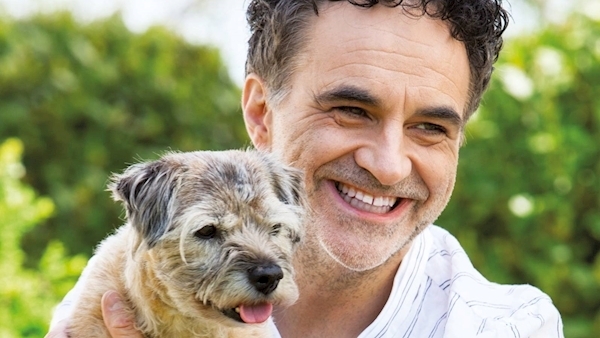
Supervet Noel Fitzpatrick is a superhero to his legion of fans. But he tells he’s just a normal man who hopes his legacy will be that he gave animals a ‘fair deal’
Noel Fitzpatrick is sitting on the edge of his seat upstairs in Easons after a book-signing, head in his hands, beating himself up because he didn’t give enough time to a woman whose beloved King Charles spaniel, Lulu, died suddenly last Saturday. “Sometimes I don’t hear what people say to me until after they’ve said it because they move along so quickly,” he says into his palms.
“That lady’s friend died on Saturday and she was distraught and I didn’t give her proper time. I didn’t give her a proper hug.” He doesn’t want to hear that the queue was longer than expected, that his schedule is unforgiving and that his fans are understanding.
His head springs up suddenly and he asks one of his publishing team if they’d go downstairs and see if they can find her. “Or if you can track her down, maybe I could send her a card.”
Noel Fitzpatrick has been beating himself up since he was ten years old, standing in a field in the middle of the night with two dead lambs and a bewildered ewe, berating his own failure to make things right.
He tells the tale in his book, Listening to the Animals, graphically described so that the icy water in the frozen ditch where they were stuck trickles downs your socks as you read.
Lambing season on the Fitzpatrick family farm in Ballyfin, Co Laois was a father-son affair and he had the graveyard shift.
He pulled the first lamb dead from the exhausted ewe but went from despondence to joy on discovering she had twins. He struggled to extract the second one and worked furiously to force breath into its lifeless lungs, then carried it triumphantly towards the barn, only to lose his footing in the dark and drop his precious prize, which declined to be brought back to life twice in one night.
It was a defining moment in the young Noel’s life, one where he howled at his helplessness and vowed to spend his life fixing things for his animal friends.
That moment, that vow, and years of desperately hard graft in between, turned one frozen, muddied, bloodied, anguished little boy into The Supervet.
Supervet has his own TV show, a stage show, festivals, a bestselling book — the one he’s here to promote — and loyal fans all over the world.
He builds bionic limbs for dogs and cats, saving them from physical pain and freeing them to run again; saving their devoted mums, dads and friends — he refuses to call them owners —from emotional pain and freeing them from the encroaching shadow of euthanasia.
He has developed new diagnostic tools, designed new forms of prosthetics and devised solutions to problems that have brought misery to companion animals for generations. His energy borders on the frenetic. On his TV show and in real life, you half expect him to fly around in a cape, smashing through the conventions of veterinary medicine and standing aloft on the rubble, arms folded, chest out, cape billowing behind him.
And yet Listening to the Animals tells the story of a young boy, sensitive, harangued by self-doubt and intensely idealistic who grew into a man with many of those vulnerabilities still intact. “It’s a wonderful irony that it’s called Supervet because I’m not super at all. I’m just an ordinary bloke who’s trying to do his best,” he says.
Yet he chose the name for the programme, acknowledging that it goes against the grain of the average 51-year-old Irishman from the midlands with an instinct to play things down.
“That’s inherent in Irish culture,” he says. “It’s our inherent burden and our blessing in the sense that it allows us to stay humble, but equally there is a sense of self-doubt there that pervades and, I think, drives us as a nation.”
Supervet is for branding purposes. It’s simple, it’s striking, it grabs the attention and that’s what Noel Fitzpatrick is striving for — to get people to see what he does and be inspired by the hope and possibilities it represents. “I don’t think ‘fairly mediocre vet’ would work,” he says.
He wants his book to do the same. “Although it’s ostensibly an autobiography, it’s not about me. It’s about everybody because everybody has fears, dreams, needs, hopes.” But of course, the book is about him and it’s an absorbing, funny, sad, tender and thought-provoking read. Fitzpatrick received a poor primary education and suffered merciless bullying in secondary school so he was on the back foot academically and socially for years.
The unwavering friendship of Pirate, the farm dog, pulled him through many a dark day as he buried himself in his books and forced himself to do better.
Getting the points for veterinary college was a huge achievement but he struggled there too and could never slacken his pace. Thirty years later, he still hasn’t taken the foot off the pedal.
Although he travels for work, his last proper holiday abroad was in 2000 and he has lost several long-term relationships over his inability to clock off.
He highlights the high suicide rate among vets and started the annual Vetfest event to marry scientific talks with sessions on wellness but he shrugs at the idea that he might learn from it himself. “I’m lucky, I like rock music and if I go to a U2 concert, that’ll give me three months of succour — thank you, Bono,” says the man who’s prone to wearing t-shirts proclaiming the virtues of ‘pets, hugs and rock ‘n’ roll’.
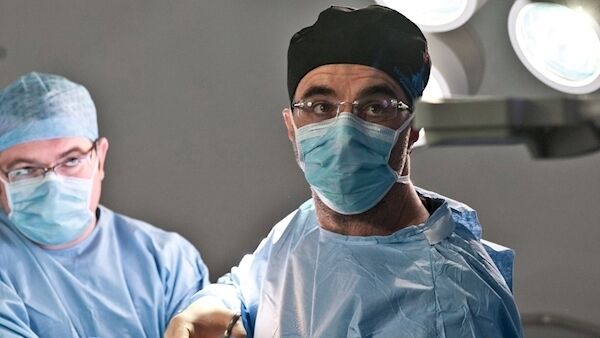
Ironically, given that he advocates for vets, fellow vets are among his greatest critics. Perhaps they think he’s too much of a showman for a serious profession. Maybe they fear he sets the bar too high for the rest of them. Possibly they look at his clientele and circle of friends — celebrities and royals among them — and question his motivation.
Fitzpatrick feels it could be any of those reasons and more. “People see you on the telly and they think you’re a big egotistical Irish leprechaun and of course the reality is that I’m just a bloke who’s trying to do his best and hopes that his legacy will be that he gave animals a fair deal.”
Actually, the legacy he dreams of is more complex than that. Firstly, he wants to establish the concept of ‘One Medicine” as standard practice.
One Medicine is the idea that clinicians — human and animal — can learn from each other and develop drugs and treatments together.
It was Fitzpatrick who took the ground-breaking intraosseous transcutaneous amputation prosthesis developed to replace the arm of a survivor of the 7/7 bombings and reworked it for a dog, demonstrating that it could also be used for weight-bearing limbs.
He learned from the human doctors and they learned from him and that’s how he believes it should be.
It pains him that cancers are induced in lab animals to help develop drugs for humans when he has patients who have run out of treatment options for naturally occurring cancers, many of which are identical to those that affect humans, yet he can’t get pharmaceutical companies to trial their new drugs on those much-loved pets. He also wants his legacy to be about hope and love. “We spend all our lives dwelling on the past and things that have happened and mourning over them and wishing it was different but it’s gone and we can’t do anything about it. We have to acquiesce to that and live in the present and that’s what the love of an animal will do — it’ll put you in the present..
“As small animal clinicians every day we are the guardian angels of hope, we are the guardian angels of love. If you could bottle the love I see in my consulting room every day and spray it around the world, you could build a community of compassion. That’s what that line was down there today. I met a girl who is terminally ill with her mother. I met a veterinary student who is having a hard time but really wants to keep going. And that lady who was distraught over losing her friend. They all have compassion. We just need to keep spreading it around.”
CONNECT WITH US TODAY



Be the first to know the latest news and updates