Easy does it: The eight best spreadable butters
IN this cold weather butter can be hard to spread even when kept out of the fridge, so we often use more than we mean to.
A spreadable butter in the fridge can be useful, especially when kids start making their own sandwiches. But which product tastes most like butter and which is the simplest with the least additives?
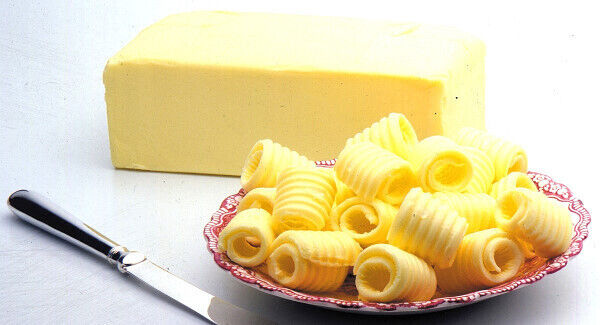
Block butter is made from dairy cream or milk churned to remove the buttermilk. It usually has nothing but salt added. This makes it ideal for baking, and butter spreads are no substitute, so keep block butter in the fridge for that.
Butter is a good source of vitamin A, and also D and E which are fat soluble and so need fat to help their absorption by the body. Some spices need a little fat for their absorption too, including turmeric (which also needs black pepper).
Beta carotene is found in a variety of fruits and vegetables, and is converted to vitamin A in the presence of fat, so butter will help absorption. Good for eye, skin, thyroid and gastro-intestinal health, butter has a lot going for it.
Of course, we don’t need a lot of any kind of butter for our quota of fat-soluble vitamins. On average about three dessertspoons of fats per day should be calculated with the hidden fats in most meat (even lean) and fish and in confectionary and convenience foods. We will look at the terrific range of artisan butters another time.
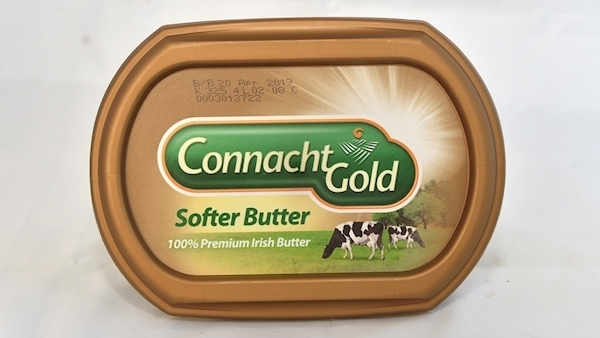
Pasteurised cream has 2% salt added, whipped to creaminess, which is easy to use from the ‘fridge. No additives. Not too salty, tasters liked this and the price. Made in Ireland.
Score: 8.7
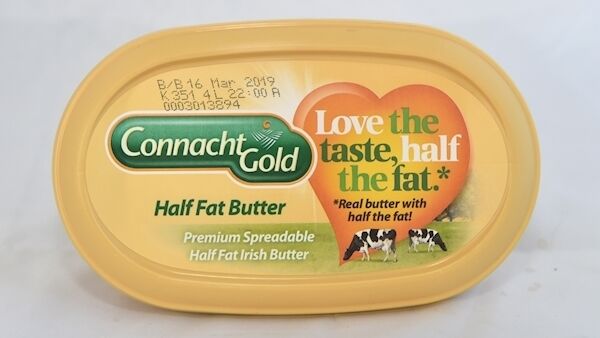
We looked at this alternative to the softer butter version to contrast its ingredients. Half the milk fat is replaced by water and milk protein, along with added vitamins A,D,E. There is also added lactic acid, potassium sorbate as preservative, beta carotene for colour, not in the brand’s full fat version. Tasters didn’t notice any difference, and one said she would prefer this less fat version, even with additives. Salt 1.1%. Made in Ireland.
Score: 7
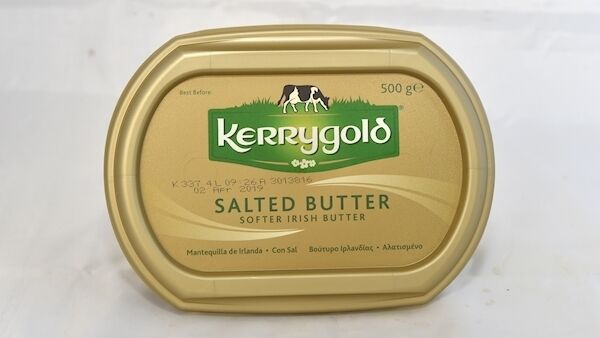
A natural taste was not surprising as there is just cream here, with 1.8% salt as in block butter. The natural texture coming from the churning process was comforting like regular butter for which this brand is famous.
Score: 8.5
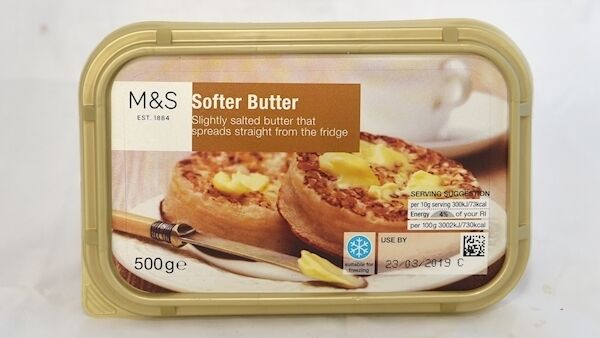
From a wide range of spreads, tasters liked this close version to block butter with just 1.8% salt added. Free from additives, the churning action makes it smooth and easily spread straight from the ‘fridge. Not cheap, though.
Score: 8
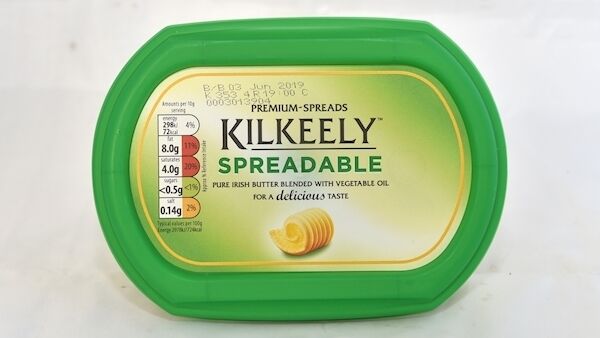
Much softer than most samples, with an oily texture which most tasters didn’t favour. Produced in Ireland, it has 63% butter with 29% rapeseed oil, water and 1.4% salt. Otherwise, no additives.
Score: 6.25
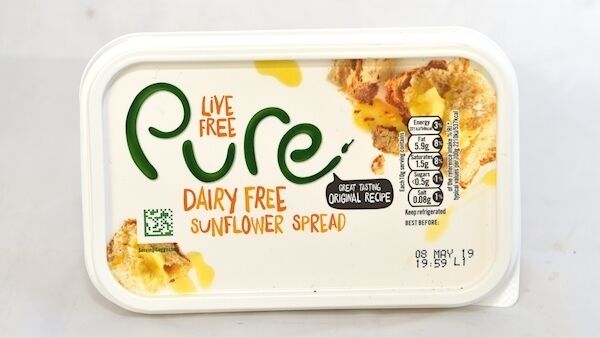
We tried this to see how a dairy free spread would taste and tasters were not won over. Water is top of the ingredients list with 35% sunflower oil and then a mix of palm and linseed oils, added flavouring, Vitamins E, A, D and B12. The benefits of less saturated fat is much debated, and this product did not encourage tasters to discover more. Salt 0.75% is low.
Score: 5
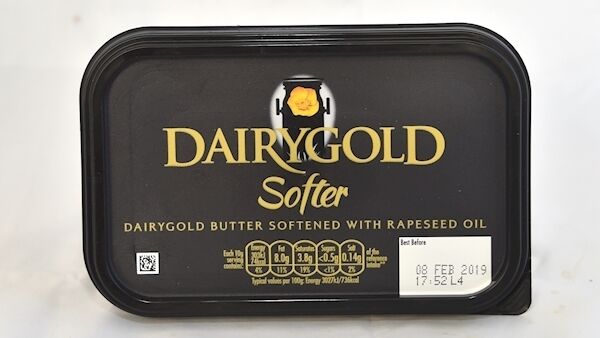
Tastier than other samples which have added oil, this one has 26% rapeseed oil. Glad to see no other additives. Tasters liked the slightly saltier flavour, despite at 1.4% being slightly lower than others. The texture was quite glossy and less natural than others, but tasters didn’t object. Straight from the ‘fridge, it wasn’t very soft, but easy to scoop and warm up.
Score: 7.25
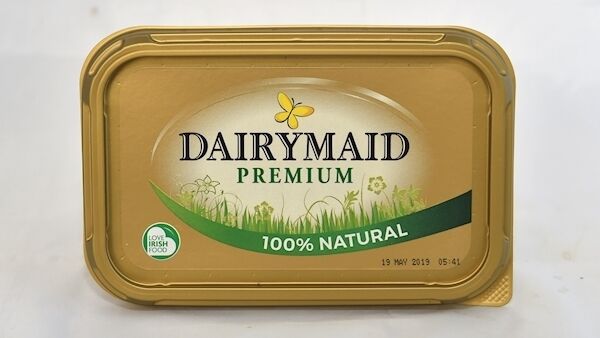
Made in Cork, this has added rapeseed and palm oils, noting that the Green Palm sustainability organisation is supported. It’s not clear what “Blended spread 64%” on the carton means. There are no percentages of each oil given, nor the percentage of cream. 1.8% salt is not noticeable as the oils overtake the flavour and the texture is very oily. There are also ‘light’ and ‘buttery’ versions in the brand.
Score: 6.75
CONNECT WITH US TODAY



Be the first to know the latest news and updates

















