Quality reigns at Cork Jazz Festival
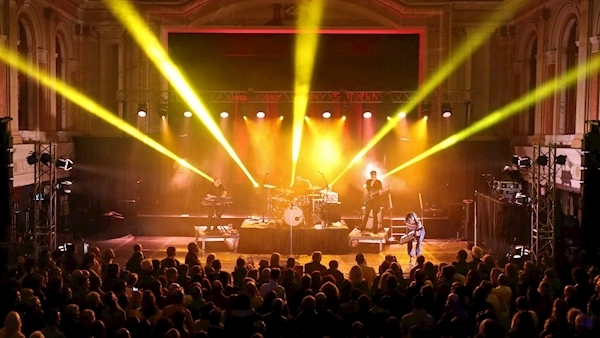
A look back at some of the highlights from this year's festival.
Maria Schneider Orchestra, Cork City Hall
At one point during the vibrant Dia De Los Muertos street parade that opened the Guinness Cork Jazz Festival, the corpse of a woman lying in a coffin in an old black carriage-style hearse sprang suddenly to life and began clawing desperately at the glass windows.
It was part macabre theatre and part ghoulish comedy, but it was wholly tempting to see the rebirth as symbolic of this year’s festival.

After several years in the programming doldrums, Ireland’s leading jazz festival seemed revived and raring to be set free.
Nowhere was that more evident than at City Hall on Sunday night, which saw the spirited debut appearance in Ireland of the crack 18-piece New York orchestra led and conducted by American composer Maria Schneider.
Schneider presented a wide and varied selection of her panoramic music, from the more traditional big band sound of the early piece ‘Gumba Blue’ from 1992, to several compositions from her pastoral and symphonic landmark 2015 album The Thompson Fields, to two new darker and unsettling scores, ‘Don’t Be Evil’ and ‘Data Lords’, that are yet to be released.
Each work was a story unto itself, a soundtrack to a theme or idea, played by absolute first-rank musicians with the ability to both harmonise into one unified and organic whole and stand out as expressive individual soloists.
It was something of a one-off, a Cork Jazz Festival coup, and the standing ovation at the end was suitably loud and long.
Loud enough even to wake the dead.
Kristjan Randalu/Dino Saluzzi, Triskel Christchurch
Triskel’s annual mini-festival dedicated to the acclaimed German record label ECM moved this year, its fourth, from its regular slot at the end of November to the October Bank Holiday weekend, and a space within the wider Cork Jazz Festival.
If such an integration might possibly have diluted the profile of the event, subsuming it within a much greater whole, it plainly made more sense in terms of taking advantage of the musical buzz and energy in the city, and potentially attracting greater audiences.
There was certainly a good and enthusiastic house at Triskel Christchurch for Saturday night’s characteristically wide-ranging concert, a double bill featuring a trio led by emerging Estonian jazz pianist Kristjan Randalu, and a group directed by one of the great masters of contemporary South American music, Dino Saluzzi.
Playing original compositions mostly from his recent ECM debut Absence, Randalu and his star trio of New York guitarist Ben Monder and Finnish drummer Mark Ounaskari created music that seemed an entirely natural fit with the label’s long-established aesthetic: lyrical, textured, exploratory, moving from delicate to dissonant in rolling waves and repeating patterns of sound.
The quintet led by legendary 83-year-old Argentinian composer and bandoneon (a type of concertina) maestro Saluzzi was largely a family affair, with Dino’s brother Felix on tenor saxophone and clarinet, son José Maria on guitar, and nephew Matías on electric bass.
The strong ties and connections were more than evident: sometimes this rigorous and complex written music had the feel of a spontaneous Sunday afternoon family session in the country, of tango and folk forms at once ancient and modern, of something vivid, sacred, even dream-like.
It was sui generis and utterly captivating. Perhaps it takes a lifetime to play this simply, directly and authentically.
I want to play more, because — and this does not happen in every place we perform — something happened in Cork, something came back to me.
In Saluzzi’s idiosyncratic English it was hard to know exactly what that was, but after an encore that lasted half an hour or more, there were few, if any, in the audience who weren’t fully glad it had.
Laura Mvula, City Hall
The figure of ‘40,000 revellers’ who are credited every year with attending the Guinness Cork Jazz Festival can largely be split into three strands.
Those who just want to drink and have fun; those who want to drink and have fun, with some musical accompaniment; and the serious music fans, willing to buy tickets for decent gigs.
One of the challenges for the festival organisers is to attract more people of that third group, a key part of ensuring the festival’s quality bar is kept high.
For instance, the most ambitious undertaking of this year’s event was to hold three concerts at the City Hall.
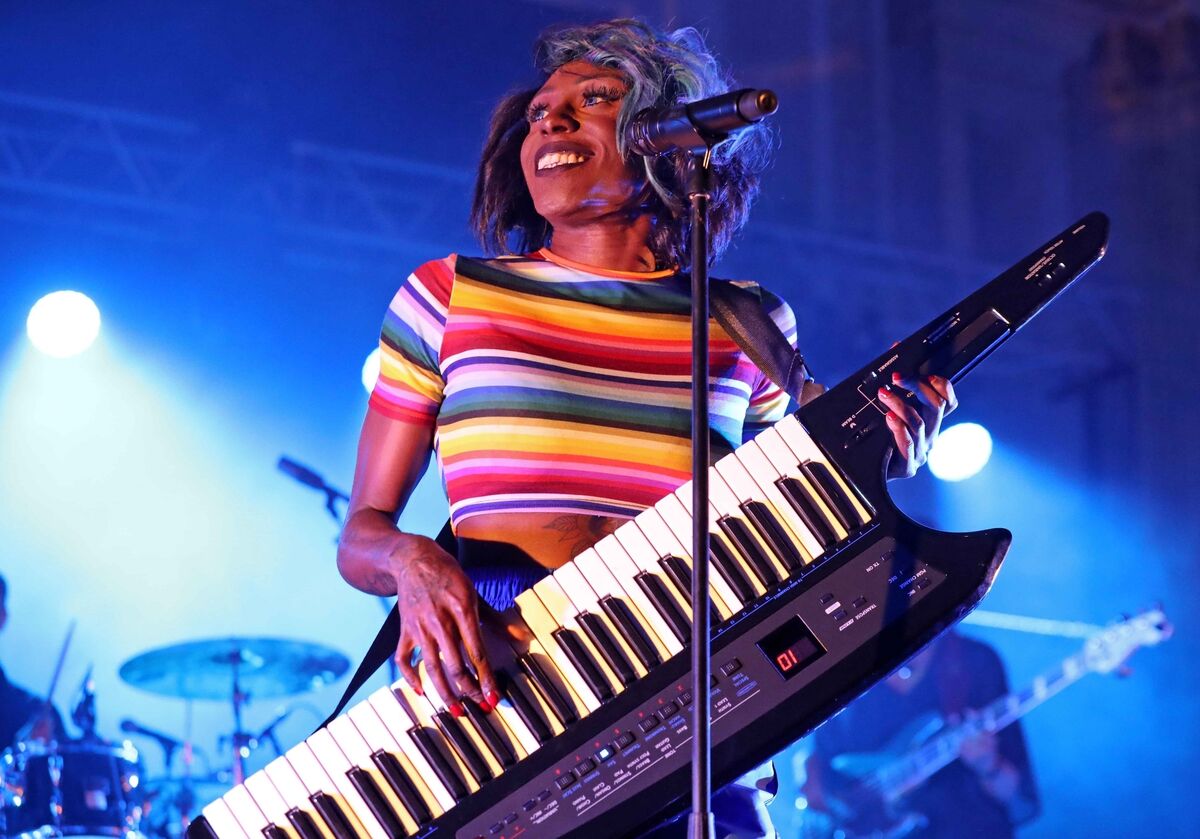
Filling the Saturday night roster of those was Laura Mvula, the British soul singer who burst on the scene in 2013 with her debut album Sing To The Moon.
The 32-year-old has had her battles with depression and anxiety since then, but she seemed in sparkling form in Cork. There was no shortage of banter as she stomped about the stage with a synthesiser slung over her shoulder.
In footballing terms, for the wide City Hall stage, the Birmingham singer eschewed the use of wingers and placed herself at the head of a tight midfield diamond, backed by keyboards, drums and bass.
Her good mood was at least partly due to recently signing to the Atlantic label, a deal she reveals came about when she was playing support to David Byrne.
Sony will no doubt be keeping a close eye to see if they made a mistake by dropping her after two albums.
Tickets were in plentiful supply on the day of the show, but there were more than enough punters (downstairs standing, balcony seated) to provide a decent atmosphere.
Mvula’s mid-set quieter moments were always going to struggle against a chatty Saturday night crowd, and it was somewhat of a relief when she returned to the more upbeat tracks.
Highlights included the title tune to her first album, a deconstructed version of hit single ‘Green Garden’, and a singalong with ‘Bread’ that gave an eager audience a chance to show off its own impressive vocal skills.
We already know that next year’s festival will see the City Hall hosting American jazz singer Kurt Elling with the RTÉ Concert Orchestra.
You’d imagine it’s a billing that will draw enough of that coveted third group of festival attendees to ensure it will be a sell-out.
Bansangu Orchestra/TS Monk Sextet, Everyman
Jazz weekend at the Everyman really got into its stride on Saturday afternoon with Paul Booth and the Bansangu Orchestra.
This is a big band showcasing the depth of UK talent, ably complemented by local lights Paul Dunlea on trombone, and Eoghan Walsh on bass.
Bansangu don’t just swing, they find a range of textures and combinations within the big band set up.
Booth leads the group through a musical landscape stretching from Brazil to Africa and the Middle East.
Ireland was in the mix too, in the shape of an appearance by uilleann piper Flaithrí Neff.
TS Monk, by name alone, embodies jazz tradition. But he’s happy to speak that tradition too, hosting the concert via a serious of personal anecdotes that themselves are a who’s who of jazz — Art Blakey, Miles Davis, Duke Ellington, Max Roach, and, of course, his beloved father, Thelonius.
Musically, TS is very much the dutiful son, drawing on his father’s canon throughout.
To begin, however, it’s a sweet, spot-on version of Wayne Shorter’s Jazz Messengers tune ‘One by One’.
TS’s own tune ‘Sierra’ is a standout too.
If Monk oozes tradition, the same can be said for his brilliant band, featuring bassist Chris Berger, tenor saxophonist Willie Williams, alto player Patience Higgins, and trumpeter Randall Haywood.
We finish, inevitably, with ‘Round Midnight’. It’s Monk Snr’s centenary year, TS reminds us, and the song is now the most-recorded jazz standard of all.
“You were right, dad,” he says. “They get it.”
We certainly did.
China Moses/Pablo Ziegler Trio, Everyman
China Moses, too, has it in her DNA — she’s the daughter of Dee Dee Bridgewater.
She’s an engaging, self-deprecating, oversharing raconteur — her years as a TV presenter having left their mark.
@chinamoses @EverymanCork for @jazzfestcork #corkjazz #JazzFestival #guinessjazz #wearecork #yaycork pic.twitter.com/4roiJ1UqpQ
— MaryboroughHotel&Spa (@TheMaryborough) October 27, 2018
Such is her enthusiasm that, at one point, she leaps from the stage to intervene when she notices an argument in the aisles.
The disputing parties are coaxed to hug it out.
Saturday finished with Pablo Ziegler, another willing servant of another great who epitomises a tradition: Astor Piazzolla.
Ziegler, on piano, is joined by guitarist Quique Sinesi, and Walter Castro on the signature instrument of the tango, the bandoneon.
Ziegler’s set explores the melodic roots of tango, drawing on the cultural melting pot of South America.
The highlight is his piano leading Piazzolla’s Bachinflected ‘Fuga y misterio’, a lively yet contemplative take on the original.
Tord Gustavsen Trio, Triskel Christchurch
After almost a decade working in larger ensembles, Tord Gustavsen has made a return to the trio, the format in which he first made his name.
Based on this performance, it’s also the format that allows the ECM artist’s genius to shine most brightly.
Opening the evening is ‘O Traurigkeit’, one of the pristine interpretations of Bach’s choral music that appears on Gustavsen’s new album, The Other Side.
Just one double bill concert left @TriskelCork & there are just a handful of tickets left! What a great weekend & still more amazing music to come from @KitDownes @tomchallenger & @tordg #GuinnessCorkJazz pic.twitter.com/L8rwyVKU5G
— Triskel Arts Centre (@TriskelCork) October 28, 2018
There’s nothing doleful about Bach’s lament in the Norwegian’s hands as he slows down and opens up its intricate melodies, summoning them amid rumbling piano chords, the atmospheric arco bass playing of Sigurd Hole, and the controlled drumming of his longtime collaborator Jarle Vespestad.
Later, the album’s title track begins with a slow yet catchy theme that soon opens far beyond the parameters of the studio recording, bass drums gathering like thunder clouds on the tune’s horizon before the lyrical clarity of the piano reemerges.
Elsewhere, an as-yetuntitled tune becomes, between piano and bass, a kind of 21st-century chamber piece — soulful, yet cerebral; playful, but controlled.
An evening of exquisitely textured music ends with another elaborate Bach suite.
Music like this is what happens when the improvisational sensibility turns toward the European musical tradition.
In Gustavsen’s hands, it’s a mine of musical inspiration as rich as that upon which the great American jazz tradition rests.
Nnenna Freelon/ Donny McCaslin, Everyman
That great tradition was alive and well earlier on at the Everyman, in the hands of the Nnenna Freelon and her trio.
A confident, engaging performer, Freelon is blessed with a voice of rare richness.
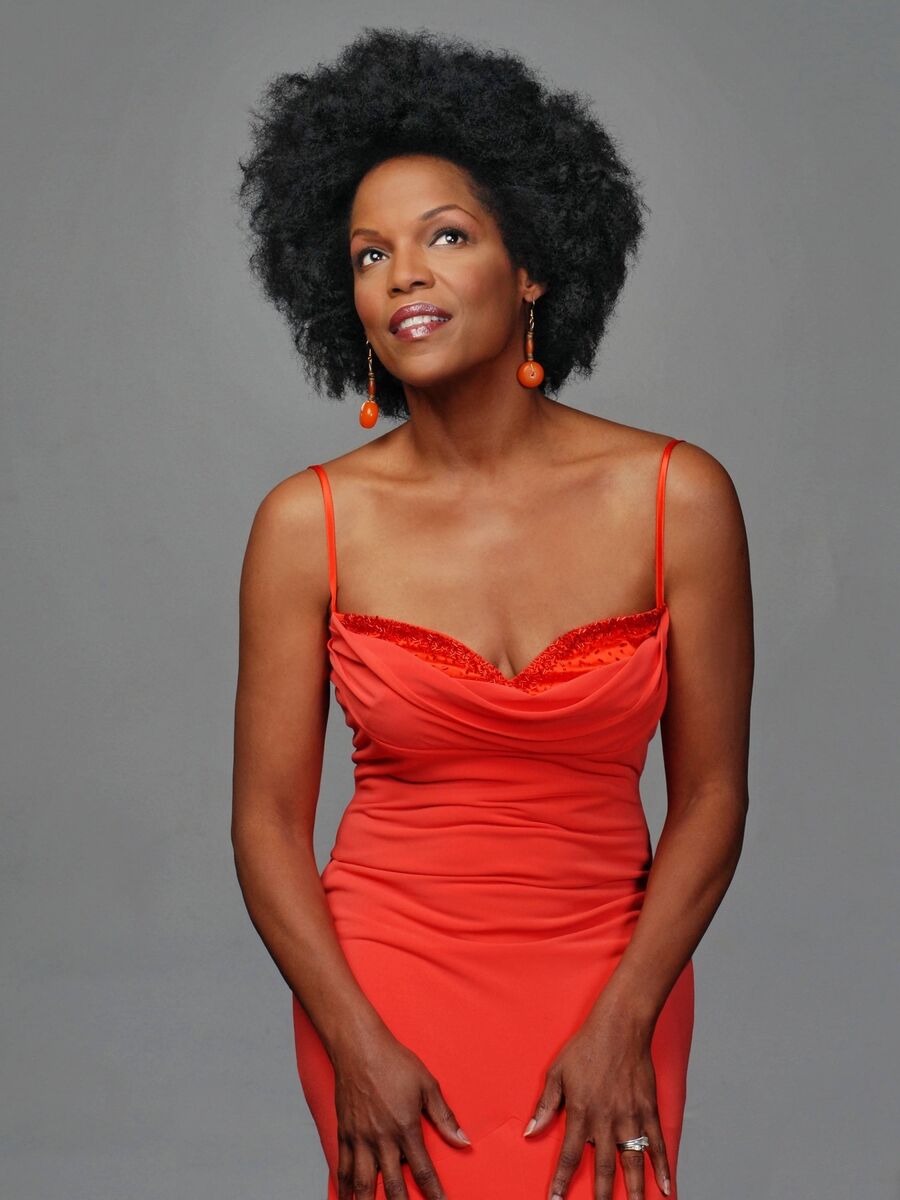
For ‘Skylark’, she’s accompanied by solo bass, a jaw-dropping showcase for her gift.
Elsewhere, she and her trio invigorate familiar favourites from the American songbook, with the beautiful playing of pianist Miki Hayama a highlight.
There could not have been a great contrast with what followed: a raucous set of complicated noise from Donny McCaslin, focusing on his extraordinary new album Blow, and reminding us what David Bowie saw in this thrilling group.
CONNECT WITH US TODAY



Be the first to know the latest news and updates









