Claudia Aurora not afraid to give tradition a little tweak
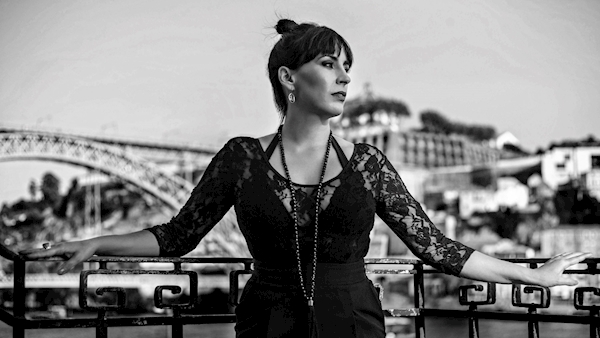
Claudia Aurora brings Portugese fado music to Cork Folk Festival, writes
It's easy to imagine that fado singers must live lives laden with romance and faded glamour, in smoky bars and atmospherically lit cobbled laneways.

So when Claudia Aurora answers her phone with a cheery “Can you call me back? I have to change my baby’s nappy,” it slightly dispels the illusion. But then again, Aurora doesn’t much hold with tradition.
For starters, Aurora’s fado singing didn’t arise from the steep cobbled streets of Lisbon’s Alfama district, where the tradition was born in the 1820s, nor even in her home town of Porto, 300km to the north. It was another seafaring town, Bristol, that set her on her musical course.
Fado is the powerfully evocative and dramatic Portuguese folk singing tradition built around the concept of ‘saudade’, for which there is no direct English translation. It’s like a nostalgic longing for something missing but not defined.
Aurora moved to Bristol 15 years ago and started singing in her kitchen to dispel her homesickness, so the story goes. Two studio albums and a selection of accolades later, she’s surely the first fadista to have risen to popularity outside her native country first, with UK tours, performances at BBC3’s world music festival, WOMAD, and a residency at a popular London venue.
The break with tradition doesn’t end there. Aurora, who writes songs with her guitarist and husband Javier Moreno, from Barcelona, isn’t scared to innovate and blend other influences into her music, including Iberian traditions such as flamenco, tango and gypsy music.
“Because I grew up with it, when I was young I always thought fado was boring,” she says, her baby daughter settled, and able for a second attempt at a phone interview.
“I listened to a lot of rock and blues and later I moved on to world music, like Brazilian music from the 1960s and ’70s. I bring all the other elements of my influences into my songwriting. They call it fado nuevo.”
A bit like in the world of Irish trad, fado purists can turn on innovators. Aurora recounts the tale of one of her heroes, Amália Rodrigues, who would become the ‘Queen of Fado’ after beginning her singing career in Lisbon in the 1930s.
When she came on the scene in Alfama, they created a group called the Anti-Amalianos. They wanted to stop her from performing fado because she had a unique style. The purists said she was a fraud and she really suffered for it at the beginning of her career.
Aurora’s last album, 2016’s Mulher Do Norte (Woman of the North), was almost entirely original compositions penned with Moreno, but with a nod to Rodrigues in her interpretation of ‘Sou Filha Das Ervas’, a song first made popular by Rodrigues.
Aurora says, no matter her influences, the true art of fado is in the emotional impact, and to this she’s true. “Fado means fate, destiny,” she says. “Fado is about emotion, about what I as a singer can transmit to my audience. Some blues singers touch me in the same way when they sing. And sometimes you can see an amazing singer but just say, ‘I don’t have any goosebumps, she’s not doing anything for me.’ A lot of fado singers don’t touch me deeply.”
It’s this emphasis on emotion that Aurora also credits with her ability to captivate an English-speaking audience: Some things, it seems, can transcend words.
You don’t have to have suffered to channel all that melancholy and loss, but it helps. “I was in my late twenties when I found an ability to express fado,” she says.
“I’ve been through a lot of situations in my life that have left scars: there’s a lot of death and loss in my family, a lot of traumatic experiences. When I perform, I channel the sadness and I feel like I heal myself. I transcend and let go.”
It’s a music born of tiny bars, and Aurora says she still prefers small venues. So she has a tip for those who want to fully appreciate the music: Sit as close to the performers as you’re able.
“The more intimate the better for fado,” she says. “I have a few fillings in my teeth, and I tell my audience that if they can feel my feelings and see my fillings, it’s a good gig.”












