Radie Peat and Katie Kim go back to their roots for Cork festival
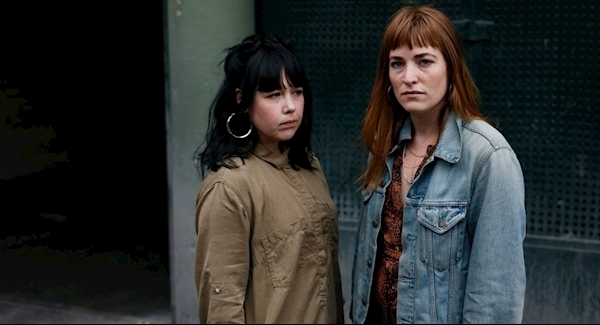
As Radie Peat and Katie Kim join forces for Cork's newest festival, they discuss the folk revival with .
Dublin folk singer Radie Peat and Waterford indie queen Katie Kim may seem musically worlds apart, but in advance of their second collaborative outing, Radie is emphasising their similarities.
They’re both, it seems, drawn to the dark side.
When choosing songs to perform for last April’s supposedly one-off collaboration at the Pepper Canister Church in Dublin, they discovered that four of the songs they’d chosen coincidentally featured a female anti-hero.
“Maybe the female villains came from me,” Radie says. “I love murder ballads, but in most murder ballads a woman gets murdered by a man, so I did deliberately start researching songs where the woman had a more active role a couple of years ago. Mind you, we did pick the songs together.”
Radie is best known as vocalist, concertina and harmonium player with Lankum, the self-styled “Dublin folk miscreants” who picked up the not inconsiderable international accolade of a BBC2 Folk Award for best group in April.
Katie Kim is the sole creator of a moody and atmospheric music-scape of her own devising, variously described as indie pop or shoegaze, and the author of three self-released albums.
“The uniting factor between us is general mood,” Radie says. “My solo gigs are far more melancholy than when I play with Lankum.
"I gravitate towards that and so does Katie. When we were rehearsing, there was certainly no, ‘we better put in an upbeat one,’ the way there normally is and that was really refreshing.”
The set the unlikely duo have devised is part folk, part Katie’s compositions reworked, with a smattering of covers including a Scott Walker song and a song by Dublin singer-songwriter Mia Sophia, of whom both Radie and Katie are fans.
The collaboration, which sees Radie ditch her concertina in favour of electric guitar, harp and harmonium, was originally suggested for Dublin’s Musictown event by manager and promoter Jon Pearson.
Now, they’re reviving it in Cork for Pearson’s Quiet Lights Festival, which aims to shine a light on “a new wave of Irish folk and traditional talent.”
They’re joined on the line-up by all sorts of folk innovations and cross-over acts, who if they have anything in common, it seems to be that they’re inspired by, but not constrained by, the traditions of Irish and other folk music: an emerging generation of musicians who are willing to make this journey into their musical tradition.
Is there a folk revival afoot?
“I come from a family that played tunes and I thought everybody did,” Radie says. “All I know is that when I was a teenager people didn’t like it and called it ‘diddly-eye music’ and by the time I was in my twenties, they liked it.
I used to get slagged for playing trad in school. Suddenly, when I was 23 or 24, I was going, ‘why are there all these people my age coming to sessions? They all look like NCAD students.’
If trad and folk have become “cool” again, then surely bands like Lankum, for whom multiple piercings and full-sleeve tattoos seem to be de rigeur, are at the forefront of that?
“What’s cool, anyway?” Radie says. “It’s to do with the perception of the music. There was a very cool folk revival in the Seventies: Planxty were really cool. The Dubliners were cool.
"The beards and the whole thing: people wanted to be part of it because they were so cool and then something changed again. It will be uncool again in ten years’ time.”
Whatever about ten years’ time, Jon Pearson agrees that right now, there’s an upsurge in interest in folk and trad.
And the festival organiser, who also manages contemporary music group Crash Ensemble, has an interesting explanation: he says it’s all the fault of the economic downturn.
“I think that when the crash came, we kind of went back to our roots culturally,” Pearson says.
“We rediscovered our Irishness, and I think that’s one of the reasons why. I think it’s really exciting that we’re beginning to embrace that wealth of folk and traditional music.”
Quiet Lights will see gigs performed in various venues around Cork, including some that are a far cry from the pub corner we associate with trad and folk.
As well as Cobh’s Sirius Arts Centre and St Peter’s events centre on North Main St, Katie and Radie’s gig is in the chapel in what is now Griffith College, the former location of Marymount Hospice.
“It’s perfect,” Pearson says enthusiastically. “Katie and Radie’s set is very much old-style dark, pagan tunes. The chapel will be lit by candles and the vibe will be very, very special.”
Highlights of Quiet Lights
Probably the closest to pure trad on the Quiet Lights line-up, the West Kerry concertina player is the son and nephew, respectively, of accordion players Brendan and Seamus Begley.
His dynamic playing style sets him apart and has led to collaborations with countless musicians, including Liam Ó Maonlaí and Caoimhín O Raghallaigh.
Appearing on a double bill with Cork troubadour Saint Caoilian, Landless are a four-piece acapella vocal group who sing traditional music of the British Isles and the US, including shape-note hymns and work songs.
The Dublin-based trio of Finnish nyckelharpa player Aki, Cork cellist Kevin Murphy and Northern Irish fiddle player Danny Diamond fuse Irish and Nordic folk traditions with add a hefty dose of innovation.
The Gloaming fiddler, left, is best known for some of his collaborative work, but at this afternoon gig he’ll be performing solo.
Ó Raghallaigh has taken his usual experimental approach even further in his solo work, incorporating electronics into the mix.
Carlow brothers Brían and Diarmuid Mac Gloinn are regulars on the folk scene with their mix of Irish and international folk sounds.
CONNECT WITH US TODAY



Be the first to know the latest news and updates

















