Time to saddle up for Down Syndrome Ireland
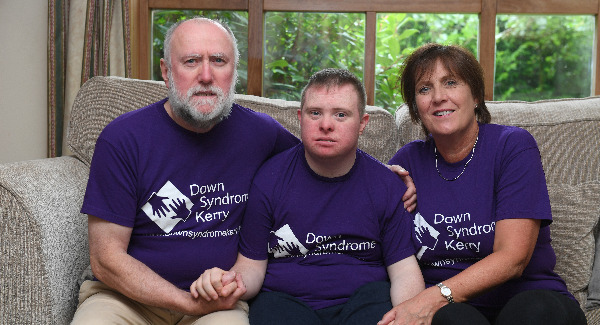
Karen Murray talks to a fundraiser who has personal reasons for getting on his bike to help raise vital monies for Down Syndrome Ireland.

Time to saddle up for Down Syndrome Ireland

Karen Murray talks to a fundraiser who has personal reasons for getting on his bike to help raise vital monies for Down Syndrome Ireland.

Enda O’Brien takes the expression ‘get on your bike’ to a whole new level.

On Thursday, August 9, he will join hundreds of others to participate in the Tour de Munster, a 640-km, four-day cycle across the province in aid of the Munster branch of Down Syndrome Ireland.

The first day of the 18th Tour de Munster will start in City Hall Cork takes the cyclists through Cork, Waterford, Tipperary and Limerick and on to Killaloe, Co Clare. Day two, they will meander through Limerick, Clare and north Kerry to Tralee; then day three will see them face more big climbs over the Conor Pass and Molls Gap as they make their way via Dingle and Killarney toward Kenmare. They will start the final day with a climb over the Caha Pass and finish in Cork city.

The event, established by Douglas man Paul Sheridan (just call him St Paul, jokes Enda), has had a life-changing impact on the lives of countless people through its fundraising efforts. Since its inception, Tour de Munster has raised approximately €2 million for its beneficiaries; and for DSI alone, it has raised almost €1.5m.

Tralee man Enda and his wife Jill are both heavily invested in the work of the DSI. Their son Hugh, now 24, has Down Syndrome

the family knows first hand what kind of supports are required and how important fundraising is at grassroots level

The organisation receives no state funding — everyone who participates in the Tour de Munster has to pay their own way, as well as raise sponsorship and pay for their own training.

Enda, who is the grandson of Antarctic explorer Tom Crean, has been involved with the Kerry branch of DSI for a long time and acted until treasurer until recently.

He’s been pretty active already this year. To mark the official partnership between Tour de Munster and DSI Munster branches as the main beneficiary, Kerry DSI hosted a 75km event called the ‘Unsung Hero Cycle’ which paid homage to his famous grandfather and also remembered DSI Kerry member Emily Keohane who died last year.

Enda says: “Last year, the Tour de Munster raised €259,000. It will be used to fund things the HSE can’t provide, like physio for example.” Jill explains that their involvement with DSI Kerry goes back to shortly after having Hugh, their second child. The couple have three other adult children, Maeve, 26, Marcus, 21 and Pierse, 18.

When Hugh was born, we went to the local support group and I ended up being committee secretary for a few years,” Jill explains. “Things were different then — there was less focus on children with Down syndrome going into mainstream education or on early intervention services. Now change is afoot — but it has taken a lot of time and effort.” English-born Jill trained as a teacher but was unable to teach here as she has no Irish. But through her work with the support group, she trained in special needs education and now works in this field.

“What is so important is that parents want their children to go to the same school, they don’t want their child to have to travel 20 miles away to a special needs school,” she emphasises the importance of allowing children with Down syndrome to be integrated into mainstream schools.

For the first 10 years’ involvement with the DSI, Jill acted on an advisory capacity for parents of babies born with Down syndrome. The hospital passed on her number to new parents and she was available to give advice on supports or just lend a friendly ear. As her own boy grew into adulthood, this advisory role has passed on to other parents with younger children.

The support within the DSI — and particularly at local level — is invaluable, she says. She has a lot of friends who are supportive but believes only people who have a Down syndrome child can truly grasp the situation.

“We all have a ‘special brand of understanding’ about Down syndrome that is really beyond words.

“When you have a special needs child, you have to be very proactive. You will only get what you want if you make a lot of noise.” The money that events such as the Tour de Munster raises goes towards paying for various services, such as speech and language therapy and physical therapy. Children with Down syndrome can often have delayed speech and problems with movement.

“If you miss the critical window, it can impact the child’s entire development,” explains Jill. “The children and young adults with Down syndrome are at all different levels - some are independent, some are not, but they have a right to develop to their maximum.” And the support doesn’t end when they reach 18. DSI also runs a two-year course for adults with Down syndrome entitled Latch On, which originated in Queensland, Australia, and focuses on literacy and technology.

“We employ teachers and assistants to teach life skills and self-esteem — it’s a holistic approach,” says Jill. “It’s important to see people with different levels of ability be able to take an active part in life. They have an absolute right to do this.” Enda agrees: “Everything we do is focused on the child,” he says. “The cycle is a big operation logistically and the training is intense. Yes, it’s tough but there’s great camaraderie.”

Visit www.tourdemunster.com and check out their Facebook and Twitter pages.

x

More in this section

Cookie Policy Privacy Policy Brand Safety FAQ Help Contact Us Terms and Conditions

© Examiner Echo Group Limited













