With season two, Luke Cage has quite a fight on his hands
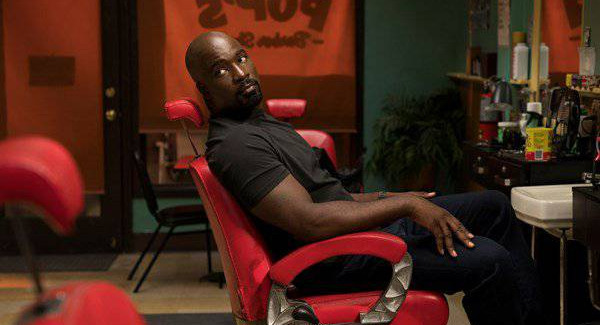
Trump’s shadow has ensured season two of Luke Cage launches at a very interesting time for America, writes Ed Power.

With season two, Luke Cage has quite a fight on his hands

Trump’s shadow has ensured season two of Luke Cage launches at a very interesting time for America, writes Ed Power.

WHEN season one of Luke Cage debuted in 2016, there seemed a vague (and

obviously terrifying) possibility that Donald Trump might be the next president of the United States. In that context, a TV series about a black superhero in a hoodie prowling the gritty thoroughfares of Harlem carried strong political resonances.

Two years later, all is changed utterly. Trump has, against all expectations, claimed the White House — with conservative white voters getting credits with putting him there, among them the fringe racist element that has now become more prominent.

Conversely, an African American crime fighter is no longer perceived as a risky proposition. Black Panther has cleaned up at the box office — a testament to audiences’s appetite for diversity in their popcorn entertainment. Luke Cage series two returns to Netflix at an interesting time.

“The thing about Trump is that he isn’t genteel, he lacks finesse, lacks a conscience,” says Luke Cage writer and show-runner Cheo Hodari Coker. “He has a very intricate relationship with the truth.”

The Orange One not directly referenced in the new 13-part run. But what his presidency says about America and its simmering racial tensions undoubtedly seeped in between the cracks, acknowledges Coker.

What Coker regards as the commander-in-chief’s elastic relationship with the facts has changed the US — both on screen and off. The New York of Luke Cage season two is a place deeply uneasy with itself — a fairground-mirror reflection of the crisis of identity suffered by the real America. By the mere fact of its existence, Luke Cage is an intensely political show.

Even without the Trump resonances, though, Cage is a superhero with a difference. Part of the wider Marvel universe, the character was created in the 1970s by white writers under orders to cash in on the popularity of ‘blaxploitation’ movies such as Shaft.

In his original incarnation Cage was just shy of parody. Where Superman embodied the American dream and Batman the dark side of human nature, Cage looked as if he’d got lost on his way to an all-ages disco. His outfit was garish yellow (wisely ditched by the Netflix adaptation) and his catchphrase of “Sweet Christmas!” was surely a send up of cheesy caped crusader banter.

He has been resurrected by Netflix as part of a quintet of Marvel adaptations. These shows are nominally part of the same “cinematic universe” as movies such as The Avengers and Guardians of the Galaxy. Yet the tone is very different: Luke Cage, Jessica Jones, The Punisher, Iron Fist and Daredevil are street-level stories, caked in the grit and smog of the real world. Here people bleed when they are shot.

The action typically takes place within a specific locale — Harlem in the case of Luke Cage — and the stakes are considerably lower than standard Marvel scenario in which humankind faces imminent extinction. Jessica Jones is a survivor of abuse; season one of Dare Devil focused on corrupt real estate development in New York’s Hell’s Kitchen neighbourhood. These are less super-hero romps that kitchen sink thrillers that happen to feature weirdos in spandex.

Series two of Luke Cage continues this downbeat vein. Still somewhat of a reluctant crime fighter, the titular hero finds himself sucked into a struggle against a reggae-loving crime-lord, Bushmaster. It’s Batman meets Scarface, with a pumping hip hop soundtrack.

As Cage, Good Wife star Mike Holter is brooding and enigmatic. His Cage is nothing if not self-aware. When he crashes a drug den in the first episode, he wonders aloud if he and the villains really have to fight. They all know how it’s going to end.

“We have to at least look like we tried,” points out one of the henchmen. Shrugging, Cage turns his headphones up to max and, with a hip hop soundtrack pumping in the background, pummels the machine-gun wielding gang (Cage’s superpower is that he’s virtually indestructible).

Colter has a background in music journalism and famously befriended Prince after profiling the enigmatic singer for Vibe magazine (he’d planned on acting Prince to guest-star in an episode of Luke Cage). His passionate for music filters onto the screen. He’s likened the new season to his favourite Tribe Called Quest LP and the packed the score with hip hop, funk and reggae.

This time, though, the most interesting developments are arguably behind the camera, with four the first six episodes directed by women, including Charlie’s Angels star Lucy Liu.

“Gender has nothing to do with taste and where you place the camera, it’s all about passion and vision. In the past there were always questions on what African American writers can do and accomplish and female sensibility,” says Coker.

It’s not about that. It’s about your vision for the characters on the show, that’s the number one criteria.

Coker would like to think that he has paved the way for the success of Black Panther. Season one of Luke Cage embraced African- American culture — for instance, the lair of villain Cottonmouth (played by Oscar winner Mahershala Ali) doubled as shrine to late rapper Notorious BIG poster. The same hat-tips are in Ryan Coogler’s Black Panther, with one early scene played out against the pointed backdrop of a Public Enemy poster.

“The success of one helps the other,” says Coker. “If using a Notorious BIG poster made it easier for Ryan to use the Public Enemy poster… if it worked well enough to break Netflix the films have the opportunity to go deeper and to acknowledge that people want as much uncut funk as they can get. That’s the beauty of Black Panther – there’s so much sophistication and fun. People want to see more of that.”

He appreciates too that, as rare African-American voices in the comic book world, he and Coogler have a duty to do their very best

“My grandfather was one of the first African-American fighter pilots,” he says at a public interview the day of our conversation. “Every mistake and every triumph would impact and send out a message to us back home, regardless of that he always said: you can’t forget to fly the plane.”

Season two of Luke Cage begins on Netflix on Friday

More in this section

Cookie Policy Privacy Policy Brand Safety FAQ Help Contact Us Terms and Conditions

© Examiner Echo Group Limited













