Opening the doors of Ireland's Big Houses
talks to the owners of four stately homes about the challenges of maintaining a Big House in today’s world
Ireland’s Big Houses are part of our heritage, but because they’re also huge and centuries-old, they’re costly to maintain. Their owners run B&Bs, tea-rooms, orchards and distilleries, and host weddings, concerts and ‘glamping’, to make ends meet. This weekend, the May bank holiday, many of these houses will open their doors to the public for the summer season. We take a look inside.
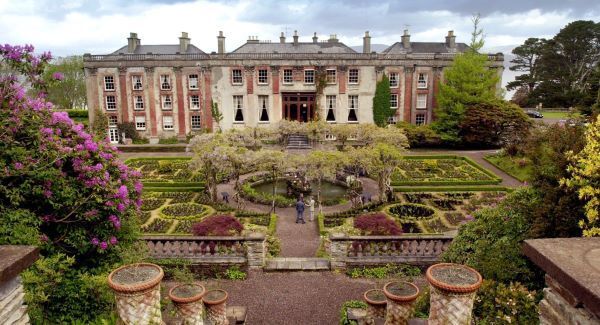
BANTRY HOUSE
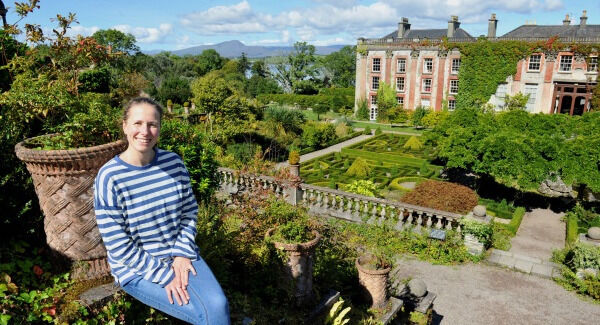
Sophie Shelswell White, 36, is general manager of Bantry House and the ninth generation of the family to occupy the spectacular, 30,000-square-foot mansion. The house sits on 100 acres overlooking Bantry Bay. It is owned by Sophie’s mother, Brigitte Shelswell-White.
“Bantry House has come down through my father’s side of the family, the Whites, which bought the property in the 1730s,” Sophie says.
“The house was much smaller then, but there was much more land. At one point, in the mid-1800s, we were the largest landowners in Cork, overseeing tens of thousands of acres.” But the house has struggled financially for the past 100 years says Sophie, whose grandmother, Clodagh, first opened Bantry House to the public after World War Two.
When Sophie’s parents, Brigitte and Egerton, took over in the late seventies, they opened a tea-room and bed and breakfast.
These days, things are even tougher: the house attracts 30,000 tourists annually, hosts weddings and festival events, is a B&B, and, this year, offered a pop-up wine bar and evening meal, but the financial shortfall is unremitting.
“The problem is that any business we do here is never really enough to carry out any great level of restoration or maintenance.
“We cannot turn over enough income to fully look after the whole estate,” says Sophie.
”Some support comes from a German conservation university, which sends students to carry out restoration and conservation at Bantry House, as part of their course-work, such as the restoration of picture frames, the house’s antique leather wall covering, and a picturesque, seven-panel folding screen, dating from the 1800’s.
“That’s something we’d like to see more of,” says Sophie, who expects to take over the house, along with her accountant husband, Josh, and brother, Sam (the latter currently oversees the gardens).
In the long-term, however, her eldest son, Jacob, six (brother Max is just 20 months old), will not automatically inherit at the age of 18: “Times are different now. The idea of the eldest boy taking on everything has gone with dad’s generation. It’ll be a case of who’s interested in taking this on after me.
“It’s the right way of doing it. I took it over because I wanted to and not because it was handed to me and that’s what I’d like to happen in the future.” The struggle to maintain Bantry House was highlighted by a plan to auction off its contents.
Although the auction never happened, the fact that it was considered highlights the financial pressures faced by the family.
“Our income was not bringing in enough to properly maintain a 30,000-square-foot house and 100 acres of land,” says Sophie.
“It didn’t feel like the right decision, so it was a good thing that that auction didn’t go ahead.” Although grants are available, under various government agencies, and from the EU, as well as from local authorities, Bantry House struggles to compete.
“When we apply for a grant within Ireland, as a private house, we seem to be competing with publicly-funded attractions and houses, and then we often don’t get the funding, where another public attraction will get it.
“We also find we’ve to match the funding 50/50 or 25/75, which means we go in on the lowest end.
“It’s a struggle to get any sort of State funding. There should be some provision; the house is part of this country’s history.
“Governments abroad seem to give support in a more tangible way, through consistent funding.
“We’ve got some grants, but, overall, we’re very much left to our own devices to keep the house going.
“My biggest worry, for the years ahead, is financial. I worry that something will happen here that we cannot afford to fix,” Sophie says.
DRISHANE HOUSE
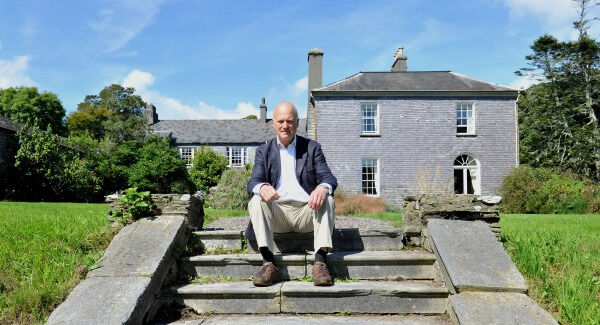
Drishane House, which sits on 120 acres in the village of Castletownshed, has been in Tom Somerville’s family since his ancestors built it, in 1780.
His is the ninth generation of the family to occupy the house.
“In the 1880s, we had about 900 acres and probably more before that,” says the former barrister, who lives in Drishane with his wife, Jane, and two sons, Thomas, 15, and Hal, 11.
“The difficulty with any place like this is the future.
“One can get by on a daily basis, but once you get the bigger bills in, like a roof that needs looking at, it’s huge.
“Our roof should’ve been done five years ago, but you’d be talking in terms of €100,000 to pay for that. How do you deal with that? And you don’t paint one window; you paint 30,” he says. Drishane House is open to visitors under Section 482. This regulation allows owners who open to the public for 60 days of the year to set off expenses against other income.
Income comes from hosting weddings and from rent from cottages owned by Drishane House, but the income from paying visitors is negligible. Drishane House also participated in the RTÉ TV series, Lords and Ladles.
Tom and Jane are pondering the possibility of offering the house for summer holiday lettings and establishing a Somerville & Ross Festival (the writer Edith Somerville, Tom’s great grand-aunt, spent her life there). Her initials, scratched by her with a diamond on the dining room window, are still to be seen.
The lack of a system of “targeted grants” means the cost of maintenance is a big worry.
“There are no targeted grants, that I know of, that you can avail of, as an historic house owner, to carry out maintenance. Drishane is a history capsule, of 250 or 300 years. We’ve wallpaper dating from the 1840s and curtains from the 1820s,” he says, adding that the dining room still has a chamber pot behind some shutters, for emergency use.
“I can see that it’s hard for the State to understand. Politicians see owners living in large, valuable houses and presume they’ve lots of money,” Tom says.
However, “anything you do have is taken up in maintenance,” he says. The big houses are a huge tourist attraction, but one the State doesn’t recognise, he believes.
“For every €1 spent visiting a big house, around €5 will be spent locally; I believe there’s a big knock-on effect for local shops, restaurants, and bars, and I don’t know if the State recognises this.”
Without the provision of more and consistent state support, owners are “caught in a pincer movement, between rising costs and falling incomes,” Tom says. If this situation continues, many of Ireland’s big houses and their contents may have to be sold off.
“Survival is currently very dependent on the inventiveness and enterprise of owners. Some owners are, and some are not. In the end, it won’t work; it can’t work,” he says. The State needs to get more involved.
“Section 482 is pretty important. It’s direct state involvement in the big house and there’s a good return on it, but, on its own, it’s not nearly enough.”
Who will inherit?
“One of the boys will inherit,” says Tom.
“Tradition is that it’s the eldest, but that’s a presumption. Whoever inherits Drishane will have to have an interest and a commitment to the house, and my boys are very young to be thinking about these things,” he says.
It’s a worry, though. “What I’d like, before I shuffle off this mortal coil, is to leave the place sustainable and not a white elephant.”
TOURIN HOUSE
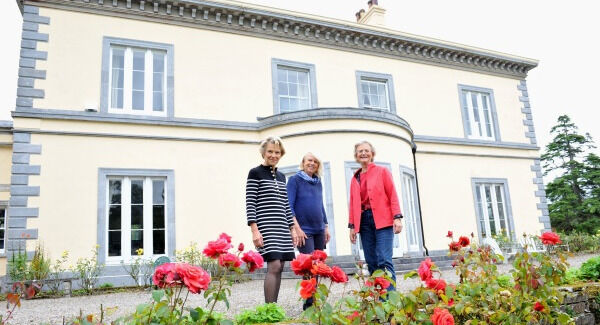
Kristin Jameson and her sister, Andrea, occupy rambling Tourin House, on 365 acres, near Cappoquin, Co Waterford, where their family has lived since 1780.
A third sister, Tara, is married and lives in Kerry, but visits regularly. Kristin and Andrea are single and Tara has no children. All three, now in their sixties, are descendants of whiskey baron, John Jameson.
“The original dwelling place at Tourin is the Tower House, dating from 1560,” Kristin says.
“Our family bought the Tower House, and its lands, in 1780.
“The Tower House is now in the garden; the current house, an Italianate villa, was built in 1840.” The sisters took over the farm and house in 1994, after the death of their father. They opened the house to the public. Tourin has a tillage farm, a 10-acre Cider Apple orchard, which supplies Bulmers, and 65 acres of
hardwood, currently being thinned-out and sold for firewood.
“I couldn’t manage without the tax break we get for being open to the public,” says Kristin.
“I’ve applied, in the past, for grants to help with the restoration of the Tower House, but was never successful.”
She’s concerned about the future. “I don’t know what will happen when the three of us are gone, because we have no direct descendants. It’s unclear as to who will inherit the house or what will happen to it.”
Andrea is an artist, with a studio at the house, from which she teaches art and runs workshops. The house also hosts photographic workshops and art exhibitions. Last year, 1,000 people visited the house to view an exhibition of paintings of the grounds of Tourin. “We’re well-looked-after, with Section 482, but I feel bad that the Tower House is not being looked after,” she worries.
It’s 400 years old and in need of repair, but no help is forthcoming from the State.
“Any funding we could get we have to match and we simply don’t have the money,” Andrea says. Tourin, which boasts about 25 acres of garden and woodland, including a walled garden and 300-year-old oak trees, attracts about 2,000 visitors a year.
There’s a pressing need to diversify, says Kristin, but the sisters don’t have the resources to develop the house, either as a B&B or as a family attraction with the playgrounds and fairy walks that are now de rigueur.
She’s considering an interactive computer room for primary school tours and educational family trips, where children can sit and learn about the house and garden.
“I think that’s the way to go,” she says.
Tourin House, and other stately homes on the Blackwater, will benefit to an extent from €57,920 allocated to Waterford County Council, as part of the Munster Vales Tourism Project for the development and enhancement of ‘recreational access points’ on the Lower Blackwater River.
Among the improvements are investment works at Villierstown Pier, close to Dromana House, as well as signage, parking improvements, and clearance work at Tourin slipway, close to Tourin House.
It is hoped that this investment, and other work on the Blackwater, will improve access from the river to the great houses of the Blackwater and encourage more river users to visit the Waterford Garden Trail, the nearby Waterford Greenway, and other attractions.
BALLYVOLANE HOUSE
Justin Greene’s grandparents bought Ballyvolane House, near Fermoy, in 1953.
To date, four generations of his family have lived in the mansion, which was built in 1728.
“My father was a dairy farmer. In the 1980s, my parents opened Ballyvolane as a B&B and were founder members of the Hidden Ireland group,” says Justin. A hotelier with considerable experience in Dubai, Hong Kong, Indonesia, New York, and Great Britain, Justin took over Ballyvolane in 2004, following his mother’s death.
He says 15-hour work days and a willingness to diversify are required to ensure the survival of the award-winning, historic house and B&B.
Ballyvolane is also a very popular wedding and ‘glamping’ venue, and boasts a successful gin distillery “It’s a story of diversity,” Justin says.
“When you have a historic house, you have to be prepared to diversify,” he says.
However, meeting insurance costs, complying with fire and health-and-safety regulations (which are the same for a new-build hotel as they are for an historic house), and an ongoing difficulty in accessing grants are a huge headache.
“Two years ago, I applied for a heritage grant to do up an old farm building and was turned down. Last year, I applied for a heritage grant to repair windows in the main house. That was turned down. We’ve received grant support for the gin distillery, in the Enterprise Office in Mallow, which has been a fantastic support.
“Unfortunately, we haven’t received support for the maintenance of the house. I’m not sure why that is so, but it’s disappointing,” Justin says.
As for which of his three children, the eldest of whom is 12, will inherit, he doesn’t know.
“We won’t put any pressure on the children at all. We’ve told them to find their own careers, when they grow up, and if any of them want to come back and take a crack at this, they’re welcome to do so, but they see how hard we work for not much return. Everything we make goes back into the house and there is very little extra. I don’t think they’ll want that life. When Jenny and I retire, if the kids don’t want Ballyvolane House, we will have no choice but to sell.”
CONNECT WITH US TODAY



Be the first to know the latest news and updates









