Photographer shares his tops tips to capture this weekend's blue moon
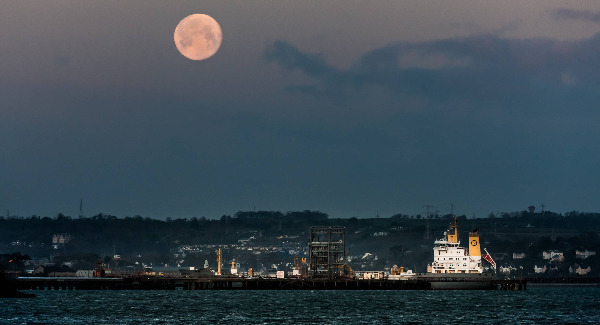
The second blue moon of 2018 will appear in our skies on saturday, and is set to be the last one until 2037.
This is a rare occurance given that a blue moon usually happens once every two or three years, and double blue moons only happens three to five times in a century.
Here are some top tips to keep in mind when trying to snap the phenomenon, as provided by acclaimed landscape photographer and Canon ambassador David Noton.
The sun’s position in the sky at any given time of day varies massively with latitude and season. That is not the case with the moon as its orbit results in monthly, rather than seasonal variations, as the moon moves through its lunar cycle. Luckily, we no longer need to rely on weight tables to consult the behaviour of the moon, we can simply download an app on to our phone. The Photographer’s Ephemeris is useful for giving moonrise and moonset times, bearings and phases; while the Photopills app gives comprehensive information on the position of the moon in our sky.
On Saturday, one of the key challenges we’ll face is shooting the moon large in the frame so we can see every crater on the asteroid pockmarked surface. It’s a task normally reserved for astronomers with super powerful telescopes, but if you’ve got a long telephoto lens on a full frame DSLR with around 600 mm of focal length, it can be done, depending on the composition.
As you frame up your shot, one thing will become immediately apparent: lunar tracking is incredibly challenging as the moon moves through the sky surprisingly quickly. As you’ll be using a long lens for this shoot, it’s important to invest in a sturdy tripod to help capture the best possible image. Although it will be tempting to take the shot by hand, it’s important to remember that your subject is over 384,000km away from you and even with a high shutter speed, the slightest of movements will become exaggerated.
Whilst images of the moon large in the frame can be beautifully detailed, they are essentially astronomical in their appeal. Personally, I’m far more drawn to using the lunar allure as an element in my landscapes, or using the moonlight as a light source. The latter is difficult, as the amount of light the moon reflects is tiny, whilst the lunar surface is so bright by comparison. Up to now, night photography meant long, long exposures but with new cameras now capable of astonishing low light performance, a whole new nocturnal world of opportunities has been opened to photographers.
The most evocative and genuine use of the moon in landscape portraits results from situations when the light on the moon balances with the twilight in the surrounding sky. Such images have a subtle appeal, mood and believability.
By definition, any scene incorporating a medium or wide-angle view is going to render the moon as a tiny pin prick of light, but its presence will still be felt. Our eyes naturally gravitate to it, however insignificant it may seem. Of course, the issue of shutter speed is always there; too slow an exposure and all we’ll see is an unsightly lunar streak, even with a wide-angle lens.

CONNECT WITH US TODAY



Be the first to know the latest news and updates

















