How to watch an enormous asteroid whizz close by Earth tonight
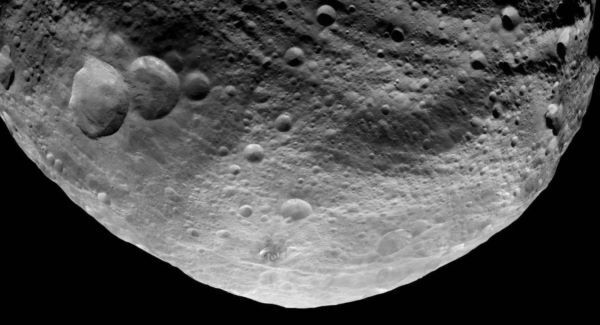
As you may or may not know, a large asteroid is going to scrape by Earth later tonight - but fear not.
While the heavenly body will be very close in astronomical terms, it has no chance to hit us - it's still going to be about three times the distance of the moon distant (1.2 million km).
That distance is fortunate, since it is about 500 metres (1,500 feet) across. And since it will be the closest asteroid of its size to earth until 2027, it's worth taking a look.
How can I see it?
[comment] [/comment]
The asteroid will be closest to earth at about 4.20pm, which is still during daylight hours in Ireland. But we'll be able to see it as it gets dark.
It should look like a very slow-moving bright spot - visible with binoculars, but those with a telescope may want to unpack it - and it will be travelling in the opposite direction to the stars, making it relatively easy to spot.
NASA's star chart is a good guide to where to look - Jupiter is a good landmark, near the constellation Leo. Depending on what time you turn your eyes skywards, you might catch a glance any time from 8pm until the small hours.

The best bet is to take a look low in the sky to the east at about 8pm. It will slowly start to change brightness after 10pm, little by little, as it crosses into the constellation Cancer. It will rise higher in the sky later into the night as it grows brighter marginally until its peak at about 4.30am.
The only might be the forecast tonight, which includes broken cloud in places. We'll have to wait and see.
Is it dangerous?

No. Once astronomers get a good handle on the location and trajectory of these objects, calculating their path is not too hard. The real danger of a sudden asteroid impact is from objects we don't even know exist.
Oh, by the way – that asteroid what will come close in 2027? That's 1999 AN, and it will pass roughly 390,000km close to the earth - about as far away as the moon.
That's close.















