Meet the women who have turned their hobby into a career
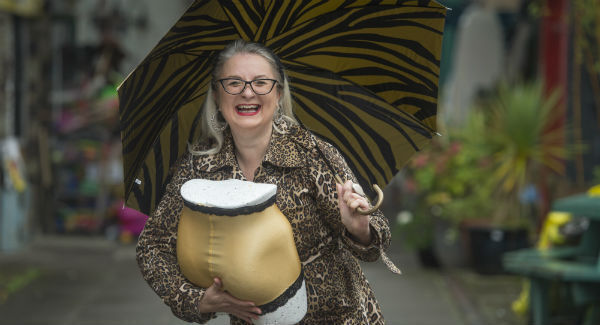
THE DESIGNER: ALI WHEELER
Once upon a time, your average womanâs knowledge of knickers was more or less limited to her own experience of wearing them. But not anymore. Iâm not sure when this changed exactlyâ maybe in the 1990s when the low-rise jean with peeping-out thong became ubiquitous, I donât know- but it has: now, in 2017 knickers are no longer a secret.
Sheer dresses, leggings, tight jeans, athlesiure wear â over the years, these have granted ordinary women like me a million unsought opportunities to follow the precise outline, to join up the dots, so to speak, of a million other ordinary womenâs knickers.
Visible panty-lines are everywhere.
On me, you, the bus, in the post office, workplace and street. Everywhere, that is, apart from upstairs in fashion designer Ali Wheelerâs little lingerie atelier, Clonakilty.
Which, if you ask me â being chock full of women and knickers â is just the sort of place youâd most expect to find them. But then what do I know? Iâm wearing one of a five-pack of cotton-rich M&S briefs.
There is no VPL in Hot Knickers Lingerie because Ali, its creator and owner, firmly believes that, âunless itâs meant to be seen, it shouldnât be seenâ.
Now, we all know that knickers are as diverse and contradictory as the bottoms they cover; thereâs high-rise, low-rise, contorting, compressing; cheeky, sensible, architectural and naff; baggy hammocks, boy-shorts, barely-there- eye-patches, thermals and three millimetre pieces of string.
But thereâs nothing of that ilk in Aliâs tiny weeny hand-made-knicker-factory â just elegant, comfortable, vintage-inspired shapewear lingerie that only the wearer will know sheâs wearing, âunless of course she chooses otherwiseâ.
You might think youâve heard this all before, but what Ali does in her Hot Knickers studio is actually quite unique: with a degree in fashion, background in bespoke costume design, extensive research, passion, hard work and four sewing machines, Ali Wheeler saves womenâs bottoms from the tyranny of ill-fitting, uncomfortable unsexy knickers with VPL.
Iâm here to find out exactly how she goes about this business of saving womenâs bottoms.
And just as importantly, why.
I ask Ali â a 52-year-old mum and one of the least intimidating women you could hope to meet â how she came to be the only bespoke shapewear lingerie manufacturer in Ireland.
âWhere weâre standing now used to be my friend Paulaâs hair salon,â Ali says, âI just had a tiny space for my costume-making business down at the back, where my sewing machines are now.
âPaula came to work one morning,â she continues, âhaving to go straight from the salon to an overnight event after work but she forgot to bring a change of knickers to wear the following day, so I quickly measured her up while she was giving one of her customers a cut and blow-dry, got my pattern-blocks out and had a go at making a pair. She said she wanted smoothing, sexy, comfortable knickers that went up to her belly-button. So I did my best with the materials I had. I remember her face when she tried them on,â Ali remembers smiling. âShe just stood there in front of the mirror, actually admiring and caressing her curves. Out loud. She was delighted with herself. I loved seeing that delight. I was hooked. It went from there.â
The inspiration for Aliâs four-part lingerie range â which comprises the Paula Knickers Brief (âŹ40), Ava and Charlie Camisoles (âŹ40) and Liz Slip (âŹ90) â is drawn from the glamour and tap-pants style of the 1940s and 50s (âif Elizabeth Taylor and Ava Gardner were alive now, theyâd definitely wear my knickersâ) but Ali fuses her vintage-inspired design with the comfort, support and functionality that modern silky European fabrics (all ethically-sourced) provide.
However, the success of Aliâs designs doesnât merely lie in the style, cut or type of fabric she uses (85%polyamide and 15% elastane in the main feature fabrics, 95% cotton and 5% elastane in gussets for maximum flexibility and support) but in the fact that all Aliâs creations are underpinned by her proper â and by that I mean empathetic â understanding of how womenâs bodies actually work.
She holds up a pair of Paula knickers.
âWomen bend at the waist,â she says, â so I cut my knickers to fit perfectly to the waist and they all have a centre back seam, just like a bottom does. By cutting and seaming fabric to follow the natural curves and bends in a womanâs bodyline you end up with a natural, smooth silhouette- and nice, heart-shaped bottom. And theyâre short in the leg so thereâs no panty line, with a cotton gusset that a panty liner fits and a tummy-smoothing panel, because in my experience, Iâve found that women are most self-conscious about their tummies.â Aliâs knickers also encase both buttocks and give a bit of âbottom supportâ which, quite apart from reassuring anyone anxious to avoid the upsetting, âcellulite in leggingsâ look, is also a major practical plus in chilly, windy Ireland.
But Hot Knickers Lingerie is about body-contouring, not contortion.
âWe are the shape we are,â Ali says, âif we squish our bodies into underwear too tight, we just end up looking boned and rolled, with lumps in places we never had them in the first place. Besides,â she says, âmen have never had to suffer the misery of underwear as a form of physical suppression, whereas throughout history, women have. I mean look at Poldark romping around in comfort while poor old Demelzaâs stuck in whalebone corsetry. If men donât have to suffer it, why should women?â Why indeed?
I examine a pair of Paula knickers. If someone held a loaded gun to my head and said, âpost a picture of yourself on Instagram in a pair of knickers of your own choosing,â Iâd choose these: soft gold with a black lace trim. Smoothing, not contorting. Clean and simple design. Modest and naughty.
But can comfort really be a happy byproduct of lingerie that is also, essentially, shapewear?
Iâm not convinced.
âTake a pair home with you,â Ali says, âand let me know if you think it can.â Iâm wearing them as I type: it can.
THE ARTIST: JENNY MONKS

Jenny Monks creates otherworldly designs by combining her photography with embroidery and carefully sourced fabrics. Her work has been shown in galleries around Cork and recently Paperdolls boutique commissioned a work to suit the space and ambience of their gorgeous store.
âI make the work by collecting fabrics,â Jenny explains. âThis can mean up cycling clothing, and sourcing heritage fabrics like antique lace from all over France and Italy. I get a lot of the really nice elements from my own clothing â nothing is safe! Iâve always loved the process of stitching and thatâs the part to me that makes my heart sing â thatâs the part that really draws me in. For me, making my work, itâs like a pianist â itâs about my hands â itâs about working directly with the touch and the feel of the materials.â Jenny says that her collaboration with Paperdolls speaks to the sartorial nature of her pieces.
âTo me, the work is fashion. Itâs the spirit of fashion, of personal expression. I love books like The Thoughtful Dresser, by Linda Grant and reading about Coco Chanelâs life and what really inspired them was the desire to tell a story through their clothes, and thatâs why Iâm doing through my work.â As a mother of two, Monks has had to learn to work her creativity around her family, and she does this by working out of a studio in her home. âI work in the evenings when the kids are in bed. My kids are a part of my work â in the studio they have their own work space/ creative space.â There are times in your life, says the artist, that you have to let go and realise that you canât achieve everything, but itâs important to remember that you can still achieve.
âWhen your children are young babies and toddlers, they are your full focus.
âEven at that youâre a creative person and you will find yourself doing really creative things despite yourself. For a creative person itâs a way of life â itâs your voice. It comes out through your kids, it comes out with your family life.â The turning point came for Monks when her children reached school age, and there was more time to flex her creative muscles. âWhen my children got to the point of being at school I decided that this work was going to be a priority for me and it became a discipline. My children have a total respect for the dedication of my work and it enhances our lives rather than deters from it.â
The practice of creating is sacred for Jenny, and gives her freedom to express herself in the best way she knows how.
âThe most important thing to do is to create time and space in which to be creative and to realise that you have to work hard to make things happen. Despite any setbacks along this journey for me â itâs a way of life, itâs my love. â
With summer comes more free time for Jenny to focus on bigger projects, and for her, last summer was about getting her branding on point. âI felt that I needed to define what my work was. Iâve been doing this for nearly 20 years so for suddenly people who know me to be surprised by my work baffles me. I have held exhibitions over the last number of years and I knew that I needed to widen my audience.â
Finding ways in which to encourage her audience to experience her work up close is a major goal for this year; because it is only in real life that you can appreciate the details and layering and finer points of her designs. Thatâs where her new collection of digital prints come in; a means in which buyers can start their own Jenny Monks collection by ordering directly from her website.
For this artist, the future is bigger â much bigger.
âI think that there are lots of unique tailor-made businesses in Cork and Iâm trying to reflect that in the work. They are there to bring a bit of spirit, a bit of soul to a space.â
- Find Jennyâs work at www.jennymonksdesign.comÂ
THE ARTISAN SOAP MAKER: HAJNI KELE

When Hungarian early intervention therapist Hajni Kele moved to West Cork to treat a group of children with cerebral palsy, she would never had predicted the recession of
the early noughties and the reality of finding herself with a newborn and redundancy just a few short years later.
âThe recession coincided with my son Hugo being born, and me losing my job which I loved.
âI felt like I was pulled out of the ground and I was gutted,â she explains.
âI had been working in my field for 15 years and for it to suddenly be taken away, I was devastated.â
In order to combat the emotional toll that her vocation demanded, a few years earlier Hajni had started to tinker with soap making.
âThe work was so intense, soap gave me a little bubble where I could unwind and be free and go with the flow,â she says. âI had no intention of ever setting up a business â all I wanted to do was load up my shower with lots of lovely things! I love it because there is so much variety and so many ways you can change soap. I love the functionality of it. During the day I was an early intervention therapist and at night I was a soap maker.â Around the time that she was made redundant, a blogger turned a light on in Hajniâs world of soaps.
âIn 2010 or thereabouts a l sent a German blogger who was very well known in soapy circles a bar of soap to review and she loved it,â she says.
âShe wrote a whole feature about my soap and told me to get my website in order because people would want to order it. I had three days to put together some kind of footprint on the internet and I started to get web orders from all over the world as a result of her article. This coincided with me being made redundant, and so I thought âmaybe I have to make soap!ââ
This quickly translated into a business idea and Hajni put the feelers out to investigate what kind of help was available to her. âThe South Cork Enterprise Board were amazing to me,â she enthuses. âThere I was, with my colourful soaps â not what theyâd be used to seeing very often, but they took me under their wing. Through them I went to Showcase, which is a special trade show for home and gifts, and that was helpful.â As a woman with a clear sense of get up and go, and a hugely supportive partner in Michael, an Enniscrone native, Hajni had achieved a lot by the time she approached the Enterprise Board.
âI did things kind of backwards or upside-down,â she admits. âBy the time I went to the Enterprise Board I already had a very defined style, I had my own formulation and the product all organised. A certified chemist had approved my formulation so I was ready to go. The Enterprise Board helped me in terms of directing me towards the market and putting a business plan together â that sort of thing.â
Mianra Soaps are things of utter beauty. Each hand-carved bar is like a piece of art, and filled with all natural ingredients â many of them foraged from Ireland.
Their best-selling lemongrass and seaweed soap uses seaweed harvested from the Sligo beaches beside where Michael grew up, and this sense of heritage is important to Hajni in the creation of her products. âThe ingredients really make a difference to the soap.â Partners for two decades, Michael and Hajni are partners in business as well as in life. Working with each other comes easy to them at this stage, she says.
âWeâve been together for 20 years now, so it was not going to be a deal breaker! You have to be careful not to boss each other about!â Mianra Soaps is coming into its busiest season and will be exhibiting at the RDS Christmas Fair; something that Hajni adores each year. âI love getting to meet our customers face to face âit helps to define what we do and what products we produce.â They have just partnered with the superluxe Ballinatray House to supply product to guests of the hotel.
âIt is amazing out there. I am really interested in collaborating with them and creating something very unique to them, bringing in a bit of their history and luxury.â What are the most important things when pursuing your passion according to Mistress of Soap, Hajni Kele? âDo something you love, with someone you love â thatâs the way.â
- Order Hajniâs gorgeous handmade soaps and bath products through her website mianrasoaps.com
THE JEWELLERS: DERVLA COGAN AND EMMA CANNING

Cork sisters Dervla Cogan and Emma Canning founded Brilliant Inc. over a decade ago with the ambition of creating beautiful, accessible fine jewellery for diamond lovers everywhere. Today, they have their flagship store on The Kingâs Road in London and the collection is also available in Brown Thomas Dublin, Cork and Galway, utilising ethically produced diamond simulants to make stunning fine jewellery.
The concept behind the company was to find a cost-effective way to wear diamonds, without compromising on quality. âWhen we first came across simulated diamonds we could not quite believe what we were seeing,â says Emma. âManmade gemstones are nothing new, but ones that are of such a high standard and almost indistinguishable from mined diamonds are special.â Dervla says that the accessibility of simulated diamonds were what attracted her. âI love the idea that beautiful fine jewellery can be accessible and enjoyed by everyone.
âAt the time, we had a blind belief that our idea and the concept that we were creating would be loved by others as much as we loved it ourselves. That passion is still the driving force behind our business.â Number crunching is key to building and maintaining a business, say the sisters.
âYou need to build on a good foundation and develop a core business plan, but you also need to adapt it along the way. Iâd also recommend doing a crash course in accounting; in my experience, itâs so important to be able to read a balance sheet and be financially astute from the start. Itâs a well-earned gift,â Dervla explains. Emma says that attitude is fundamental when it comes to dealing with people. âEnjoy what youâre doing because itâs catching! We found that people recognise the entrepreneurial spirit and are very open to sharing advice and helping you along the way. Itâs also good to join some networks, be open and chat to people, as you always learn something. This can really spread the word about your business.â Not all of us could work with our sister, but the Brilliant Inc. siblings say that sibling honesty is a huge positive in their business. âItâs lovely working with your sister as you can speak very candidly,â smiles Emma. âSharing the ups and downs with someone who will always be there for you and be your biggest cheerleader is the best. Our skills are fairly inter-changeable and this gives us great work flexibility.â
The benefits of working with someone who has known you forever clearly outweigh the negatives, agrees Dervla. âWe have a lot of fun working together and read the signals when some space is needed. I think weâve learned in more recent years to switch work off and have fun in our downtime as sisters. Itâs so important.â
As successful women in business have they come up against sexism in the marketplace? âThere is a lot that needs to be addressed depending on where you live and work,â admits Emma. âBoth London and Ireland are very modern places to do business. However, in the past, we have been asked more than once in meetings, âWhat does your husband do?â Iâm not sure this happens to men very much!â
Dervla is conscious of a womanâs need for flexibility in her career. âI think every woman should be allowed the opportunity to develop a career that works for her; and itâs important to recognise that this can often change at different stages of a womanâs life,â she attests. âI think the key is to not push harder all the time.
Knowing your passions, being bold and taking calculated risks will give the best rewards, but you can only do your best and you must recognise that is enough. Above all, itâs about not letting yourself be guided by pressure and fear and that can be a challenge for both men and women equally.â
So whatâs in store for these dynamos over the next decade? Sustained growth is where itâs at, says Emma. âWe have kept the business a manageable size without taking on any outside investment to date. If we came across the right match weâd have a think about expanding more quickly, however until then, weâre quite happy designing our jewellery and keeping our customers happy.â
- The Brilliant Inc. collection is stocked in Brown Thomas Dublin, Cork and Galway or online at www.brilliantinc.co.ukÂ
THE FOOD PRODUCER: LORETTA KENNEDY

For Loretta Kennedy, food has always been an important part of her life. Brought up in Mayo by a family of foodies, she took being well fed and healthy as a horse as a result of it for granted. Her brother and sister both channelled their upbringing into food businesses, but it wasnât until her own children were born, and she became even more committed to eating well that the idea behind Mama Bear Ketchup was born.
âWhen I had Ăine, my first child I was all excited about food,â she says. âI got really into cooking and looking at the nutritional aspect of food. It wasnât until we had a dentist appointment a few years ago and one of my kids had a cavity. I was mortified because I pride myself on there being good, healthy food in the house â we buy store made stuff of course but we wouldnât have that much junk around.â
Loretta started to investigate hidden sugar in food and found that ketchup was a major culprit in her house. âWe were having ketchup nearly every day and the kids were having it with all their vegetables â it had to stopâ she explains. âI started making my own ketchup.
âGradually their palates changed and they started to love it. Now they wonât eat shop-bought ketchup because they donât like the taste.â Mama Bear produces two kinds of ketchup, original and roasted garlic. The sauce contains less than half the sugar (10g per 100g) than shop-bought ketchup (up to 26g per 100g), has no hidden sugars and is full of natural prebiotics. Gut health is something that she is passionate about, and it was important to include boosters like prebiotics in her ketchup.
It was her sister Aisling that encouraged her into starting Mama Bear foods.
âWell, pushed me really,â laughs Kennedy. âShe was just after giving birth to her sixth child as well as running two food businesses of her own, and she was ringing me in the middle of the night telling me that there was nobody else doing what I wanted to do. â
The next step was to contact the local Enterprise Board, who was incredibly helpful, and SuperValuâs Food Academy followed suit.
âAll of this support gave me the confidence to really identify my target market and the unique selling point of my brand. I started at the community stall at Mahon point and did a few other Farmerâs Markets. These markets are an amazing opportunity for free market research and I found that I had a regular customer base who wanted lots of my product.â With products on shelf at Menloe Stores, a January launch in SuperValu and a firm place at some of Corkâs most popular farmerâs markets, Loretta Kennedy says that itâs a good time to be a woman in business, particularly if youâre starting out.
âWhen I did Food Academy it was mostly women, the start your own food business was all women and everyone was coming at it with the same passion.
âThereâs a lot of positivity and support for women in business and thatâs what I found,â she fizzes. âMaxine Hyde in Ballymaloe was just amazing to me and she didnât have to be â she didnât know me from Adam.â
What advice would she give to a woman who wants to turn their passion into a business?
âIf youâre waking up every morning and you have a fire in your belly that wonât go away, take a look at it, research and go for it. There is a lot of great free advice out there and its important to take advantage of whatâs available.â
- Along with 70 other Irish artisan producers, Loretta will be showcasing Mama Bear Ketchup at the Cork & Kerry Food Market taking place today in Cork City Hall.












