Book review: 'Against Elections' by David Van Reybrouck
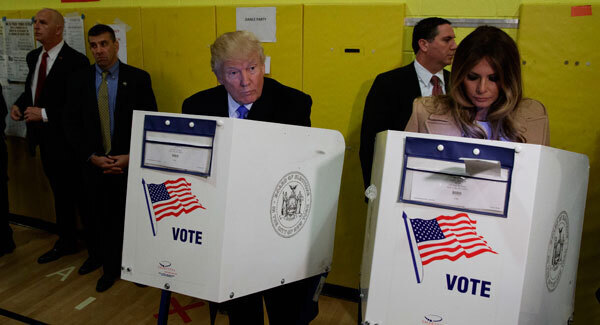
SOMETHING is rotten in the state of Denmark. And America. And France. Right throughout the West in fact.
We are in the grips of ‘Democratic Fatigue Syndrome’.
Fewer people are voting. Those who do vote are showing less and less loyalty to any one party. Membership of political parties is in freefall.
David Van Reybrouck does not hold back in Against Elections.
There may be less malign explanations than Democratic Fatigue Syndrome for things like lower voter turnouts, but Van Reybrouck doesn’t stop even to glance at them in his rush to catastrophise.
Nevertheless, there is a ring of truth to much of what this Belgian intellectual has to say about how we govern our countries: “The word ‘elections’ and ‘democracy’ are nowadays synonymous for almost everyone,” he observes.
“We have become convinced that the only way to choose a representative is through the ballot box.”
Well, it’s time to unconvince ourselves.
We are “electoral fundamentalists, despising those elected but venerating elections”.
The media has grown “insane” in its “exaggeration of futile conflicts”. Elections are now “media-corporate spectacles”.
The power of governments to actually get things done is shrivelling.
This is a crisis of both legitimacy and efficiency.
Meanwhile, there is a whole other tradition of democratic representation that we have forgotten about.
In the heyday of Athenian democracy, the drawing of lots among citizens in order to fill various representative posts meant wide participation not just in choosing governments but in actually running them too.
Complex forms of “sortition” were widely used in city states across western Europe in antiquity, the Middle Ages and the Renaissance.
In this reading, the American and French Revolutions were spectacular wrong turns.
The late 18th century was when the idea of the equal distribution of political opportunities was buried.
Then, elections were simply a method of producing new aristocracies. Nowadays they create distant professional elites.
Elections are not the Holy Grail of democracy. They are its poisoned chalice.
Naturally, Van Reybrouck lauds the experiments in ‘deliberative democracy’ that have sprung up around the globe, giving citizens the opportunity to come together, discuss issues and come up with solutions, even if the record of tangible change arising from these experiments is mixed, at national level, at least. (His straightforward attribution of the result in the equal marriage referendum in Ireland to the work of the Convention on the Constitution is ridiculously reductive.)
One obvious suspicion arises. Has Van Reybrouck calculated that such innovations will lead to outcomes in keeping with his own political outlook?
Where he does cite outcomes, they are ones that would all meet with the approval of people with broadly left-liberal views.
Would he be calling for reform if elections were mostly producing liberal, left-wing governments?
In his critique of referendums, he says that this form of vote “often reveals people’s gut reactions”, while the deliberations he advocates reveal “enlightened public opinion.”
Maybe, maybe not. But the question he doesn’t really address is: who, in the deliberative model, plays the role of the enlighteners of public opinion?
How are they chosen? It would be good to know.
It would also have been good to have heard more from Van Reybrouck about education. In ancient Greece, they relied on training in the liberal arts — grammar, logic, rhetoric — to prepare citizens for an active part in civic life. And in modern Europe?
Van Reybrouck acknowledges the potential pitfalls of sortition and citizen deliberation, and tries to present a blueprint that mitigates them.
Allowing membership of second houses such as the Seanad to be decided by lot would be a start. Bits of what he offers still sound convoluted and quite starry-eyed to me, the diagnosis more convincing than the cure, but why not judge for yourself?
You don’t have to agree with everything David Van Reybrouck proposes to find this quite a riveting book of political theory.
CONNECT WITH US TODAY



Be the first to know the latest news and updates

















