New book offers a social commentary on the Irish tendency to self-aggrandise
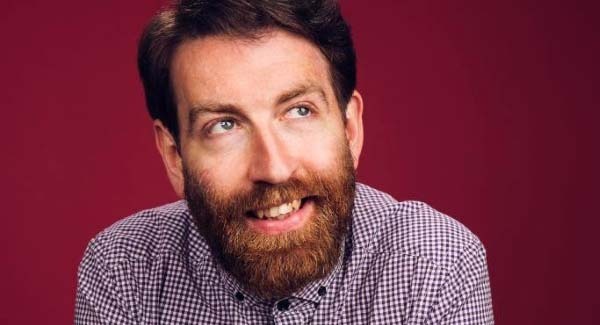
Colm O’Regan is an Irish Mammies boy no more. The Cork stand-up gained a cult fanbase by tapping into his inner small-town mater, via a dryly hilarious Twitter feed and three best-selling books.
However, with the fetishisation of Irish culture approaching a tipping point (the endless online articles debating the merits of King v Tayto, etc) he’s struck out for fresh comedic pastures with his book, Bolloxology.
“There is a huge industry of Irish people talking about being Irish,” says the deadpan comedian. “The first Irish Mammy tweets were in 2011, which feels a long time ago. There is definitely more talk about tea towels than there was five years ago. I wasn’t the first person to talk about all of that. I was the first to do so in a particular way. Perhaps it’s best to leave the ground to others and move on... Everyone is writing about Irish mammies now. I’d run out of things to say on the topic.”
The new book is social commentary with a wry chuckle. Bolloxology describes the (predominantly Irish) tendency to self-aggrandise even as we understand that the worst a person could do is boast or carry themselves with a swagger.
“It refers to the… the pretension and the notions we all have. I don’t mean that in a negative sense,” says O’Regan, a native of Dripsey, Co Cork. “We all have notions — the Aldi bag inside the Brown Thomas one and so forth. There’s nothing wrong with notions; Albert Einstein had notions. If Albert Einstein was told not to have notions, we wouldn’t have space travel.”
Such behaviour is a universal component of human nature, he believes. Nonetheless, something in the Irish character makes us more particularly prone to talking big while waxing modest.
“If you were to compare Ireland and Finland… they don’t do small talk in Finland. If you said to a Finnish person: ‘Tis a grand day, isn’t it?’ They would respond factually: ‘Yes it is grand’, or, ‘no actually, it is a better than average day’. It wouldn’t be a prelude to an hour’s conversation.
“We are very indirect in this country. Whether that comes from years of not telling English soldiers whether someone has a pike in their thatch or because Irish translated into English doesn’t quite mean the same thing, I’m not sure. Whatever the cause, we do have a tradition of obfuscation and half-talk that lends itself to bolloxology.”
O’Regan might, in the healthiest sense, be said to have notions himself. In addition to his stand-up work and Irish Mammies bestsellers, he’s a radio columnist for Drivetime on RTÉ (he was on air recently commenting pithily on the budget) and for the BBC World Service. Just last week, he won a PPI radio award for Colm O’Regan Wants A Word, a two-part mix of stand-up and sketch comedy.
“The reach of radio never fails to bowl me over,” he says. “I did something about Dripsey once for the World Service…I got got an email from some guy driving through Nebraska. ‘I heard you talking about your village’. It’s astonishing.’”
He was approached by the BBC after performing at Kilkenomics, an annual mash-up of economics conference and comedy festival. They were looking for someone who could be both funny and informative. “I’m a stand-up comedian – my daily work involves trying to make sense of the world in a reasonably punchy way. They needed someone to cast a jaundiced view at the world. With the Drivetime column, what I like is the immediacy. You reach an audience of two or three hundred thousand with something you have written an hour or two before I record. You don’t have that long a lead time and I enjoy that.”
O’Regan became a father last year and, though this has obviously changed him profoundly, parenthood has yet to filter into his comedy. He wants to do the topic justice, while also being wary of turning into the stand-up equivalent of the overbearing parent insisting everyone coo over their baby pictures.
“It’s the most amazing thing that has happened to me. I’m still processing it. There is only so much you can do with talking about your baby. Half the audience don’t care, as they don’t have children, so, you have to work out how to get across what it’s like. I am working through that.”

“The way we speak here in Ireland is a sometimes entertaining mix of our natural bent towards bolloxology and our natural resistance to it”
Much has been written about Hiberno-English. A lot of it has been immense works of scholarship, cross-referencing old texts, researching etymologies and making links with Indo-European languages and whatnot. This has not been done here, though it totally could have been, and anyway, in today’s busy world, who has time for that? Instead it’s just broad strokes and generalisations. That’ll do you grand.
The way we speak here in Ireland is a sometimes entertaining mix of our natural bent towards bolloxology and our natural resistance to it.
We equivocate a lot. We can be excessively modest — not taking any credit for anything, even if it was clearly proven we did it. Although we will take huge amounts of credit to buy a house at the wrong time in an economic cycle.
Here is an example of the Irish argot and how the bolloxology or anti-bolloxology applies.
The silent voice
The silent voice is what is meant by what is actually said. It’s like a dog whistle for humans but instead of a high- pitched sound, it’s those unspoken words directed at you and your oul talk.

An emigrant coming back
The conversation between a returned emigrant and the person who stayed can be laden with subtext, with neither side saying overtly what they want to say, even though they may be screaming inside, as the following example shows:
‘I thought it was you, all right. Well, how’re you getting on — over in LA, is it?’
‘San Fran, actually.’
‘San Francisco, bedads.’
‘You like it out there?’
‘Oh yeah. It’s just a different world, you know?’
‘Who are you working for? Google or Facebook, I suppose. One a them Silicon Valley crowds, I suppose.’
‘No, you wouldn’t have heard of them — Softoid. But we’re on the same campus, actually. All part of the same ecosystem.’
‘Eco-system’?
‘Softoid. I don’t know them. Must be a small crowd, are they? Wan a them start-ups?’
‘Actually it’s got a market cap of 30 billion but it’s very much under the radar. But you’ll hear about it, I’d say, when it IPOs. The CAPEx on our B2B model for SMEs is attracting a lot of VC interest. The NASDAQ is going to go nuts for it.’
‘CAPEx, yeah, they go stone mad for the CAPEx, all right.’ The clown. ‘You must be on big money out there.’
‘Haha. It’s a good living. But you know, long hours so . . . Would you not think of going out there yourself?’
‘Ah, no. Wouldn’t be for the likes of me.’
‘I’d say you’d like it. It’s real active. We go skiing every weekend in the winter and then it’s a short drive to the ocean for surfing. It’s not just staying in the pub.’
‘Skiing. Begor. There won’t be much skiing for me now anyway with the young lads, haha. Have you family yourself out there?’
‘No.’
‘Ah shur — plenty of time, I suppose.’
‘I suppose so.’
‘Good man.’
‘And how are things here?’
‘Goin’ well, actually.’
‘So that’s the way now.’
‘That’s the way.’














