Jake Bugg is the Justin Bieber of British rock
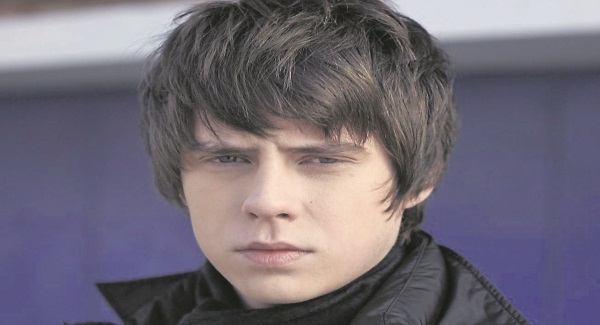
JAKE Bugg is the Justin Bieber of British rock. He was introduced to us as a quintessential boy wonder, playing Glastonbury at 17, signing a record deal six months later and achieving a number one album by his 19th birthday. Overnight successes have rarely arrived so quickly.
Whatâs more, the LP that brought him fame, 2012âs self titled Jake Bugg, was strikingly mature. In a flinty whine somewhere between Bob Dylan and Liam Gallagher, Bugg chronicled his upbringing on a scrappy Nottingham council estate â a rare infusion of social realism as the British music industry became a playground for bored rich kids (from Mumford and Sons to Coldplay, the toffs had taken over).
There was nothing to do but take drugs and steal cars, yet Bugg invested the deprivation with a powerful sense of tragedy and nobility.
Notably absent was the sneery self-regard that can often seem de rigueur in UK guitar music. Aside from his somewhat affected singing style, his most striking quality was searing honesty.
But now, just like Bieber, Bugg is at a point in his career and life, where he can no longer rely on boyish charm. Aged 22, heâs just released his most challenging album to date â one that has split his previously devoted fanbase down the middle. For many it may be the point at which they and Bugg part ways.
In a stark departure, Bugg has incorporated dance elements and, rather than singing about the plight of Britainâs forgotten youth, gives voice to his deepest fears and insecurities (of being alone, of failing to sustain success etc). On My One (Nottingham slang for âon my ownâ) is a brave LPâ maybe to a fault, with a number four chart placing making it the first Bugg album not to reach the top. He shrugs â you have to follow your muse. Otherwise why pick up a guitar in the first place?
âIf fans donât like this record they might like the next one,â says the deadpan Bugg, his English midlands burr flattened at the edges after several years living in Los Angeles.
âBecause thatâs obviously going to be different, isnât it?â
The Justin Bieber comparison isnât as facetious as it might initially seem, as early on Bugg was accused of having been âmanufacturedâ by his record label and management. True enough, he has worked with a variety of writers-for-hire (including Iain Archer, co-composer of Snow Patrolâs âRunâ) and big name producers, most notably Rick Rubin, the enigmatic âsong doctorâ whose collaborators stretch from the Beastie Boys to Johnny Cash.
However, thatâs all in the rear view mirror. On My One is largely produced by Bugg and he authored the majority of the songs. Itâs another step on the road to artistic maturity. A wide-eyed teenager no longer, he is finding his voice and outgrowing his influences.
âThe album is my most personal,â he says. âA lot of the thoughts I express have been lingering in there for some time. I also wanted to experiment with sounds: usually, when you have a producer he has his own vision of what he likes.â
The only outside assistance was from Jackknife Lee, the Dublin-born producer who has welcomed artists as diverse as Snow Patrol and Taylor Swift to his Los Angeles studio. He and Bugg collaborated on a number of tracks, even if Lee did not really influence the recordâs over-all tone.
âHe was suggested through my publishing company,â explains Bugg. âIâm always open to trying new things. He challenged me â told me some of the material could be improved. That wasnât always easy to hear. But if he hadnât been straight with me, then the songs wouldnât have been as good in the end. Itâs good to keep an open mind.â
As a kid in Nottingham, Bugg adored Oasis and the Arctic Monkeys. But the eureka moment was when he discovered Donovan and Dylan, troubadours whose blending of folk and rock spoke to a side of himself he had not previously known existed. On Jake Bugg he was duly accused of being a luddite, refusing to acknowledge anything interested had happened in music since the mid-seventies.
The criticism didnât rankle â Bugg shares his generationâs healthy disregard for the (much diminished) British music press. Still, four years on, he has opened himself up to contemporary influences â in particular new UK electronic acts such as Disclosure and Rudimental. He doesnât rap or rave on On My One â nevertheless, the album is an impressive forward step for an artist who arguably wore his obsession with the past a little too prominently.
He has worked hard at not having his head turned by fame. While he no longer lives in Nottingham and seldom returns, Bugg makes a conscious effort to stay in touch with acquaintances from back in the day.

âI always surrounded myself with my friends. Theyâll remind you of what itâs like in the real world â of how life is for them. Iâm lucky to have people like that around me,â he states.
Bugg may have experienced a quick rise. Yet, staying at the top is often just as difficult as getting there. He discovered this when headlining Glastonbury recently opposite main-stage act Coldplay. He attracted a decent crowd. It was nonetheless clear who the bigger draw was. He doesnât seem too put out, understanding that set backs like that keep you grounded.
âThat was hard to compete with,â he says. âA lot of people at Glastonbury were obviously Coldplay fans. You make what you can of it.â
Itâs a strange time for rock stars, even chart toppers such as Bugg. A generation ago, people invested everything in music. In this era of PokĂ©mon Go and Snapchat, there have never been so many distractions and for millennials music is often just another entertainment option, not a way of life.
âThere are pros and cons,â nods Bugg. âThe internet narrows it down to a celebrity world. Also, everyoneâs voice is heard. But because everybodyâs voice is heard, there are too many out there. Itâs difficult. You just have to do your best.â











