Vintage View: The codpiece
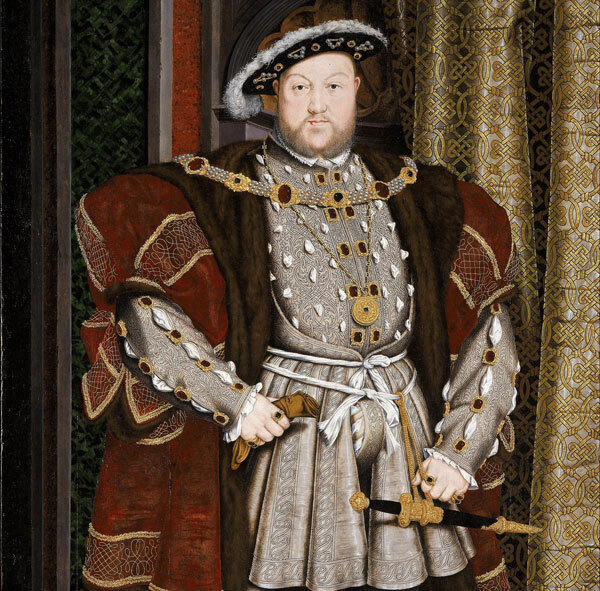
Kya deLongchamps takes a wincing look at the most peculiar protuberance of male attire which thankfully wilted in the age of Shakespeare’s ‘A Mid-Summer Night’s Dream’.

Vintage View: The codpiece

Rowan Atkinson and his scripting geniuses knew exactly where to head for the greatest laughs in their Tudor round of the anti-hero adventurer— Blackadder (BBC).

Who could forget the pungent Baldrick’s boast of his uncle playing ‘second codpiece’ in a version of the Scottish play (Sense and Senility 1987). “Did he have a large part?” asks Edmund.

Well, it all went gleefully downhill from there, with ridiculous, highly mobile appendages waved around from the groin in just about every episode. Codpieces were in fact out of fashion by Elizabeth I’s reign, but why spoil the romp?

I apologise for those plunging into their first lightly boiled egg, but the rude truth is that ‘cod’ means scrotum.

I’ll leave the comparative detail to the subtleties of your tender, Saturday morning imagination.

Was a cod-piece just an item to cover a man’s genitals?

Or, to quote Baldrick, a cunning plan for making up in grand fashion for Nature’s lack of streamlining and protection in that tender area?

Fair enough, 16th century life could provide the unexpected stab if some heartily-dressed upper class idiot swung around to pick up a pewter cup of mead and their dress sword swung into Father’s meat and potatoes — the cod-piece would give it a deflecting save.

Aristocratic male dress in the 15th and 16th century comprised of pants made up of hose in two separate legs, sometimes pulled on independently.

Vulnerable gaps required careful tailoring and tying with dedicated laces and buttons. Wealthy individuals would be routinely sewn into their outfits.

The doublet at the time of Henry VIII (1491-1547), was shorter and cheekier than ever, so there was a real chance of a man’s magnificence swinging right into view.

Enter the codpiece, a proud leather ‘braguette’ for the nethers which probably started its 75 year rage under the Yorkist Kings.

Of course, the male psyche being what it was, the protective padding over the manhood inflated through the early 1500s to comic lengths and angles, used as an indicator of a fellow’s God-gifted size, potency and sexual prowess.

It was phallocentric upholstering at its finest, but it is highly unlikely that any man’s endowments ever actually extended into the real estate of a large codpiece. The garage was empty.

Visual beefing up was in line with the popularity of the ‘slash and puff’ styles, which costumed up a fellow to be as big and square in his upper body as possible. The chest and shoulder line and musculature of his arms were exaggerated, leaving the legs dangling rather daintily to the floor in long or short hose, ornamented with a garter.

The biologically unlikely size of the codpiece was perfectly acceptable to fluff up the hosiery of these aristocratic peacocks where it mattered most. Sumptuary laws in place from the 13th century, dictated what each station of society could wear, ensuring that no dandyish up-start could wave his bits about in upper-class framing.

The padded galleon of a codpiece, made in the same material as the jerkin (jacket) or upper stocking, thrust stiffly and proudly through a man’s dress. He was ready for action. Was there an underlying message — ‘I’m just so big, I cannot be contained by standard trousering’?

Artists from Titian to Bruegel recorded the rude presence of cod pieces. King Henry VIII drawn by Hans Holbein the Younger (1497-1593), has a large, luscious bow draped over his, the cod-piece parting his doublet like a greedy actor taking his third bow.

Whatever the male motivations and pretensions, it was a potential if pinching hiding place for anything from jewels (hence the expression ‘family jewels’) to dressings needed to treat the common scourge of syphilis.

Armoured codpieces were genuinely useful and given lion heads and other scary flourishes, were intimidating in battle dress.

This primal, phallic declaration ran deep.

Very little Tudor dress survives outside paintings and sketches of the time, but there is a magnificent suit of armour of Henry’s dating from the 1540s in the Royal Armoury which includes a really impressive codpiece pointed directly at the oncoming enemy.

Take a discreet look when you next visit the Tower of London.

Television adaptations of this era, with any sort of serious tone, like Hilary Mantel’s ‘Wolf Hall’ (BBC 2015), have been forced to keep the codpieces undersized from their original splendour.

Elizabeth I (1533-1603) was a fastidious follower of fashion, understood its vital nuances, and dictated the niceties of dress to her male suitors. The court began to favour a ‘peascod’ or goose-belly, a padded stomach area which spoke of wealth, ease and eroticism, the hips thrust forward to present jewels and embroidery.

During Gloriana’s reign, the formerly must-have male totem of the codpiece deflated from its 1550s virility down to simple open folds of material in the 1590s, discreet enough to allow coverage only, the precursor of the modern ‘fly’.

Shakespeare was one of many writers to openly make fun of the vain, improbability of the codpiece.

Clearly her majesty herself was not inclined towards overly pert confidence, bobbing along in either her court or chambers.

I can’t say I blame her.

x

More in this section

Cookie Policy Privacy Policy Brand Safety FAQ Help Contact Us Terms and Conditions

© Examiner Echo Group Limited













