New national autism registry offers hope to families
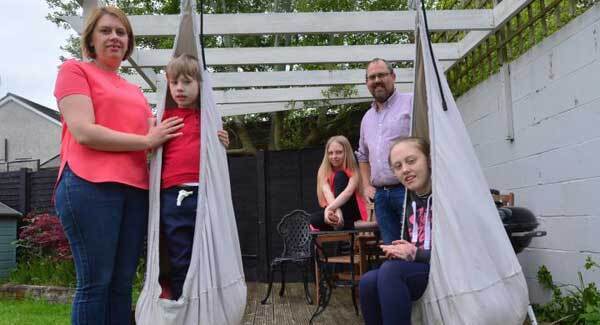
Six-year-old Max Birney has moderate to severe autism, ADHD, hyper-mobility syndrome and a sensory processing disorder.
“He has a good bit going on,” says his mother Sharon, a part-time nurse, based near Naas.
Yet when Max — then almost four — was initially assessed after a two-year wait, the mum of three was told her youngest child’s difficulties were due to her parenting.
“They said I was too soft on him, that I let him away with a lot of negative behaviours because of his speech delay. They said his speech delay was due to minor hearing loss.”
Her daughters, Alanagh and Leah — now 13 and nine respectively — were thriving. She blamed herself for letting Max’s behaviour get out of hand.
“He was a loving little boy but he had difficult tantrums, was constantly running around and wouldn’t sit down. I felt I had to buck myself up and take him in hand, be firm. I though if I was more disciplined I could fix him.”
Sharon went to parenting courses and borrowed how-to books from the library but Max didn’t improve.
“His playschool teachers firmly believed something was wrong. They pushed for reassessment but getting a reassessment is nearly impossible — so many are waiting for initial assessment.”
With primary school fast approaching and Max just four months short of his sixth birthday, Sharon was worried. Without a diagnosis, he had no right to resources such as a SNA. Also he isn’t good in crowds.
“He’s a flight risk. Going into a big school, if he was any way overwhelmed, he’d be gone.”
With time running out, she got a referral to a paediatrician and then to a consultant psychiatrist. Sharon was “absolutely floored” to hear Max had moderate to severe autism.
“I knew in my heart [something was wrong] but I didn’t think he was that bad. He’d missed out on all the early intervention he could have had if he’d been diagnosed properly in the first place.”
She and husband Roy were told “under no circumstances” could Max be in mainstream school. The Special Education Needs Officer (SENO) identified one place available in a new ASD unit in Kildare town. It has been the bright spot in an otherwise bleak and weary time of waiting for community services.
“He’s thriving at the ASD unit. He has good and bad days but his teacher has brought him on so much. But he absolutely needs speech therapy, occupational therapy and physiotherapy. He needs a couple of people to show him the way.”
Max has been on the Kildare National Disability Team (NDT) waiting list since last October. In January, Sharon rang to check if he’d moved up far.
“I was told there were no children coming off the list — there were no school-aged services available. It was a waiting list to nothing.”
So, for Sharon, news of a proposed national autism registry is the “first most positive thing to happen for autism in a very long time”.
The pilot phase was recently launched in Kildare/West Wicklow.
It’s a research-driven initiative led by Dr Geraldine Leader, director of the Irish Centre for Autism and Neurodevelopmental Research and lecturer in psychology at NUI Galway, and Louise Gallagher, professor of child and adolescent psychiatry at TCD.
The aim is to roll it out nationally on an incremental basis.
“What we’re really doing is conducting a census on autism. We’re trying to map the needs of the autism population in Ireland,” says Leader.
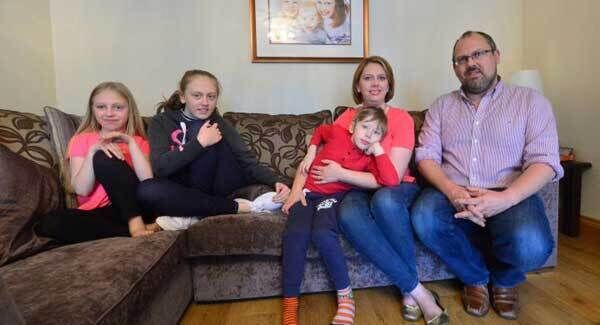
The heart of the project, she says, is data —gathering information on the individual with autism.
“What’s their profile? What are their needs — health, educational and clinical? Currently in Ireland, we don’t have an effective health information system in respect of autism.
"If we don’t know the needs, we can’t plan effectively. A registry — involving ongoing information gathering — would help us plan for effective services, based on need. It would allow us predict what services are needed in future.”
Leader points to a crisis in autism services — long waiting times for assessments, bottlenecks in accessing intervention and gaps in service provision.
“This is very worrying. Long established research demonstrates children who receive early intervention will make most progress. In effect, our children are losing valuable intervention time when they’re placed on waiting lists.”
National registries for cancer and for cystic fibrosis already exist. And now, says Leader, one is urgently needed for the one per cent of the population who have autism.
During the national consultation process that preceded set-up of the pilot phase of the registry — this comprised town hall meetings in Dublin, Galway, Sligo and Cork, as well as a national online survey — 93% of participants endorsed the registry.
The mood among parents at the town hall meetings was despair, says Leader. “They’re in crisis. They don’t know where to go for help. My day job is teaching students and doing research. I could spend my day on the phone.Parents ring me because they’ve hit this brick wall.”
It’s a sentiment Sharon Birney echoes. “Once you get diagnosed with autism, you get no information from anyone except other parents. Just knowing there’s going to be something out there now is such a relief for parents.”
ASD: Therapies can improve symptoms
Autism spectrum disorder (ASD) — the name for a group of neuro-developmental disorders. The word ‘spectrum’ is used because of the wide range of symptoms, skills, and levels of disability.
- Exact causes aren’t known. Research suggests genes and environment contribute. Boys are more likely to be diagnosed with ASD than girls. Other predisposing factors include having a sibling with ASD and having older parents (mum 35 or older, and/or dad 40 or older when baby was born).
- Symptoms include: Repeating certain behaviours or unusual behaviours; overly focused interests, such as with moving objects or parts of objects; lasting intense interest in certain topics, e.g. numbers, details, facts.
- Other symptoms relate to social communication/interaction: Getting upset by slight change in routine or being placed in new, overly stimulating setting; making little or inconsistent eye contact; tending to look at/listen to other people less often; facial expressions, movements and gestures not matching what’s being said.
- Research finds 46% of children with ASD have above average intelligence. Strengths/abilities include strong visual and auditory learning ability; excelling in maths, science, music, art; ability to learn things in detail and to remember information for long periods of time.
- No cure exists for ASD. Therapies and behavioural interventions remedy and can hugely improve specific symptoms.
Ideal treatment plan coordinates therapies that meet individual’s specific needs — the earlier the intervention, the better.
www.autismireland.ie.
CONNECT WITH US TODAY



Be the first to know the latest news and updates

















