Where to Invade Next: Michael Moore is taking Europe's better ideas for governance to the US
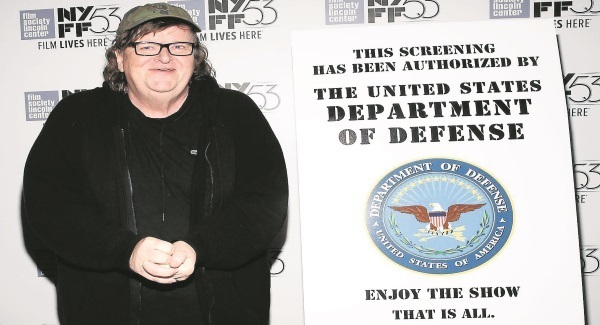
WHEN it was announced that Michael Moore would present Where to Invade Next, his first film in six years at the Toronto Film Festival last September, speculation was rife regarding who the director would place in the firing line this time.
Moore, who laces serious subject with humour, put documentary filmmaking on the cinematic map after winning the Cannes Palme d’Or for Farenheit 9/11, his critical look at the presidency of George W Bush and his ‘war on terror’, and he won the documentary Oscar for Bowling for Columbine, about the Columbine high school massacre. Few filmmakers have been as influential.
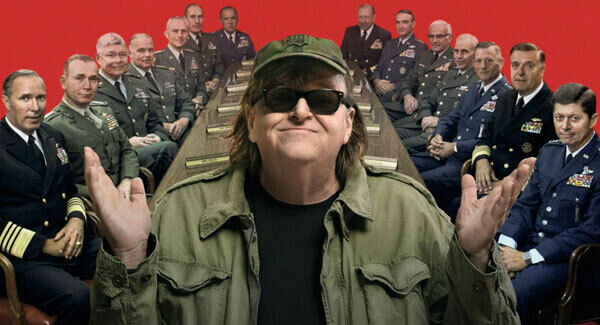
Many had believed that Where to Invade Next, which had been kept under a veil of secrecy, would focus on America’s continuous cycle of war around the world, especially since a kitschy picture of the US Joint Chiefs of Staff was paramount in the promotional materials.
Instead in Moore’s typical light-hearted yet scathing manner, he travels to other countries with better government policies (Italy, France, Finland, Slovenia, Germany, Portugal, Norway, Tunisia, and Iceland) and notes how America should adopt them. The film achieves that rare ability of being both provocative and entertaining at once.
TRAIN OF THOUGHT
“The idea started when I was 19,” Moore, who is now 61, recalls. “I got a Eurail pass and a youth hostel card and went across Europe for two months with a friend. We just kept wondering how come we don’t do this. I broke my toes in Sweden and it didn’t cost me a thing. I couldn’t believe it. So this idea has percolated for 30-plus years: What if we show fellow Americans that which we don’t have and others do have? Maybe that would inspire them.”
Not only focusing on health, the rotund director travels to Slovenia and meets an American student receiving a free university education. At the premiere he told the crowd he had application forms “for anyone who wants to go to college for free in Slovenia. Any Americans here incurring any college debt pick up one of these!”
In his six years away from movie-making following Capitalism: A Love Story, Moore says he left it to other people to “rise up and get involved”. He cites Occupy Wall Street as a way in which young Americans did. Then at the end of 2014 following ‘the Ferguson unrest’ (the protests and riots that began the day after the fatal shooting of black teenager Michael Brown by white police officer Darren Wilson on August 9, 2014) he “found it important to re-enlist.”
“I turned 60 years old and there is that cliché of your working life being over when you’re 60, but I hope I have many more years to go,” says Moore.
“I think that my father [an automobile assembly line worker who inspired his debut film Roger & Me] also passed away in 2014 had a real impact on me in a way that I didn’t think that it would. My two sisters and I were very close to him and I thought I’d just be depressed for a year or more and the opposite actually happened.
“After his death I felt more alive and wanting to live and wanting to do something and he’d have wanted that I’m sure. So I went the other way with it; it sort of gave me something and I just decided to start living differently. I had personal things change in my life [Moore divorced his wife of more than 20 years, Kathleen Glynn] and now I’m just my own self, which is good. I really appreciate the people that I’m around, people who are my friends, who I live and exist with in the world and in my life.”

HAPPY MAN
Moore infused his new good mood into Where to Invade Next, with his regular crew members calling it “Mike’s happy movie”.
“That was the code for it, the no problems, all solutions movie and we made a conscious decision to do a couple of things here. One was that we would not shoot a single frame of this movie in the US of A and we would say more about who we are and in a hopefully more profound and devastating way by going elsewhere, so we could maybe examine what happened to our American soul.”
At the Toronto premiere he knew critics would reject Italy as an example of superior welfare state. (He presents a couple, who receive an annual 30-days paid vacation) “Are you kidding, that place is a f***ing mess?!” he bellowed.
In many ways Moore included the economically strapped country to bring home his point — that even they can be enlightened.
“I went there to pick the flowers and not the weeds. Other people can pick the weeds, but I wanted to show my fellow Americans as well as other people around the world the contrast between the two and the way you operate as part of a crew in a sense.”
He sniggers uncontrollably when he talks about the Germans and their enlightened social policies.
“Look at the friggin’ Germans. I love the Germans so much and they’re so good.
“They’re so peaceful and happy. They went from being Nazis just 70 years ago and I said, ‘We can do this.’ I mean, at least we’re not Nazis.”
Half way into his travels sitting and talking and listening to these people Moore came to the conclusion that in countries where women have power things are better.
“It’s just so obvious and I think that if we can fix that, things would be better. I don’t think just by electing an African-American president or a female president is going to fix that. I think there’s much deeper work to be done. You know in the United States we’re so happy that we now have 20 women senators. Whoo hoo! Do you realise how ridiculous you are that you’re happy about that when 52% of the population are women and have only 20% of the power?
“In 100 years from now no one is going to think that people were living in a democracy when it was controlled by the minority gender.”
GLASS HALF FULL
Moore nevertheless has hope for the future. “Honestly I’ve always been optimistic. I’ve never been a cynic. I’ve always believed that cynicism is just a different form of narcissism. And I do believe in the goodness of people and I do believe that most people have a conscience and they know right from wrong and they know what they should be doing. They’re just afraid or they’re ignorant and once those things get fixed we’ll stop living in fear.
“I actually think things will happen because young people are going make it happen. There aren’t as many haters in the younger generation as the older generation and as the old generation dies off, the young people will come up. They know they got a raw deal and my generation gave it to them and it’s not right and we should probably do something about it.”

CONNECT WITH US TODAY



Be the first to know the latest news and updates