The Bed
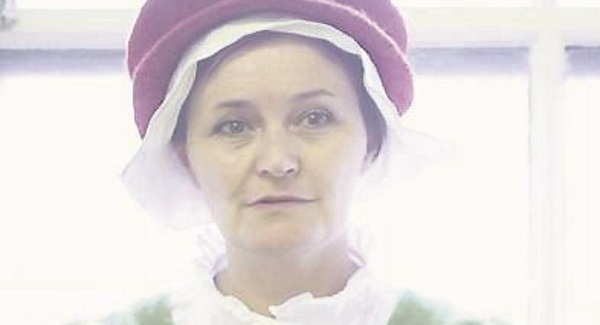
This one-woman show, starring Paula McGlinchey, with original music by Irene Buckley, opens with Hathaway reacting to her late husband’s curious will. As well as being a brilliant writer, the Bard was also a canny investor and became wealthy through owning extensive property in and around his birthplace, Stratford-upon-Avon.
But he left the bulk of his estate to his eldest daughter and her husband, bequeathing his wife nothing more than his ‘second best bed.’
“It’s really baffling,” says Fitzgibbon. “You wonder what was going on there. Is it an insult, a joke, a smack in the teeth? It’s possible that Hathaway wasn’t capable of looking after things at that stage. Shakespeare was fifty-two when he died. She was sixty which was pushing on for a good age at that time. It’s really what the play was about. It starts just after the reading of the will. It’s about her immediate reaction. She has just lost her husband and is driven to think back on their life together.”
The one-act play, premiering at the Unitarian Church as part of the Cork Midsummer Festival, is half way between fact and fiction.
“It takes what the key points in the known narrative are and then imaginatively plays around them. It’s what (playwright) Howard Barker calls imagined history. I don’t think there’s anything I’ve written that directly contradicts any of the known facts.”
Shakespeare’s marriage to Hathaway was a shotgun wedding. She gave birth to their first child six months after the nuptials were fast-tracked.
Shakespeare’s sexuality has been a matter of speculation. “Certainly, from his sonnets, it’s implied that he had at least one very torrid heterosexual affair. But it’s also implied that he might have had a homosexual affair. The way he wrote his plays, it seems clear that he was fully tuned into desire, passion and romance.
“The trouble is it’s very hard to interpret some of the language he uses. In Shakespeare’s time, the kind of dedications written at the start of books and the language in collections of poetry are, to our ears, extraordinarily passionate and over-written.
“Homosexual love doesn’t really come into Shakespeare’s plays very much. There are glimpses of it but of course, there’s a lot of fantasising around the whole business of Elizabethan theatre with boy actors playing the parts of women.”
Shakespeare was only 18 when he married the older Hathaway. “She was living with her father who had a step-family. They were in a crowded house on a small farm. She must have been fairly desperate to get out of there. Shakespeare would have been a bit wet behind the ears when he married her. I suspect he was a little bit geeky and very poetic. And she is this strong farmer’s daughter.
“There’s that kind of apparent collision and also, a contrast in personalities. A lot of the histories say she was illiterate. That’s probably only half true. Like a lot of women at the time, she could probably read but not write. She would have been reading the Bible at church.”
The tag-line Fitzgibbon is using for the play is: “To the world, he left Hamlet; to his wife he left his second best bed.”
In this, the 400th anniversary of Shakespeare’s death, The Bed is a fitting look at an intriguing woman who was married to this most extraordinary man.

CONNECT WITH US TODAY



Be the first to know the latest news and updates

















