Meet the shortlist up for the International Dublin Literary Award and the €100,000 prize
This is one of those understated, polite Irish novels that have critics reaching for the word ‘human’. It is the story of Tess Lohan, following her from the meagre, rural Ireland of the early 20th century, through her life in New York City: first as a young woman predictably shocked and shamed by her sexuality, then as a lonely mother.
There are plain words here, arranged in fine, careful sentences. But one waits in vain for any surprises. It may be ‘human’, and true, but there is more to being human — more madness, desperation, chaos, and adventure — than books like Academy Street allow.
-
Cercas takes us back to Spain’s protean post-Franco days in the 1970s. In the Catalan city of Gerona, a middle-class teenager, Ignacio, falls in with a wild gang of charnegos — economic migrants from Spain’s poorer south. Thirty years later, Ignacio is a defence lawyer, and one of the gang, Zarco, now a notorious crime boss, wants to be his client. Outlaws is a novel of rollicking incidents, but never simply that, given Cercas’ historical perspective, Zarco may represent “the yearning for liberty and the frustrated hopes of the heroic years of the change from dictatorship to democracy in Spain,” but so, too, does this book.
-
Dave Eggers is nothing if not an engaged novelist, and here we find him engaging with unhesitating directness with most of the political bugbears of liberal Americans today. It’s Eggers premise that allows him to dissect his country’s moment so thoroughly in just 211 pages: a hostage taker interrogates carefully selected captives, who include an astronaut, a cop, a Vietnam vet politician, his former teacher, and his mother. We forgive the gimmick, because of Eggers’s skill. The book contains only dialogue, yet the characters are as vivid and delineated as the scene Eggers sets.
-
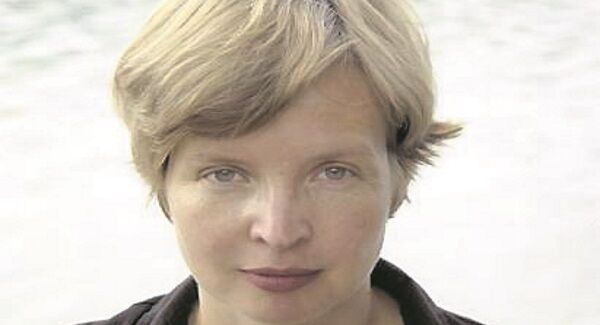
The author-as-God usually wrangles about the what-ifs of a character’s life before delivering the final result of innumerable little decisions. But what if those very what-ifs where the substance of a novel? That’s what Erpenbeck sets out to do here. A baby, born in the last days of Austro-Hungary, dies, and her parents pick up the pieces. But then that death is undone, and a different chapter follows in a young life. So it goes across the bloody 20th century in Europe. A virtuoso work that shows guts to go with the admirable technique.
-
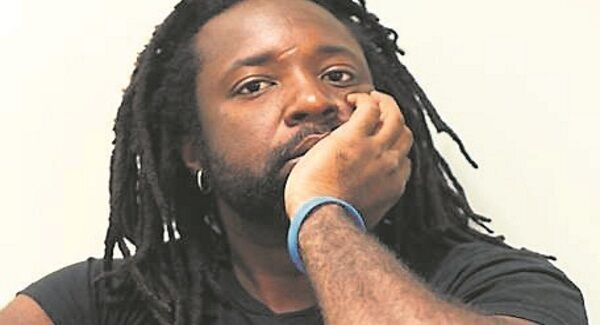
There’s nothing brief about James’s near 700-page novel, and there are far more than seven killings in its bloody toll. But it is a work of towering ambition, one that gets to the heart of a troubled period of Jamaican history. Using the attempted assassination of Bob Marley in 1976 as a focal point . It’s a story worth telling and he tells it with supreme skill, through the words of a vast cast of 70-plus character-narrators. A Brief History won the Man Booker Prize in 2015. It will be interesting to see if the Dublin award can resist following suit.
-
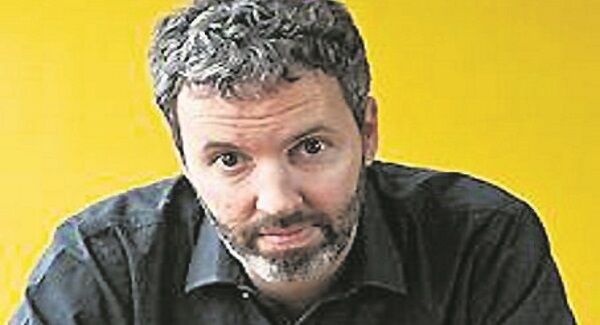
Laub, a Brazilian author and journalist, achieves something remarkable in this novel: he finds a fresh, emotionally charged and artistically valid way to write about the Holocaust. It’s a daring feat, too: any writer who wishes to mine Auschwitz as a metaphor better have earned it. Especially when the subject seems so petty by contrast: a repugnant act of bullying, by Jewish schoolboys agains the one “goy” in the class, that echoes down through the years, and crystalises the relationships between the narrator, his father, and his survivor grandfather.
-
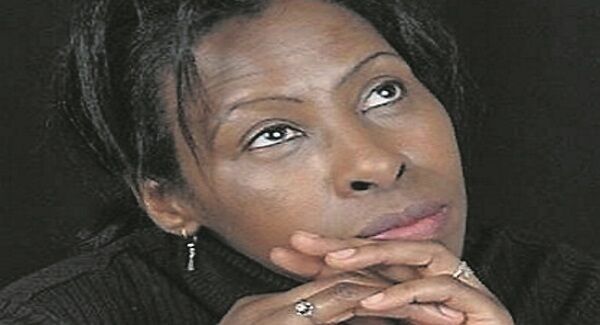
Rather than confronting the horror of the 1994 Rwandan genocide head on, Mukasonga takes us back to 1979 and an elite girls’ school. It is a wise decision. It skilfully exploits the reader’s knowledge of what’s to come, to create a terrible sense of foreboding. But at the same time it is true to its moment, and gives a chilling depiction of the only barely submerged ethnic tensions that spilled over so violently. It also leaves the reader unabsolved, as we see that such massive crimes are, while aberrations, also rooted in petty human jealousies and prejudices.
-
This not-quite-novel of fragmentary prose explores the situation of a wife who really wanted to be a self- obsessed “art monster” (her term for single-minded geniuses like Vladimir Nabokov). Paragraphs ponder the tensions of motherhood and identity, or bring in references to science, poetry, Kafka and Keats. There is much that is true here, about relationships, art and the shock of parenthood to the 21st urban narcissist. But if feels ultimately like an exercise given to creative-writing students, rather than a fully fledged narrative feat. (The author teaches on the MFA course at Columbia University.) It’s light, sharp, and easily digestible .
-
When the default setting of literary fiction is an agnostic scepticism, Robinson stands apart by her religious conviction. Here she completes her classic Gilead trilogy, telling the story of Lila, the second wife of the Rev John Ames whose testament to his young son was the eponymous first novel of the trilogy. Now, the shadowy Lila takes centre stage, beginning on the stoop of violent workhouse, where Lila is rescued from abject abandonment. Her new life remains one of poverty and hardship, until her tender relationship with Ames.
-
One might expect the story of a family’s move from Delhi to New York in the 1970s to be invested with epic proportions befitting those two countries. Yet Family Life is a chamber piece. Through the younger of two sons, Mishra, we follow one family’s wide-eyed relocation to the new world. It is warm and witty, and, when disaster strikes, heart-wrenching. Yet even though it describes a volatile family in a vibrant immigrant community, it never reaches for the melodramatic. Instead, the young son’s perspective gives the narrative a sense of privacy that is unusual.
CONNECT WITH US TODAY



Be the first to know the latest news and updates

















