GAME TECH: Monster fun to be had in Undertale
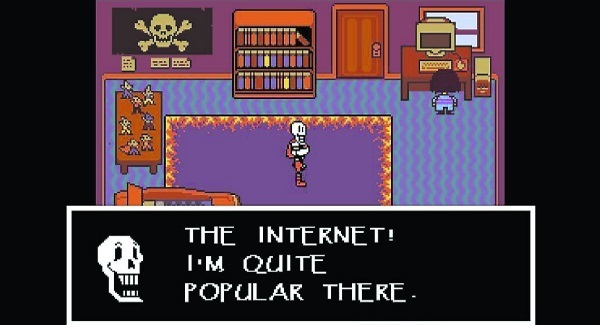
Did you ever wonder what the monsters in Final Fantasy are thinking?
GAME TECH: Monster fun to be had in Undertale

As you chop them down, did you ever say to yourself – ‘That rabid goblin might be ok, if you just got to know him’. No, didn’t think so. But Toby Fox wondered that, and the result is one of the best games of 2015.

You can fight the monsters in Undertale but, really, why would you want to? They are some of the funniest, most endearing characters to ever grace a video game. And while most of them will attack you at first, it’s your job to win them over in battle, to make them happy — and to ultimately spare them.

Undertale begins like many old games once did, with your character lost in the dark recesses of a dungeon, desperate to find a way out. In this case, your character is a human child, and the dungeon is the centre of the earth, where monsters have been sealed away by magic.

Long ago, the monsters and the humans lived together, but the humans won a battle and locked the monsters away.

The thing is — the monsters are desperate to see sunlight again, and any humans that venture below are attacked by order of the king. Once they attack you, you can fight back and kill them, or you can interact with them, making them lose the will to fight in hilarious ways, before the option to spare them appears.

A giant dog sentry can be ‘petted’ repeatedly until it becomes affectionate; a lonely skeleton can be won over with flirtation and puns; a muscle-bound monster will leave you alone if you win a ‘flexing contest’; a ‘vegetoid’ becomes happy if you eat your greens and stay healthy.

Undertale is an unforgettably funny world, one in which the tropes of role-playing games are played upon brilliantly. It’s Final Fantasy meets Adventure Time.

Fighting isn’t just about selecting funny options though. When the monsters attack, a little ‘mini-game’ appears, resembling old arcade classics, where you need to avoid the monster’s attack or you will take damage.

These mini-games require a lot of old-school gaming skill and are superbly implemented, constantly changing in their ingenuity. It’s a big part of what makes Undertale so playable and so consistently enjoyable.

Fighting is just one part of the game, however. Just like Final Fantasy, a large part of the story is experienced through dialogue and interaction with the environment. In that regard, Undertale will go down as one of the best-written games ever.

It is relentlessly charming and expertly scripted. It will make you laugh out loud without fail, but there is a darkness to it too, a contrast that is handled wonderfully.

Toby Fox did everything on this game. He designed it, programmed it, and wrote both the script and the superb retro soundtrack. It’s no wonder Undertale’s desktop icon is a heart — because this is a game made with a real love for games. An instant classic, and a must-buy at just €10.

BATMAN GAMES

When the subject of brilliant writing comes up in this business, two names are usually mentioned.

One is Chris Avellone, the legendary role-playing writer. The other is Telltale Games, who made the much-loved Walking Dead series, one of the few games that people will admit made them cry.

At the Video Game Awards 2015, Telltale announced that they have acquired the licence to make Batman games, sending the collective gaming community into spasms of joy.

While no other details have yet been announced, it’s hard to imagine Telltale messing up such a fantastic opportunity.

PSYCHONAUTS SEQUEL

The Video Game Awards were otherwise a largely sedate affair, but good writing continued to win out with the revelation that Tim Schafer’s Psychonauts would finally be getting a sequel.

Psychonauts is considered one of the most original video game worlds ever created, in which the titular psychonauts explore people’s psyches in order to extract information or soothe nightmares.

Each person’s mental landscape was utterly different to the last, unique to their own personal demons. Like many of Schafer’s games, it was also side-achingly funny.

At the awards show, Schafer announced that the sequel would be partly crowd-funded through the Fig platform which, unlike Kickstarter, allows pledgers to make money from their initial investment.

More in this section

Cookie Policy Privacy Policy Brand Safety FAQ Help Contact Us Terms and Conditions

© Examiner Echo Group Limited










